Eco-friendly food packaging guide for Saudi restaurants 2026 — PLA bioplastics, rPET recycled plastic, bagasse containers, FSC-certified paper, cost premiums, compostability certifications, and G-Pack sustainable options.
Eco-friendly plastic in food packaging is no longer merely an ethical preference in Saudi Arabia — it is becoming a competitive advantage, a regulatory anticipation strategy, and a brand differentiation tool in the premium market segment. Saudi Arabia is investing heavily in environmental sustainability through Vision 2030, and consumer awareness of packaging waste has grown significantly since 2023. For Saudi restaurant operators and food brands, switching to eco-friendly or sustainable packaging is not a distant consideration — it is a current business decision with real cost implications, real brand value, and an accelerating regulatory trajectory. This guide covers the full landscape of eco-friendly and sustainable packaging options relevant to Saudi food service operations in 2026: materials, performance, cost, certification, marketing value, and practical implementation.
Who This Guide Is For
This guide is for Saudi restaurant owners, food brand managers, purchasing managers, and sustainability officers who are making packaging material decisions for 2026. Whether evaluating a full eco-packaging transition or identifying specific high-value items to switch to sustainable materials, this guide provides the practical framework for a market-relevant decision.
Bioplastics — the category of plastics derived from plant-based renewable sources — are increasingly available in the Saudi market and offer a compelling alternative to conventional petroleum-based plastics for food packaging. The main bioplastic options: PLA (polylactic acid): derived from corn or sugarcane starch. Transparent, rigid, and visually similar to conventional PET plastic. Used for cold drink cups, salad containers, and clear-lidded food containers. PLA is compostable under industrial composting conditions (not standard household compost). The key market question is whether industrial composting infrastructure is available at scale for disposal — in Saudi Arabia, commercial PLA composting programs are emerging but not yet universal. However, the raw material origin (plant-based) and the composting certification are valuable brand communication assets regardless of actual composting rate. PHA (polyhydroxyalkanoate): a newer bioplastic with better heat resistance than PLA and home-compostable in some formulations. Higher cost than PLA but genuinely biodegradable in a wider range of conditions. Currently available for specific high-value packaging applications.

Complete guide to wholesale packaging discounts for Saudi restaurants 2026 — annual contracts, volume discount tiers, multi-item consolidation, upfront payment discounts, Ramadan pre-order strategy, and G-Pack wholesale pricing.

Complete guide to measuring and maximizing custom packaging ROI for Saudi restaurants 2026 — social media amplification, delivery rating improvement, cost-per-impression vs digital advertising, and ROI calculation framework.
Recycled Plastics — using post-consumer recycled (PCR) plastic content in food packaging — is the most immediately scalable and cost-competitive sustainable packaging option for most Saudi food service operations. rPET (recycled PET): made from recycled PET bottles and containers. Used for cold drink cups, sauce containers, and lids. rPET typically costs only 10-20% more than virgin PET and is mechanically indistinguishable in performance. The recycled content certification (30% PCR, 50% PCR, 100% PCR) is a quantifiable and verifiable sustainability claim. rPP (recycled polypropylene): used for food containers, lids, and hot-fill packaging. Performance is essentially equivalent to virgin PP. Slightly higher cost than virgin PP. Availability has improved significantly in the Saudi market since 2024. Food-safety certifications: all food-contact recycled plastic must carry food-safety certification (ISO 22000 or equivalent) demonstrating that the recycling process eliminates contaminants to safe levels. Always request food-safety certification documentation when sourcing recycled plastic food packaging.
| Material | Origin | Compostable | Recyclable | Cost vs Standard | Performance vs Standard | Heat Resistance |
|---|---|---|---|---|---|---|
| PLA bioplastic | Plant starch (corn) | Industrial only | No | 20-40% higher | Equal (cold only) | Low — max 45 deg C |
| PHA bioplastic | Bacterial fermentation | Home compostable | No | 60-120% higher | Equal | Medium — max 65 deg C |
| rPET (recycled PET) | Post-consumer PET bottles | No | Yes | 10-20% higher | Equal (cold) | Low — max 65 deg C |
| rPP (recycled PP) | Post-consumer PP | No | Yes | 15-25% higher | Equal (hot/cold) | Good — max 120 deg C |
| Kraft paper (unbleached) | FSC-certified wood fiber | Yes (paper compost) | Yes | 0-15% higher | Good for dry food | Low (not liquid-resistant without lining) |
| Sugarcane bagasse | Sugarcane waste fiber | Industrial compost | No | 25-50% higher | Good for hot food | Medium — max 95 deg C |
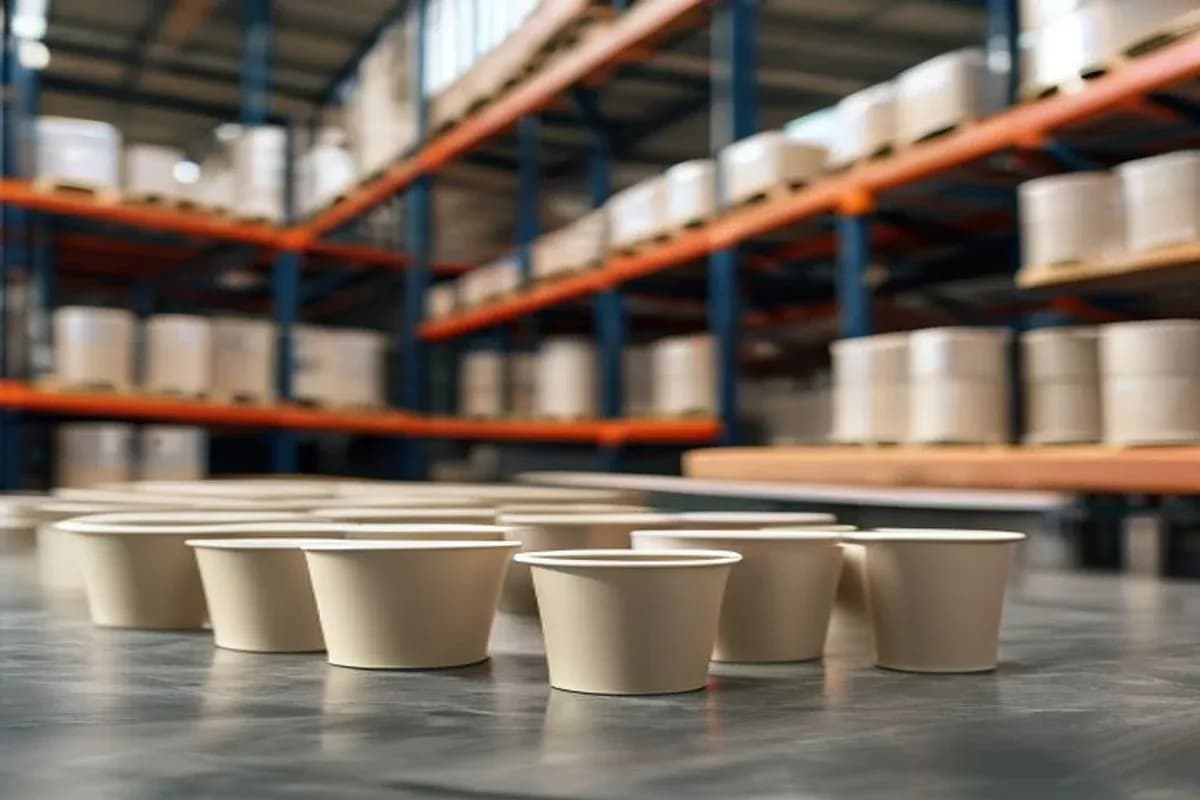
Paper-Based Alternatives to Plastic Are Advancing Rapidly in the Saudi Market. The category of paper-based packaging with functional coatings is one of the fastest-evolving segments of sustainable food packaging. Traditional paper packaging was limited by its inability to resist grease, oil, moisture, and liquids — making it unsuitable for many food applications. New paper-based solutions using plant-derived coatings (PLA, aqueous dispersion coatings, wax alternatives) now provide the functional performance of plastic-lined packaging with significantly better environmental credentials. Paper-based alternatives relevant to Saudi restaurants: Paper cold cups with PLA lining: replaces conventional PE-lined cold cups. Performance is equivalent. Cost premium: 15-30%. Compostable under industrial conditions. Paper-based food containers with aqueous coating: for noodles, rice, and grain dishes. Replaces standard PP or PE containers. Cost premium: 20-40%. Bagasse containers: made from sugarcane fiber, suitable for hot and cold food. Excellent heat resistance (up to 95 degrees C). Fully compostable. Cost premium: 25-50%. Greaseproof paper for wrapping: naturally plant-based and biodegradable. Already widely used. Switching from PE-lined wrap to greaseproof eliminates the plastic lining entirely.
Marketing the Eco-Friendly Packaging Decision — a Strategic Brand Opportunity. The decision to switch to eco-friendly packaging is not only an operational and cost decision — it is a brand communication asset that, when communicated effectively, delivers measurable marketing value to the right customer segments. The Saudi consumer segments most receptive to eco-packaging messaging: premium cafe and specialty coffee customers (high environmental awareness, willing to pay premium for sustainability), university and young professional demographics (social media-active, sustainability-aware), hotel and resort F&B customers (sustainability is an international hospitality standard), and expatriate dining community (familiar with eco-packaging standards from European and North American markets). Marketing implementation: print the sustainability claim directly on the packaging (example: "This cup is made from plant-based PLA — commercially compostable"), add certification logos (compostable certifications, FSC logo for paper items), and use social media to communicate the switch. A packaging sustainability announcement post consistently generates high engagement from the relevant customer segment.
The Cost Premium for Sustainable Packaging Is Narrowing Year by Year as Demand Scales. In 2022-2023, the cost premium for eco-friendly packaging over conventional equivalents was 40-80%. In 2026, the premium has narrowed to 15-55% for most materials as production scale increases, more suppliers enter the market, and Saudi import tariffs on sustainable materials are reviewed. For Saudi restaurant operations, the cost increase from switching to eco-friendly packaging is typically SAR 0.05-0.20 per packaging item depending on the material and item type. At 100 orders per day, the monthly cost increment for a full eco-packaging switch ranges from SAR 150-600. For most premium restaurants, this is a justifiable investment that the customer segment expects and often rewards with higher loyalty and social media advocacy. For budget and mass-market operations, a partial eco-switch (prioritizing the most visible customer-facing items) delivers brand value at lower total cost increment.
| Item | Standard Cost SAR/unit | Eco Alternative | Eco Cost SAR/unit | Premium % | Recommended Eco Option |
|---|---|---|---|---|---|
| Coffee cup 8oz (PE lining) | 0.33-0.48 | PLA-lined paper cup | 0.43-0.65 | 25-35% | PLA-lined (compostable claim) |
| Cold drink cup 16oz (PET) | 0.42-0.60 | rPET cold cup | 0.50-0.72 | 15-20% | rPET (recyclable claim) |
| Food container (PP) | 0.55-0.80 | Bagasse container | 0.72-1.10 | 30-40% | Bagasse (compostable claim) |
| Kraft delivery bag | 0.55-0.80 | FSC-certified kraft bag | 0.60-0.90 | 10-15% | FSC kraft (renewable source claim) |
| Pizza box (standard corrugated) | 0.56-0.76 | Recycled corrugated | 0.62-0.85 | 10-15% | rCorr (recycled content claim) |
| Wrap paper (PE-lined) | 0.03-0.08 | Greaseproof (no PE) | 0.04-0.10 | 15-25% | Greaseproof (plastic-free claim) |
Sustainability Certifications and International Standards for Packaging in Saudi Arabia. Certifications and standards matter because they provide third-party verification for sustainability claims made on packaging. Without certification, sustainability claims are marketing assertions that may face regulatory challenge as Saudi environmental regulations develop. Key certifications to know: FSC (Forest Stewardship Council): for paper and cardboard packaging. Certifies that wood fiber was sourced from sustainably managed forests. The most recognized and credible certification for paper packaging globally. OK Compost (TUV Austria): certifies compostability under industrial conditions. Applied to PLA cups, bagasse containers, and other compostable packaging. Available in industrial and home compost variants. EN 13432 (European Standard): the international standard for industrial compostability of packaging. Most commercial PLA and bagasse packaging meets EN 13432. ISO 22000: food safety management system certification. For recycled plastic food packaging, ISO 22000 certification verifies that the recycling process eliminates contaminants. Requesting certifications from packaging suppliers before purchasing is the standard due diligence for eco-packaging procurement.
The Future of Sustainable Packaging in Saudi Arabia — Regulatory and Market Signals. Saudi Arabia is moving toward stricter packaging waste regulation as part of Vision 2030 environmental commitments. While specific packaging plastic regulations are not yet universally implemented as of 2026, the regulatory direction is clear: single-use plastic reduction, increased recycled content requirements, and improved labeling of recyclable and compostable materials. Restaurants that transition to eco-friendly packaging now are not only responding to current consumer demand — they are building the operational infrastructure and supplier relationships to comply with future regulations without disruptive transition costs. The practical steps: establish relationships with certified eco-packaging suppliers now, develop the supply chain for your priority eco-packaging items, build the cost model for a full eco-transition, and communicate the eco-commitment to customers. The Saudi market window for first-mover brand advantage in restaurant eco-packaging is 2025-2027 — before regulatory requirements make eco-packaging mandatory rather than differentiated.
Packaging Prices 2026 — Eco vs Standard Reference for Saudi Restaurants. Summary cost reference for eco-friendly packaging compared to standard equivalents: Paper cups 8oz: standard PE-lined SAR 0.33-0.48, PLA-lined eco SAR 0.43-0.65. Cold cups 16oz: standard PET SAR 0.42-0.60, rPET recycled SAR 0.50-0.72. Hot food containers: standard PP SAR 0.55-0.80, bagasse eco SAR 0.72-1.10. Delivery bags: standard kraft SAR 0.55-0.80, FSC certified SAR 0.60-0.90. Pizza boxes: standard corrugated SAR 0.56-0.76, recycled corrugated SAR 0.62-0.85. Wrap paper: standard PE-lined SAR 0.03-0.08, greaseproof (plastic-free) SAR 0.04-0.10. The average eco-premium across all packaging items is approximately 20-35% in 2026 — down from 45-70% in 2022 and projected to continue narrowing toward 10-20% by 2028-2029 as scale and competition increase.
| Item | Standard SAR | Eco Option | Eco SAR | Premium | Eco Claim |
|---|---|---|---|---|---|
| Cup 8oz | 0.33-0.48 | PLA-lined | 0.43-0.65 | 25-35% | Commercially compostable |
| Cold cup 16oz | 0.42-0.60 | rPET | 0.50-0.72 | 15-20% | Made from recycled plastic |
| Food container (PP) | 0.55-0.80 | Bagasse | 0.72-1.10 | 30-40% | Commercially compostable |
| Delivery bag (kraft) | 0.55-0.80 | FSC kraft | 0.60-0.90 | 10-15% | FSC-certified renewable |
| Pizza box | 0.56-0.76 | Recycled corrugated | 0.62-0.85 | 10-15% | Recycled content |
| Wrap paper | 0.03-0.08 | Greaseproof | 0.04-0.10 | 15-25% | Plastic-free |
List every packaging item you currently use. For each, identify the material: is it PE-lined, PET, PP, standard corrugated, or uncoated paper? This audit reveals which items are candidates for eco-substitution and establishes the baseline for cost comparison.
The most impactful eco-packaging switches are on the items customers see and handle most: cups (held for the entire beverage duration), primary delivery bags (visible on delivery and throughout the meal), and food containers (opened and examined at the table). Prioritize these three before lower-visibility items.
For each priority packaging item, request PLA, rPET, bagasse, or FSC-certified alternatives from G-Pack. Request samples and evaluate: performance (heat resistance, structural integrity, leak resistance), appearance (color, texture), and printability (logo and design compatibility).
For each eco switch, calculate the per-unit cost increment and multiply by daily order volume. The total daily eco-premium across all packaging items tells you the true cost of the transition. Compare this against the brand value of the sustainability claim for your specific customer segment.
For any eco-packaging item you plan to market as compostable, recyclable, or sustainably sourced, obtain the relevant certification documentation from the supplier: EN 13432 for compostable claims, FSC for paper, rPET or PCR % certification for recycled plastic. Keep these documents on file for regulatory and marketing purposes.
Work with your packaging designer to incorporate the sustainability claim into the packaging print. Examples: "This cup is plant-based and commercially compostable," "Made from 100% recycled PET bottles," "FSC-certified paper from sustainable forests." The claim must be accurate and supported by certification.
Announce the eco-packaging transition on social media with a specific post explaining what materials you switched to and why. This is one of the highest-engagement brand communications a Saudi restaurant can make to the sustainability-aware customer segment. Follow up with regular social media content featuring the eco-packaging in use.
Each year, identify the next packaging item to transition to eco alternatives. As costs narrow and availability improves, the economics of each additional switch become more favorable. The goal for most Saudi premium restaurants is a complete eco-packaging portfolio by 2028.
10 Common Eco-Packaging Mistakes to Avoid
(1) Claiming "biodegradable" without certification — many materials require specific conditions to biodegrade and the term is not legally regulated. Use certified terms like "industrially compostable" or "FSC-certified paper." (2) Using PLA cups for hot beverages — PLA cups deform above 45 degrees C and are NOT suitable for hot coffee or tea. (3) Not obtaining certification documentation from suppliers before making claims on packaging. (4) Switching to eco packaging without informing customers — the brand value only materializes if customers know about the switch. (5) Prioritizing low-visibility back-of-house eco switches over high-visibility customer-facing items. (6) Assuming all paper packaging is eco-friendly — standard PE-lined paper cups contain as much plastic as PET cups. (7) Not testing eco alternatives for performance before volume ordering — bagasse containers behave differently from PP under heat. (8) Ignoring the disposal infrastructure for compostable materials in the specific Saudi city context. (9) Mixing eco and non-eco claims on the same packaging item confusingly. (10) Not planning the eco-packaging transition as a multi-year roadmap — attempting a complete switch in one order cycle creates operational risk.
For hot food: sugarcane bagasse containers are the most practical and cost-effective option — heat-resistant to 95 degrees C, commercially compostable, and available with custom printing. For cold food: rPET (recycled PET) containers provide equivalent performance to virgin PET at 15-20% cost premium with a recyclable claim. For liquid-holding containers at all temperatures: PLA-lined paper is the emerging standard, though PLA is not suitable for hot beverages above 45 degrees C.
Yes — the Saudi eco-packaging market has expanded significantly since 2023. PLA-lined paper cups, bagasse food containers, FSC-certified kraft bags and boxes, rPET cold cups, and greaseproof paper (plastic-free wrap) are all available through specialist suppliers including G-Pack. Availability and pricing have improved substantially from 2022 levels, and the product range continues to expand.
Current premiums by material: PLA-lined cups 25-35% above standard PE-lined. rPET cold cups 15-20% above virgin PET. Bagasse food containers 30-40% above standard PP. FSC-certified kraft bags 10-15% above standard kraft. Greaseproof wrap paper (plastic-free) 15-25% above PE-lined wrap. These premiums represent approximately 50-60% of 2022 premiums — the cost gap continues to narrow and is projected to reach 10-20% for most materials by 2028-2029.
Only if it is certified by a recognized third-party standard such as EN 13432 (European standard for industrial compostability), OK Compost (TUV Austria), or equivalent. Without certification, "compostable" claims may be considered misleading advertising. Request EN 13432 certification documentation from any packaging supplier before making compostable claims on your packaging. Note: industrial compostability requires collection and processing at an industrial composting facility — it does not mean the packaging biodegrades in a landfill.
FSC (Forest Stewardship Council) certification on paper packaging means the wood fiber used to make the paper was sourced from forests managed according to FSC standards for sustainability, biodiversity, and workers rights. FSC-certified paper and cardboard packaging is the globally recognized standard for sustainable paper sourcing. The FSC logo on packaging is an immediately recognizable and credible sustainability signal for informed consumers.
PLA is NOT suitable for hot beverages or food above 45 degrees C. PLA is a cold-use bioplastic — it deforms and loses structural integrity when in contact with heat above its low heat deflection temperature. For hot coffee, tea, and hot food, specify PLA-LINED PAPER cups (the paper provides the structure, the PLA coating provides the barrier) — not transparent PLA cups. For hot food containers, specify bagasse or rPP rather than PLA. This distinction is frequently confused and results in product failures if ignored.
As of 2026, Saudi Arabia does not yet have specific packaging environmental claim regulations equivalent to EU Green Claims Directive. However, the Saudi Standards Authority and developing Vision 2030 regulations are moving toward stricter claim requirements. Best practice for Saudi operators: only make claims supported by third-party certification (EN 13432, FSC, PCR percentage), use specific and verifiable language ("30% recycled content," "EN 13432 certified compostable") rather than vague terms ("eco-friendly," "green"), and maintain supplier certification documentation. This approach is both currently compliant and future-proof against anticipated regulatory tightening.
Start with the highest-volume, highest-visibility single item — the cup for a cafe, the primary delivery bag for a cloud kitchen, the food container for a restaurant. Request eco-alternative samples from G-Pack, test performance with your actual food items, calculate the per-unit cost increment, and then brief the customer-facing transition on social media. After the first successful eco item switch, add one additional item per quarter. A complete eco-packaging transition done in phases over 12-24 months is operationally sustainable and creates a consistent stream of sustainability communications to customers.
Yes — G-Pack supplies PLA-lined paper cups, FSC-certified kraft bags and boxes, rPET cold drink cups, sugarcane bagasse food containers, and greaseproof wrap paper with plastic-free certification. All eco-packaging items include certification documentation. Contact G-Pack for a full eco-packaging consultation and sample kit.
Saudi Arabia does not yet have mandatory eco-packaging regulations equivalent to EU single-use plastic directives as of 2026. However, the Saudi government has signaled regulatory movement toward single-use plastic reduction through Vision 2030 environmental commitments. Some municipalities and venues have implemented voluntary eco-packaging policies. The most prudent approach is to begin transitioning to eco-packaging now, establishing supplier relationships and operational experience before regulatory requirements make the transition mandatory.
G-Pack supplies PLA cups, bagasse containers, rPET cold cups, FSC-certified bags and boxes, and greaseproof wrap. All items include certification documentation. Free sample kit before volume orders.
Get a Free Quote