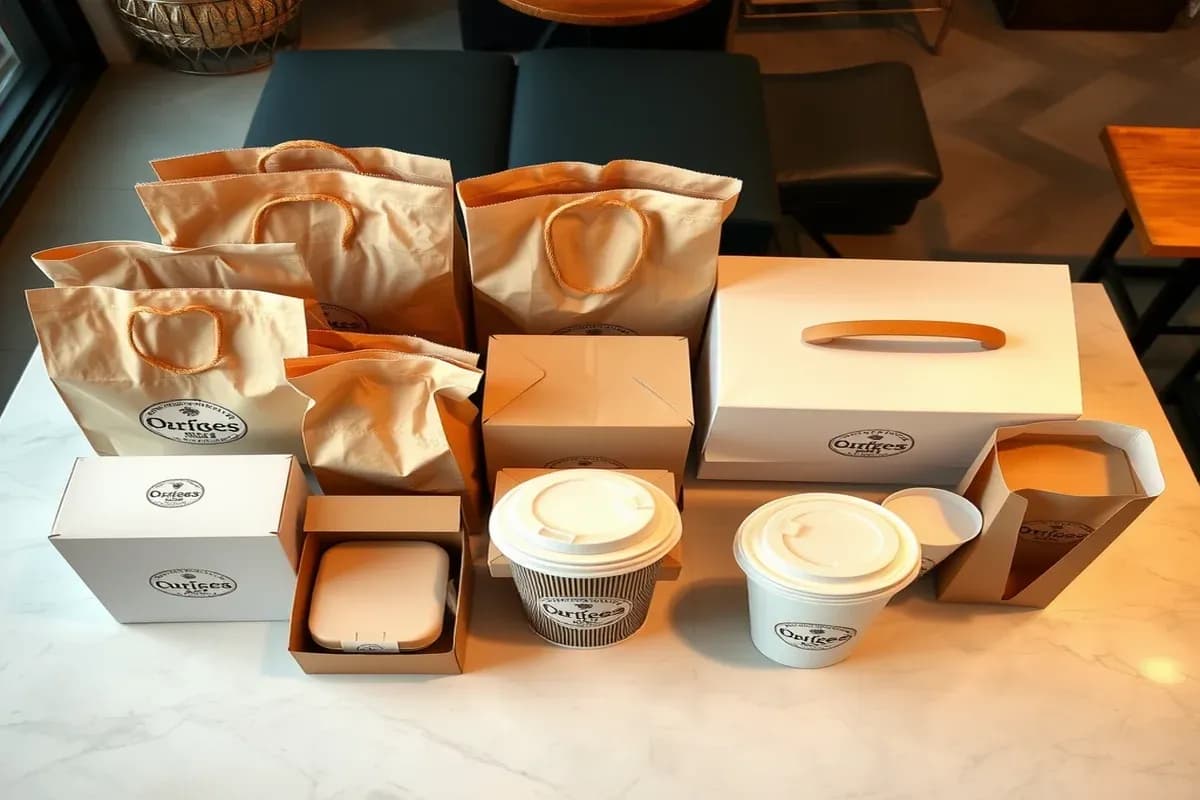
A food box is not just a container — it is the first thing your customer sees when their order arrives, and the ambassador that carries your restaurant identity into their home. In Saudi Arabia's boom...
A food box is not just a container — it is the first thing your customer sees when their order arrives, and the ambassador that carries your restaurant identity into their home. In Saudi Arabia's booming food service market, where thousands of restaurants and cloud kitchens compete for customer loyalty, packaging quality and printed appearance have become a genuine competitive differentiator.
This guide covers everything you need to know about restaurant packaging box printing in the Kingdom of Saudi Arabia: from box types and materials, to printing technologies and finishing options, through to SFDA requirements and GSO 839:2021 compliance, and production pricing in the Saudi market for 2026. For a broader overview of all restaurant packaging types (cups, bags, boxes, wraps), see the Ultimate Restaurant Packaging Guide.
This guide was written by the G-Pack manufacturing team with over 10 years of experience in printing and manufacturing restaurant packaging in Saudi Arabia.
• Material is the first decision: Kraft for daily volume, SBS for premium printing, corrugated for delivery
• Box style determines assembly speed: Tuck Top Auto Bottom for high volume, Straight Tuck for front-facing display
• Offset for large quantities, digital for small runs: Choosing the right printing technology saves 30-50% on cost
• GSO 839:2021 mandates all food boxes be food-grade: No exceptions
• Minimum order quantity (MOQ) starts at 500-1,000 boxes: Larger quantities reduce unit price by 40-60%
Every food type has different packaging requirements. Choosing the right box protects the product and enhances the customer experience.
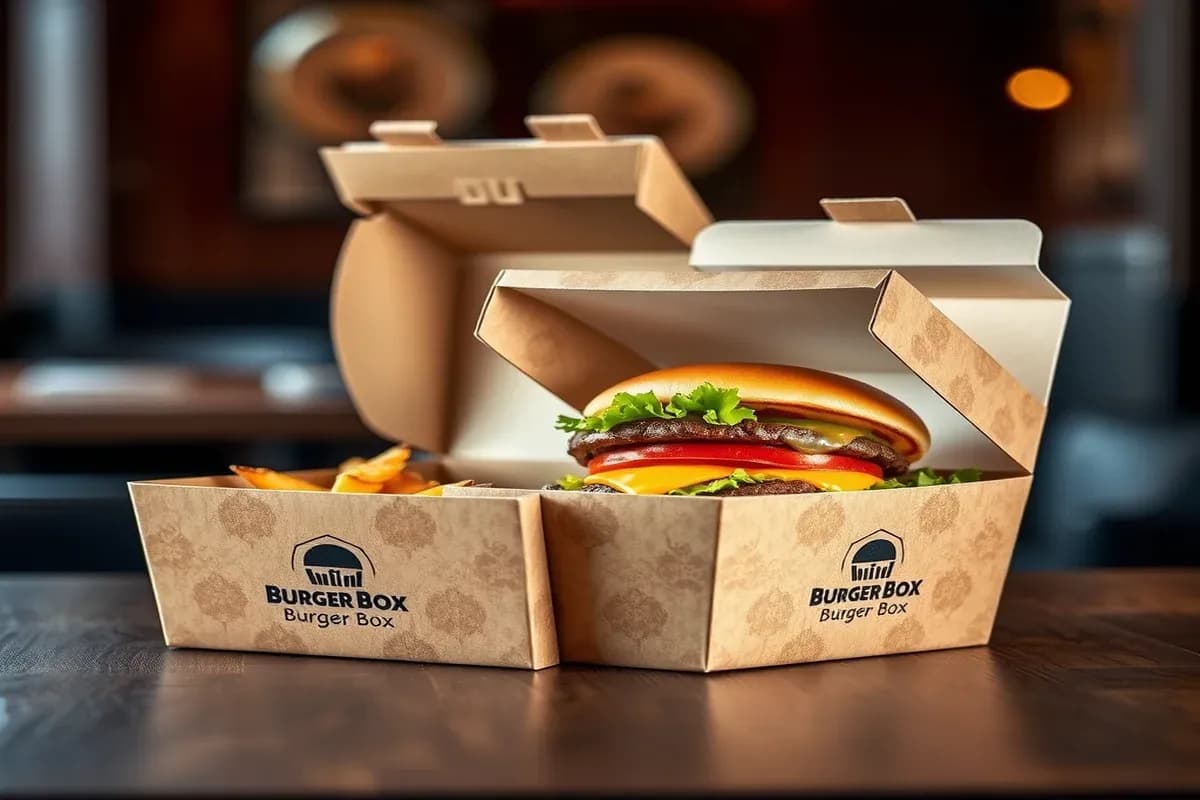
Burger boxes need grease resistance and ventilation to prevent steam condensation. The ideal material is grease-resistant kraft or SBS with an interior coating. Standard sizes: 7x7x4 cm (regular burger), 9x9x5 cm (double burger). For a detailed guide, see the Custom Burger Box Printing Guide. You can also explore printed burger boxes from G-Pack.
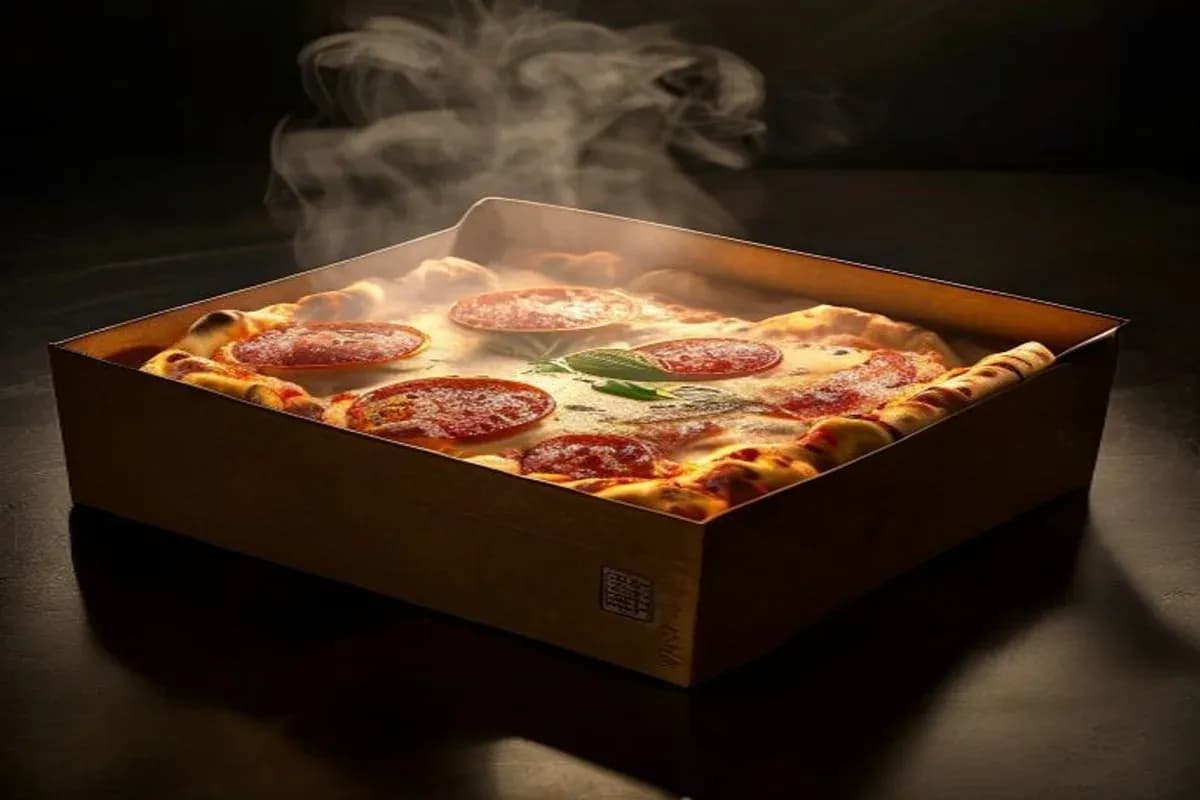
Pizza boxes require corrugated board (E-flute or B-flute) to retain heat and prevent oil leakage. Sizes: 9 inch (personal), 12 inch (medium), 14 inch (large), 16 inch (extra large). Corrugated board provides thermal insulation and prevents pizza from sticking. See the Custom Pizza Boxes Guide and explore printed pizza boxes from G-Pack.

The ultimate restaurant packaging guide for Saudi Arabia 2026 — covering the four core materials, custom printing as a marketing tool, seasonal planning, budget optimization, and how to build an integrated packaging system from scratch.

Complete guide to custom printed burger boxes for Saudi restaurants in 2026 — structural types, ventilation requirements for delivery, printing specifications, pricing benchmarks, and how to order correctly the first time.
Fries boxes need ventilation holes to maintain crispiness. The common design is an open-top box with side ventilation holes. Material: 300gsm kraft or SBS with grease-resistant coating. See the Custom Fries Boxes Guide and printed fries and snack boxes from G-Pack.
Shawarma and sandwich boxes require leak resistance since foods may be moist or sauced. Ideal material: grease-proof coated paper or SBS with PE coating. See the Custom Sandwich Wrapping Guide and printed shawarma boxes from G-Pack.
Family meal boxes need strong handles and ample space. Typically use corrugated board (B-flute) with integrated paper handles. Sizes: 30x20x8 cm or 35x25x10 cm. Explore printed family meal boxes from G-Pack.
Kids meal boxes feature bright colors and attractive designs. Use white SBS for the best print quality. May include printed games or puzzles on the box. See the Custom Kids Meal Boxes Guide and printed kids meal boxes from G-Pack.
Salad boxes need a transparent lid (PET window) to display contents. Material: kraft or SBS with a die-cut transparent plastic window.
Pastry and cake boxes require reinforced corners and often internal inserts to prevent movement. Material: white SBS or FBB with matte or gloss finishing. Gold foil stamping may be added for premium boxes.
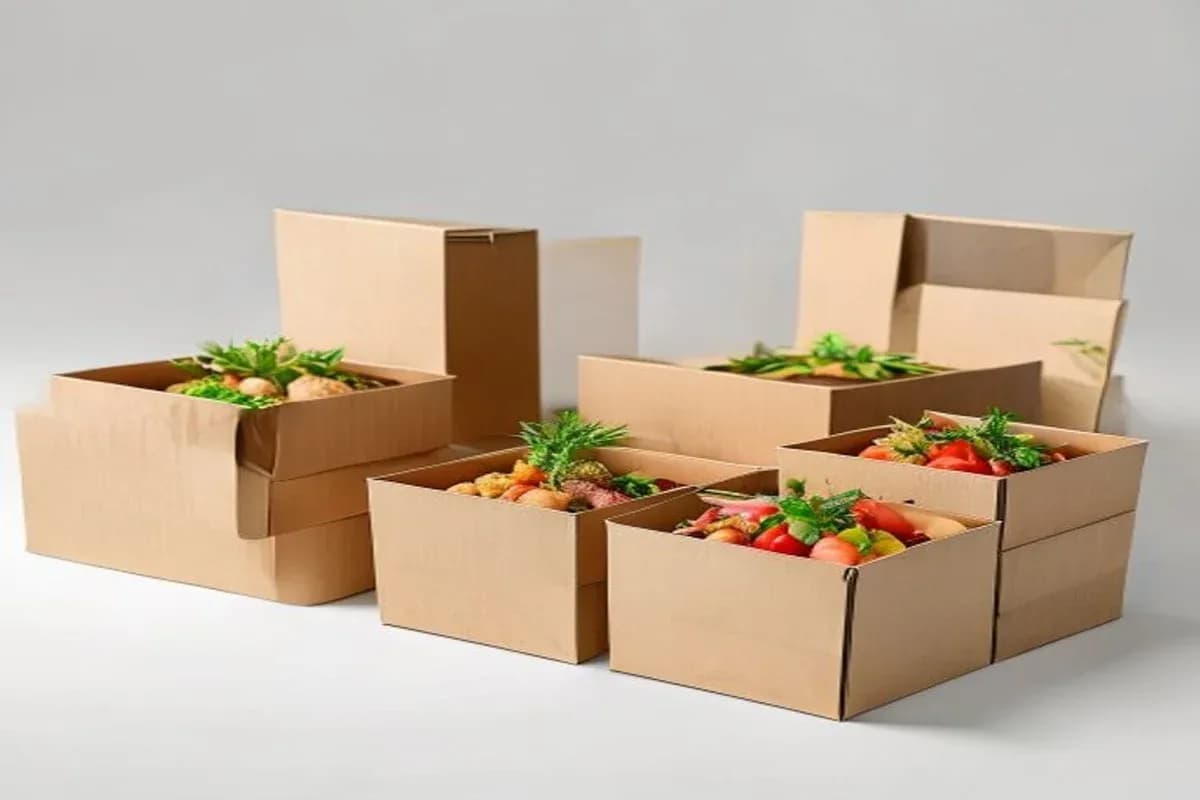
Delivery boxes need corrugated board (B-flute or E-flute) that resists impact. Must withstand humidity and temperature during transit. May include ventilation holes or sauce pockets. For choosing the best delivery boxes, see the Best Food Delivery Boxes Guide and explore printed delivery boxes from G-Pack.
Noodle and rice boxes feature a traditional Asian design — typically a square or rectangular box with a top lid. Need heat and moisture resistance. Material: kraft with internal PE coating.
Material selection is the most important decision in restaurant box printing. Each material has properties that affect performance, price, and print quality. Weight is measured in GSM (grams per square meter) — higher GSM means thicker, more durable board.
Kraft paper is made from unbleached wood fibers, giving it a natural brown color. It is the economical and eco-friendly choice. Strong and tear-resistant, but has a rougher printing surface compared to white materials. Suitable for fast food restaurants and cloud kitchens.
SBS is white board made from bleached fibers. It offers a smooth printing surface ideal for vibrant colors. More expensive than kraft but the top choice for premium brands. May be clay-coated for enhanced print quality.
Consists of three layers: inner liner, fluted middle layer, and outer liner. Flute types: E-flute (1.5mm) for printing and small boxes, B-flute (3mm) for strength and delivery boxes. Provides thermal insulation and impact resistance.
Recycled board with a white clay coating on one side. Economical with acceptable print surface. The interior is brown or gray. Suitable for dry products and non-direct food contact boxes.
Kraft or SBS treated with a grease and oil resistant coating. Essential for burger, fries, and shawarma boxes. Prevents oil from seeping through and maintains box appearance. Compliant with GSO 839:2021 requirements.
Restaurants are increasingly shifting toward sustainable packaging. Available options: recycled kraft, board coated with PLA (Polylactic Acid) — a biodegradable alternative to PE plastic, and FSC-certified (Forest Stewardship Council) paper that ensures the material comes from responsibly managed forests. These options cost 15-25% more than conventional materials but enhance brand image and meet the expectations of environmentally conscious customers.
| Material | Weight (gsm) | Grease Resistance | Print Quality | Relative Price | Best Use |
|---|---|---|---|---|---|
| Kraft | 250-350 | Medium | Medium | Low | Fast food, cloud kitchens |
| SBS | 300-400 | Low (needs coating) | Excellent | High | Premium brands, kids boxes |
| E-flute Corrugated | 400-500 | Medium | Good | Medium | Pizza boxes, delivery |
| B-flute Corrugated | 500-700 | Medium | Medium | Medium | Large delivery boxes |
| CCNB | 300-350 | Low | Good | Very Low | Dry products |
| Grease-Resistant | 280-350 | Excellent | Good | Medium | Burger, fries, shawarma |
Box style affects assembly speed, security, and cost. Choosing the right style saves labor time and reduces waste.
The bottom is pre-glued — when the box is squeezed from the sides, the bottom automatically pops open. Fastest to assemble, ideal for high-volume production. Supports heavier loads than other styles.
Top and bottom flaps tuck in from the same side (usually the back). Provides a clean front display panel with no visible raw edges. Ideal for shelf display.
Top flap tucks from the back, bottom from the front (or vice versa). Allows tighter nesting during manufacturing, reducing waste and cost. Suitable for economical boxes.
Bottom consists of three flaps that interlock manually. Stronger than STE and RTE. Suitable for heavier products like family meals. Requires longer assembly time.
A cut-out opening in the box covered with transparent film (PET). Allows customers to see contents. Ideal for salad and pastry boxes. Requires precise film bonding.
A box with a triangular roof (gable shape). Assembles quickly and offers a distinctive appearance. Common for kids meals and special meal boxes. No additional handles needed.
| Style | Assembly Speed | Strength | Cost | Best Use |
|---|---|---|---|---|
| TTAB | Excellent | High | Medium | High volume, all types |
| STE | Medium | Medium | Low | Front-facing display |
| RTE | Medium | Medium | Very Low | Economy boxes |
| Snap Lock | Slow | High | Medium | Heavy products |
| Die-Cut Window | Medium | Medium | High | Salads, pastries |
| Gable | Fast | Medium | Medium | Kids meals |
Printing technology choice affects cost, quality, and production speed. For a detailed explanation of all packaging printing methods, see the Packaging Printing Methods Guide.
Uses metal plates and indirect ink transfer. Excellent print quality, consistent colors, low per-unit cost at high volumes. Economic minimum: 2,000-3,000 boxes. Ideal for brands requiring high color accuracy.
Uses flexible photopolymer plates mounted on rotating cylinders. Fast-drying ink suitable for plastic and paper packaging. Faster than offset and cheaper for medium quantities. Good quality sufficient for most restaurant boxes.
Direct printing from a digital file without plates. No setup required and low fixed cost. Ideal for small quantities (50-500 boxes) and variable designs. Good and continuously improving quality. Top choice for small restaurants.
Uses a mesh screen to transfer ink. Suitable for uneven or rough surfaces. Slow but provides raised, tactile printing. Used for very small quantities or special finishes.
Two main color systems: CMYK for general colors (mixing four primary colors), and Pantone (PMS) for precise brand-specific colors. Pantone ensures color consistency across production runs but increases cost. For food box printing, food-safe low-migration inks must be used — these do not transfer to food, especially in direct contact applications. All G-Pack inks comply with food-grade standards.
| Technology | Print Quality | Production Speed | Economic MOQ | Small Qty Cost | Large Qty Cost |
|---|---|---|---|---|---|
| Offset | Excellent | Medium | 2000+ | High | Low |
| Flexo | Good | Fast | 1000+ | Medium | Low |
| Digital | Good | Medium | 1+ | Low | High |
| Screen | Medium | Slow | 50+ | Medium | High |
Finishing is not just cosmetic — each option serves a practical purpose. Here is when to use each:
Lamination: A thin plastic layer (matte or gloss) that protects printing and increases box durability. Matte for a premium look, gloss for vibrant colors. Adds 10-15% to cost. Use it for: delivery boxes exposed to moisture, daily-use boxes, any box that is frequently handled.
Spot UV: A selective UV varnish that creates glossy contrast on specific design elements. Use it for: highlighting logos or restaurant names on premium boxes. Adds visual impact but no protection.
Foil Stamping: Metallic printing (gold/silver) applied with heat and pressure. Use it for: pastry and cake boxes, Ramadan and seasonal promotions, upscale restaurants. Adds 15-25% to cost but elevates perceived product value.
Embossing/Debossing: Raising or depressing design elements to add a three-dimensional effect. Use it for: logos on family meal boxes and gift boxes. Creates a tactile experience that leaves a strong impression.
Die-Cutting: Custom cutting the box with a die to create non-standard shapes or windows. Use it for: salad boxes with transparent windows, innovative shapes for seasonal promotions. Die tooling costs 500-1,500 SAR and amortizes across quantities.
> Warning: All food boxes in Saudi Arabia must comply with GSO 839:2021. Non-compliance may result in product confiscation or fines from the Saudi Food and Drug Authority.
The Gulf Technical Regulation GSO 839:2021 establishes general requirements for food packages of all types including paper and carton. Key requirements:
Material Safety: All packaging materials must be food-grade and safe for direct or indirect food contact. Must not transfer harmful substances to food.
Protection: Packaging must protect the product from microbial contamination, insects, and dirt, and preserve food properties while preventing undesirable odors and flavors.
Non-Reactivity: Packaging must not react with food or alter its taste, color, or odor. Migration testing is essential to verify compliance.
Moisture Barrier: Packaging must be impermeable to moisture for products that require it.
Mechanical Durability: Packaging must withstand impacts and vibration during transport and handling.
Additionally, SFDA evaluates packaging as part of product safety and traceability. Packaging specifications must match records registered in the SFDA portal. HACCP and ISO 22000 systems also require documentation of all packaging materials used in the production chain. You can access the full technical regulation on the GSO website (gso.org.sa) and the SFDA website (sfda.gov.sa).
Practical tip: Always ensure your packaging suppliers provide food-grade certificates and migration testing certificates upon request.
Prices vary by box type, material, quantity, printing technology, and finishing options. These are Saudi market averages for 2026. For a comprehensive guide to restaurant packaging costs, see the Restaurant Packaging Costs Guide.
Note: Prices below are estimates and vary based on design, season, and material availability.
| Box Type | Material | Quantity | Price per Box (SAR) |
|---|---|---|---|
| Regular burger | Kraft 300gsm | 1000 | 0.80 - 1.20 |
| Regular burger | Kraft 300gsm | 5000 | 0.50 - 0.75 |
| Double burger | SBS 350gsm | 1000 | 1.20 - 1.80 |
| Pizza 12 inch | E-flute | 500 | 2.50 - 3.50 |
| Pizza 12 inch | E-flute | 3000 | 1.50 - 2.20 |
| Small fries | Kraft 280gsm | 2000 | 0.40 - 0.60 |
| Shawarma | Grease-resistant | 2000 | 0.60 - 0.90 |
| Family meal | B-flute + handles | 500 | 3.50 - 5.00 |
| Kids meal | SBS 350gsm | 1000 | 1.00 - 1.50 |
| Salad with window | SBS + PET | 1000 | 1.50 - 2.20 |
| Delivery box | B-flute | 500 | 2.50 - 4.00 |
Cost-increasing factors: Lamination (+10-15%), foil stamping (+15-25%), spot UV (+8-12%), custom die-cut (+20-30%), additional colors (+5-10% per color).
Cost-saving tips: Order a 3-month supply at once to reduce unit price by 25-30%. Use printed stickers on ready-made boxes for small quantities instead of direct printing. Choose a 2-color design instead of 4 colors to reduce printing cost by 20%.
Choosing boxes depends on five key factors:
1. Food Type: Wet or oily food needs grease-resistant material. Hot food needs ventilation. Heavy food needs corrugated board.
2. Sales Channel: Dine-in needs attractive display boxes (SBS). Delivery needs strong, resistant boxes (kraft or corrugated).
3. Daily Volume: High production justifies investment in custom die-cut tooling. Low production favors digital printing or stickers on ready-made boxes.
4. Budget: Start with kraft for daily needs, add SBS for signature products. Stickers on ready-made boxes save 60% compared to direct printing for small quantities.
5. Brand Identity: If packaging is part of your brand strategy, invest in offset + lamination. If purely functional, simple kraft is sufficient.
Scenarios by Restaurant Type:
Fast food restaurant: Kraft 300gsm + digital printing + TTAB style for fast assembly. Focus on price and speed.
Fine dining: SBS 350gsm + offset printing + matte lamination + gold foil for logo. Focus on premium impression.
Cafe: SBS 300gsm + digital + simple design with few colors. Focus on practical elegance.
Cloud kitchen: Kraft + custom stickers per brand + STE style. Focus on flexibility and cost reduction.
Delivery service: B-flute corrugated + offset + lamination to protect printing from moisture. Focus on durability.
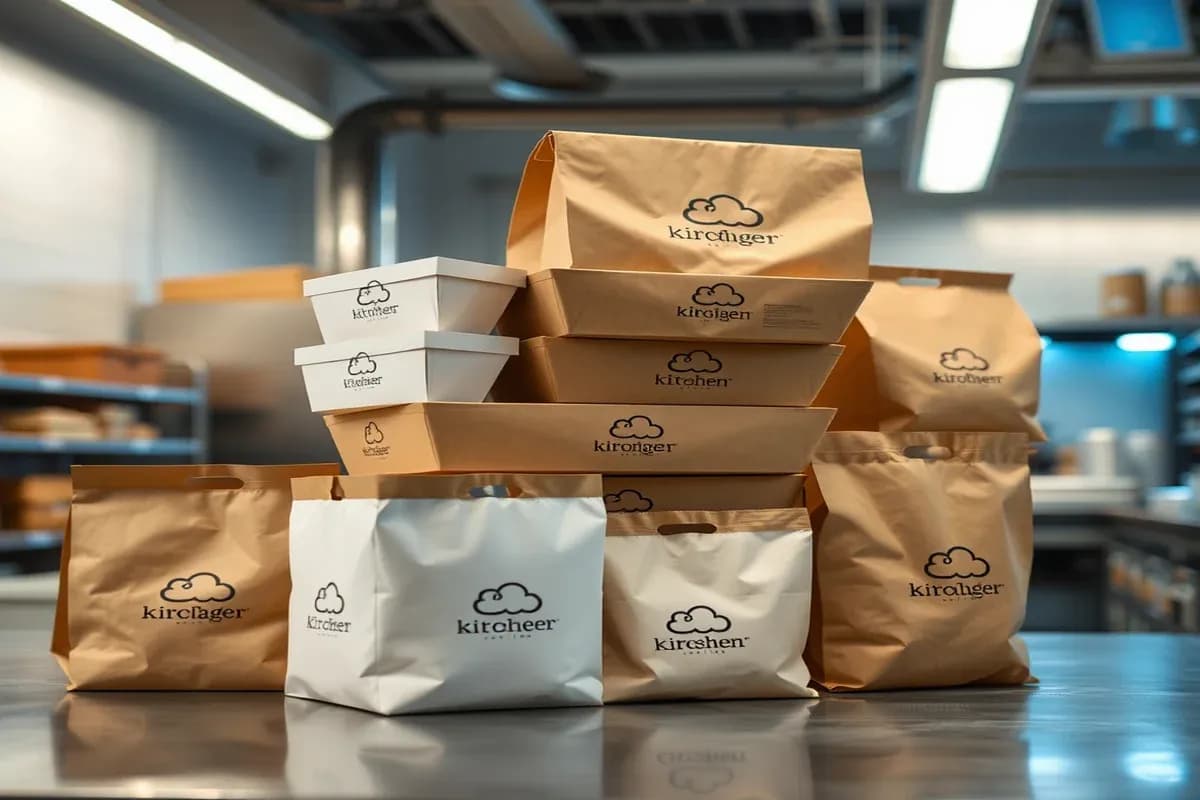
Cloud kitchens have unique requirements: they operate multiple brands, need quantity flexibility, and rely entirely on delivery. For a comprehensive guide, see the Cloud Kitchen Packaging Guide.
Cloud Kitchen Packaging Strategy:
Use ready-made kraft boxes with custom stickers for each brand. This saves custom tooling costs and provides flexibility to change designs quickly. Small sticker quantities (500-1,000) are more economical than direct box printing.
For stable brands, transition to direct digital printing (low MOQ) then offset when exceeding 2,000 boxes monthly.
Delivery Platform Requirements: Platforms like Jahez and Hungerstation require packaging that withstands delivery times of up to 45 minutes without damage. We recommend adding lamination to delivery boxes to protect printing from condensation, and using tamper-evident seals to ensure customer confidence that the order has not been opened.
Breakeven Point: Sticker printing on ready-made boxes = 0.30-0.50 SAR per box. Direct digital printing = 1.20-1.80 SAR per box. The breakeven occurs at 2,000-3,000 boxes per month per brand — beyond that, direct printing becomes cheaper.
1. Send your specifications: Food type, required size, monthly quantity, and preferred material
2. Free design approval: Our design team sends you a digital mockup of the box before production
3. Quote and approval: You receive a detailed quote including material, printing, finishing, and production timeline
4. Production and delivery: Production takes 5-10 working days depending on quantity and finishing, with delivery to all cities across the Kingdom
The best material depends on food type. For burgers and fries: grease-resistant kraft. For pizza: E-flute corrugated board. For premium brands: white SBS. For delivery: B-flute corrugated board. The general rule: choose the material that protects the food and fits your budget.
Per-box cost ranges from 0.40 to 5.00 SAR depending on type, material, and quantity. Large quantities (5,000+) reduce price by 40-60%. Digital printing for small quantities (100-500) starts from 1.50 SAR per box.
Four main technologies: Offset (for large quantities and high quality), Flexo (for medium quantities and speed), Digital (for small quantities and flexibility), and Screen (for special finishes). Offset and digital are the most commonly used in the Saudi market.
Choose based on: food type (oily/dry/hot), sales channel (dine-in/delivery), daily volume, budget, and brand identity. Start with kraft for basic needs and upgrade to SBS when you want to distinguish your brand.
GSO 839:2021 mandates that all food boxes be food-grade, not transfer harmful substances, protect food from contamination, not alter taste or odor, and withstand transport and handling. SFDA evaluates packaging as part of product safety.
Kraft is thick paper from unbleached fibers (250-350gsm) — suitable for small boxes. Corrugated board consists of three layers with a fluted middle layer — stronger and thicker, suitable for delivery boxes and large boxes.
MOQ ranges from 500 to 1,000 boxes for direct printing. Digital printing can start from 50-100 boxes. To reduce cost for small quantities, use printed stickers on ready-made boxes.
Production takes 5-10 working days depending on quantity and finishing. Digital is faster (3-5 days), offset takes longer (7-10 days). Delivery to all Saudi cities takes 1-3 additional days.
Yes, you can print your logo, colors, and full design on all types of food boxes. Offset and digital provide the best logo quality. For small quantities, printed stickers with your logo on ready-made boxes are an excellent economical option.
Main types: burger boxes, pizza boxes, fries boxes, shawarma and sandwich boxes, family meal boxes, kids meal boxes, salad boxes, pastry boxes, delivery boxes, and noodle boxes. Each type has different material and design requirements based on the food type and serving method.
Yes, boxes are available in recycled kraft, PLA-coated board (biodegradable alternative to plastic), and FSC-certified paper. These options cost 15-25% more but enhance brand image and meet the expectations of environmentally conscious customers.
The most common mistakes: ordering large quantities before testing a physical sample, ignoring grease resistance for oily food, choosing offset printing for small quantities (costs 3x more), not measuring the actual food size, and neglecting finishing for moisture-exposed boxes. Always order a single sample before committing to full quantity.
Yes, but you should choose corrugated board (B-flute) boxes with lamination to protect printing from condensation, and tamper-evident seals for customer confidence. Delivery times can reach 45 minutes, so packaging must withstand heat and moisture without damage.
Ordering custom printed boxes is an investment in your brand. Avoid these common mistakes:
1. Ordering large quantities before testing samples: Start with 100-500 boxes as an initial test. Verify size, print quality, and material performance with your food before committing to 5,000+ boxes.
2. Ignoring grease resistance: A standard box with oily food = oil seeping through and a box that looks dirty. Always use grease-resistant material for burgers, fries, and shawarma.
3. Choosing offset for small quantities: Offset plate setup cost is fixed regardless of quantity. 500 boxes in offset may cost 3x more than digital. Use digital for quantities under 2,000.
4. Not measuring actual food size: Box size should match food size after packaging, not before. Measure food when ready for serving, then add 1-2 cm for clearance.
5. Neglecting finishing for moisture-exposed boxes: Delivery boxes without lamination lose their printing quickly due to condensation. Invest in lamination for all delivery boxes.
6. Not verifying GSO compliance: Ensure your suppliers provide food-grade certificates. Non-compliant boxes may be confiscated and expose your restaurant to legal liability.
7. Ordering boxes without considering temperature: Very hot food can warp thin boxes. Use corrugated board for hot food and kraft with ventilation holes for crispy food.
At G-Pack, we offer restaurant packaging box printing services for all types and materials. From burger and pizza boxes to delivery boxes and family meal boxes — everything you need in one place.
Why G-Pack?
• Over 10 years of experience in restaurant packaging printing and manufacturing in Saudi Arabia
• Full compliance with GSO 839:2021 and SFDA requirements
• Free design and digital mockup before production
• Offset and digital production based on your needs
• Delivery to all cities across the Kingdom
• Food-grade inks safe for direct food contact
Special Offer: Get a free design + physical sample on your first order from G-Pack.
Order Now:
• WhatsApp: Contact us directly on G-Pack's number
• Phone: Call us for a free consultation
• Send your specifications and receive a quote within 24 business hours
• Browse our products: printed burger boxes, pizza boxes, fries boxes, shawarma boxes, family meal boxes, kids meal boxes, delivery boxes
• Learn about our carton packaging printing and manufacturing service for restaurants
G-Pack — your partner in packaging that reflects your restaurant's quality.