Saudi Arabia's food and beverage market is experiencing unprecedented growth, driven by a booming restaurant sector, explosive delivery demand, and Vision 2030's emphasis on food quality and safety. A...
Saudi Arabia's food and beverage market is experiencing unprecedented growth, driven by a booming restaurant sector, explosive delivery demand, and Vision 2030's emphasis on food quality and safety. At the center of this growth is an often-overlooked element: the food packaging sticker.
A sticker is no longer just a paper label slapped on a box. It is a critical touchpoint for brand identity, a regulatory requirement for SFDA compliance, and a marketing tool that reaches your customer's hands with every order. Whether it's a coffee cup sticker in a Jeddah café, a delivery bag seal in Riyadh, or a nutrition label on a factory-produced food item — the quality of your sticker directly impacts how customers perceive your product.
This guide is written by the G-Pack team — Saudi Arabia's leading manufacturer of food packaging solutions — to cover everything you need to know about food packaging sticker printing: materials (BOPP, vinyl, paper, kraft, foil, clear), printing technologies (digital, offset, flexographic, UV, hybrid), SFDA and GSO regulatory compliance, technical specifications, pricing, and practical tips for every sector from restaurants to home businesses.
• Best material for wet/oily foods: BOPP or Vinyl with lamination
• Best material for dry products: Glossy or matte paper
• Best material for specialty coffee: Eco-friendly Kraft
• Regulatory compliance: GSO 9:2022 mandatory — Arabic language + 13 allergens
• Technical specs: 300 DPI + CMYK + 3-5 mm safety margins
• Small quantities: Digital printing from 50 pieces
• Large volumes: Flexo for automated production rolls (50,000+)
• Delivery time: 7-14 business days to all Kingdom regions
Food packaging stickers are adhesive labels specifically printed to be applied to food and beverage containers. They typically carry brand logos, product information, ingredients, expiry dates, barcodes, and other mandatory data required by regulatory standards.
The distinction between a sticker, a label, and a stamp lies in application method: a sticker adheres directly to the packaging, a label may be tied or inserted, and a stamp is imprinted directly onto the surface. In this guide, we focus on adhesive stickers because they are the most common and effective solution in the Saudi market.

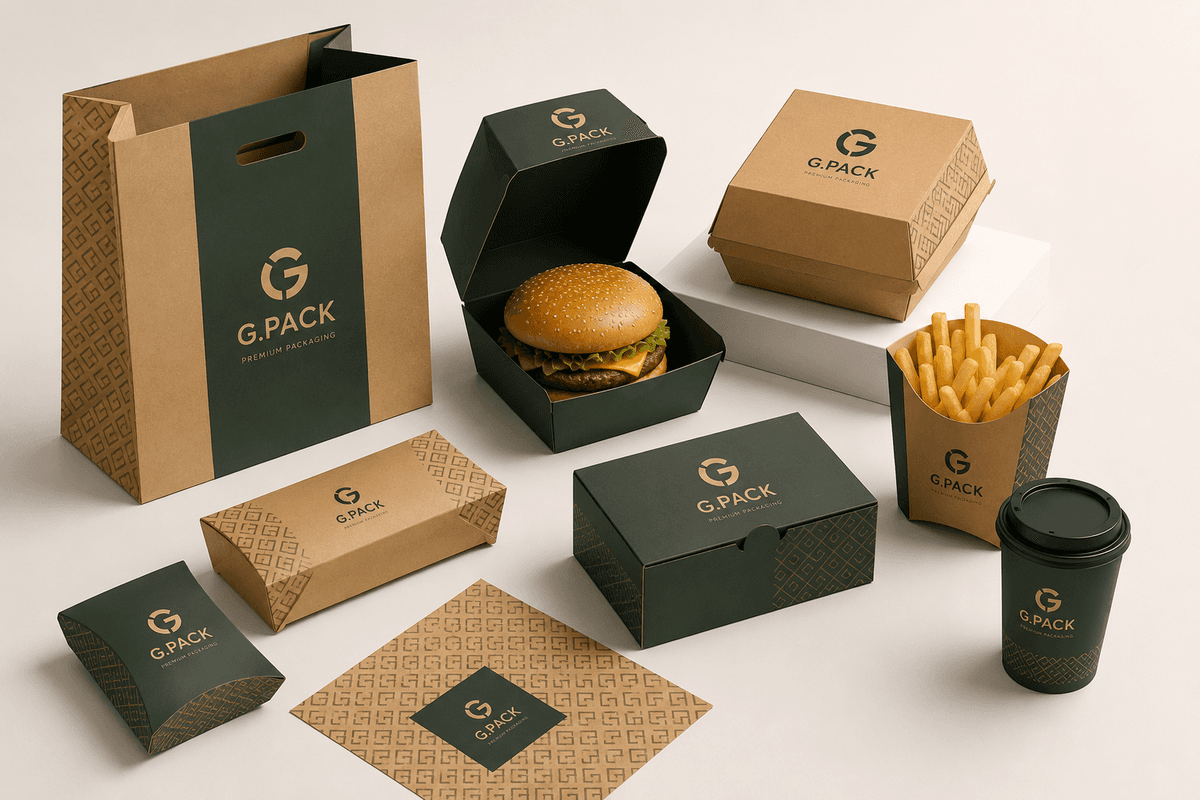
A food box is not just a container — it is the first thing your customer sees when their order arrives, and the ambassador that carries your restaurant identity into their home. In Saudi Arabia's boom...

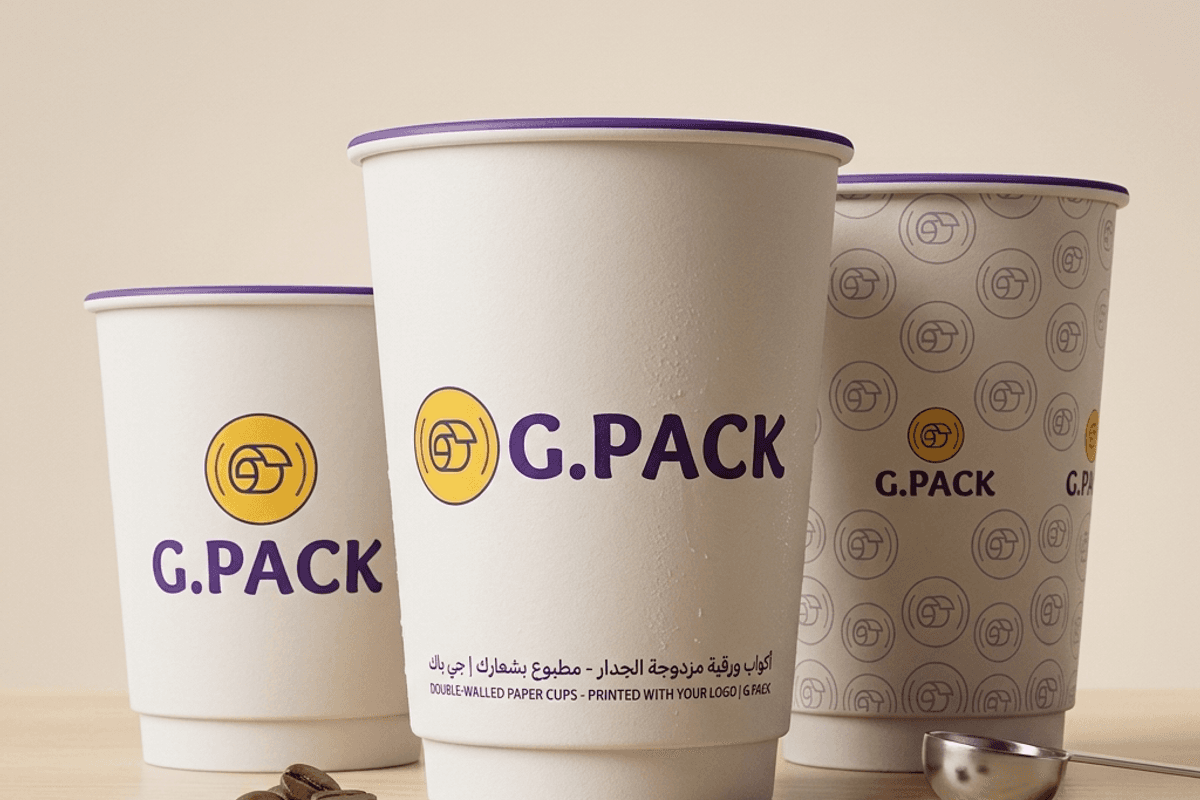
A comprehensive professional guide to printing single wall and double wall paper cups in Saudi Arabia — differences, materials, printing techniques, sizes, pricing, and how to choose the perfect cup for your brand.
The role of stickers in food packaging goes beyond aesthetics. They serve three critical functions:
1. Brand Identity: Your logo and colors on every box and cup create a consistent brand experience that reaches the customer's hands.
2. Regulatory Compliance: Mandatory information — ingredients, expiry, allergens — must be clearly printed and readable to meet SFDA and GSO standards.
3. Product Protection: Delivery bag seal stickers prevent tampering and ensure the order arrives intact, building trust with every delivery.
The Saudi food packaging market is valued in billions of Riyals and growing at over 6% annually, driven by the expanding restaurant sector, delivery services that have doubled since 2020, and Vision 2030's increasing focus on food product quality and safety standards.
Choosing the right material is the first and most important decision in food packaging sticker printing. The wrong material means peeling stickers, fading ink, or a label that loses its vital information. Here are the six primary materials available in the Saudi market:
BOPP is a thin plastic film manufactured by stretching polypropylene film in two directions (machine direction and transverse) to increase its strength, clarity, and dimensional stability. The result is a material that combines durability, flexibility, and optical clarity.
BOPP's properties make it the ideal choice for food applications: water-resistant, oil and grease resistant, chemical resistant, UV stable, and unaffected by acids. It is FDA-approved for indirect food contact, making it safe for use on food packaging.
BOPP is available in four main types: white (most common, ideal for rich color printing), clear (for the "no-label look" on transparent containers), metallic silver (for a premium appearance), and squeezable (for flexible containers like sauce and juice bottles).
Best for: Carbonated beverages and juices, sauces and ketchup, refrigerated and frozen products, pickles, edible oils, moist sweets boxes. At G-Pack, we recommend BOPP with additional lamination for products exposed to oils or continuous refrigeration.
Vinyl — or Polyvinyl Chloride — is the go-to choice for any product exposed to moisture, heat, or outdoor conditions. High flexibility, withstands liquids and oils without ink fading or label tearing, and a lifespan of 3–8 years depending on grade.
Best for: Refrigerated products, beverages, delivery bags, outdoor use, restaurant vehicle and facade stickers. At G-Pack, we recommend adding lamination over the print for food projects — additional protection from oils and friction during transport and storage extends the label's life and preserves its appearance.
The most affordable and widely available option, with weights ranging from 80 to 100 GSM. Available in two finishes: matte (gives a calm, sophisticated look) and glossy (makes colors more vibrant and eye-catching on the shelf).
Best for: Dry food products, baked goods, food gift boxes, nuts and dates, biscuits and ground coffee. Important warning: do not use paper labels for refrigerated or water-exposed food products — they will peel and deteriorate within days. The paper material is a functional decision, not just an aesthetic one.
A natural brown material with a warm, authentic character, made from unbleached wood fibers. The word "Kraft" in German means "strong" — and that's exactly what this material offers: natural strength with an organic look that tells your customer "this is a natural, eco-conscious product" before they read a single word.
Best for: Specialty coffee, organic products, natural honey, natural foods, premium dates, artisanal food brands. Kraft is 100% biodegradable and recyclable, making it the ideal choice for sustainable brands. FSC (Forest Stewardship Council) certification is available for Kraft paper to ensure sustainably sourced fibers. Note: Kraft is not water-resistant, and you may face adhesion challenges on flexible containers — we recommend testing adhesion before full production.
A metallic shiny surface that instantly elevates the perceived value of the product. The difference between an ordinary product and a premium one is sometimes just this label alone. Foil is applied using either Hot Foil Stamping (thermal pressing) or Cold Foil technology.
Best for: Premium sweets boxes, luxury chocolate, seasonal dates, food gift boxes, Ramadan products, premium nuts. At G-Pack, we offer gold and silver foil with customization options for other metallic colors.
They provide a "no-label look" that makes the product appear as if the design is printed directly on the container. Ideal for glass and clear plastic.
Critical technical note: on clear stickers, colors don't print "as you see them" — they are affected by the background color. Light colors disappear on dark containers, and logos become unreadable. The professional solution is adding a White Ink Layer beneath the design to ensure color consistency and clarity on any background. This is a detail that only a specialized printer handles, but it makes a significant difference in the final result.
Best for: Juice bottles, water bottles, clear bakery containers, glass beverages, oil bottles.
| Criteria | BOPP | Vinyl | Paper | Kraft | Foil | Clear |
|---|---|---|---|---|---|---|
| Water Resistance | Excellent | Excellent | Poor | Poor | Moderate | Excellent |
| Oil Resistance | Excellent | Excellent | Poor | Poor | Moderate | Excellent |
| FDA Approved | Yes | Yes | Yes | Yes | Yes | Yes |
| Relative Cost | Medium | Medium | Low | Low | High | Medium |
| Sustainability | Medium | Low | High | Very High | Low | Medium |
| Best For | Beverages/Sauces | Delivery/Cold | Dry | Organic/Coffee | Premium | Bottles |
Choosing the right printing technology directly impacts color quality, unit cost, and delivery speed. Not all technologies are equal, and each has its proper place.
Digital printing transfers the file directly from computer to press without printing plates. It uses Inkjet or Electrophotographic (Toner) technology to deposit ink onto the material.
Advantages: Fast setup (5–15 minutes), ideal for small quantities (under 10,000 stickers), offers unique Variable Data flexibility — each sticker can carry different data (unique barcode, batch number, different QR code). Higher unit cost at large volumes but most economical for small runs. Lower waste (3–6%) and reduced energy consumption.
Best for: Home businesses, small restaurants, trial orders, stickers with variable data.
Offset uses aluminum plates to transfer the image to a rubber blanket and then to the material. It delivers exceptional print quality at 150–200 lines per inch (LPI) and Pantone color matching accuracy up to 98%.
Advantages: Extremely high color accuracy, suitable for complex designs and fine details, higher setup cost but lower unit cost at large volumes (5,000+). Food-safe FDA-approved inks available.
Best for: Mid-to-large restaurant chains, regular orders at consistent volumes.
Flexo uses flexible rubber plates and Anilox rollers to transfer ink directly to the material at high speeds (150–300 meters/minute). It is the backbone of high-volume sticker roll printing.
Advantages: Very high production speed, very low unit cost at large volumes (50,000+ stickers), ideal for sticker rolls designed for automated application on food production lines. Moderate waste (8–12%) during setup.
Best for: Food factories, large-scale production, sticker rolls for automated application, mass-produced packaged foods.
UV printing uses inks that are cured instantly by ultraviolet light, delivering vivid colors and high resistance to scratching and fading. Ideal for special effects like Spot UV that adds selective shine to design elements.
Best for: Premium stickers, special finishes, stickers exposed to harsh conditions.
Hybrid printing combines two or more technologies in a single production line — typically digital + flexo, or digital + UV. The goal is to leverage the strengths of each technology: digital's quality and precision for variable elements (barcode, QR code, batch number), and flexo's speed and efficiency for fixed printing (logo, colors, base design).
Advantages: Reduces overall cost for mid-volume production (5,000–50,000 stickers), enables Variable Data at scale, and minimizes waste. Ideal for food factories that need fixed printing + variable data on the same sticker.
Best for: Mid-size food factories, products with unique barcodes per batch, mixed stickers (fixed design + variable data).
| Criteria | Digital | Offset | Flexo | UV | Hybrid |
|---|---|---|---|---|---|
| Minimum Quantity | 50 | 1,000 | 5,000 | 500 | 2,000 |
| Production Speed | Medium | Medium | Very High | Medium | High |
| Color Quality | Excellent | Excellent | Very Good | Excellent | Excellent |
| Setup Cost | Low | High | High | Medium | Medium |
| Unit Cost (Large Qty) | High | Low | Very Low | Medium | Low |
| Variable Data | Yes | No | No | Yes | Yes |
| Best For | Small projects | Restaurant chains | Food factories | Premium stickers | Mid-size factories |
In Saudi Arabia, compliance with Saudi Food and Drug Authority (SFDA) and GCC Standardization Organization (GSO) standards is non-negotiable. A non-compliant label means product distribution stops, fines, and direct revenue loss.
This standard is the primary reference for labeling prepackaged foods across all GCC countries. It requires all prepackaged foods to carry the following information on the label:
• Product name
• List of ingredients (including additives)
• Nutritional information
• Net content
• Name and address of manufacturer and importer
• Country of origin
• Expiry date and storage/use instructions
• Batch number
• Applicable mandatory items: irradiation, organic, halal, allergens
Arabic language is mandatory on all food labels. When additional languages are used, all information must match the Arabic text exactly. Products not intended for direct consumer sale are exempt from the Arabic labeling requirement.
This 2015 standard defines general requirements for label application including "stickering." Key points:
• Additional stickers are permitted but must not cover or obscure information on the original label
• A single sticker from the manufacturer carrying all mandatory information must be provided
• Additional stickers are used for translation or adding local information (such as local distributor)
This standard defines the requirements for the Nutrition Facts Panel that must appear on prepackaged food labels. It includes: calories, fat (saturated and unsaturated), carbohydrates, sugars, protein, salt (sodium), and vitamins when present. The information must be presented in a clear tabular format in Arabic, with metric system units.
This standard defines the format for production and expiry dates on food labels. The mandatory format is: [day/month/year] in numerals, with the phrases "Production Date" and "Expiry Date" or their approved codes. Storage instructions (temperature, conditions) must be clearly stated. Stickers must maintain the clarity of these dates throughout the product's shelf life — we recommend materials resistant to fading and abrasion.
GSO 9:2022 mandates allergen warnings if the product contains or may contain traces of the following:
1. Cereals containing gluten
2. Crustaceans and products thereof
3. Eggs and products thereof
4. Fish and products thereof
5. Peanuts, soybeans, and products thereof
6. Tree nuts and products thereof
7. Milk and products thereof
8. Sulphur dioxide and sulphites (at concentrations more than 10 ppm)
9. Celery and products thereof
10. Mustard and products thereof
11. Sesame seeds and products thereof
12. Molluscs and products thereof
13. Lupin and products thereof
If the food product or any of its ingredients is derived from animals, the type of animal must be specified on the label. Animal products require a halal certificate issued by an accredited body. Any claim, symbol, or logo related to halal, organic status, or product quality is not permitted without supporting valid documents or certificates. The reference standard is SFDA.FD/GSO 2055-1:2015.
Important note: Writing phrases, logos, or symbols related to quality management system certifications such as ISO 9001 on food labels is prohibited.
An unreadable barcode means distribution problems and direct loss. The Zakat, Tax and Customs Authority (ZATCA) requires barcode compliance for tax tracking purposes. At G-Pack, we ensure precise barcode and QR code printing at no less than 300 DPI with accurate scanning standards.
With the rise of delivery orders in Saudi Arabia, stickers have become an essential part of restaurant identity. Sealing delivery bags with a branded sticker adds instant professionalism and prevents tampering during transit. Box stickers transform an ordinary burger box into a complete brand experience.
Best materials: Removable stickers for sealing, or glossy paper for internal packaging. For oily boxes, we recommend Vinyl or BOPP with lamination. Connect restaurant stickers with G-Pack products like printed kids meal boxes, printed fries snack boxes, and printed paper plates.
Cafes are the primary users of printed cups, and stickers add an additional identity layer. Coffee cup stickers are typically cut in circles with diameters of 5–9 cm, printed on Vinyl or BOPP to resist heat from hot beverages and condensation.
In specialty cafes, Kraft stickers are gaining popularity for their natural aesthetic that aligns with specialty coffee branding. Connect cafe stickers with G-Pack products like double-wall paper cups and single-wall paper cups. For a deeper guide on cup printing, see our paper cup printing guide.
Bakeries need oil and grease resistant stickers (butter, oils) and labels for ingredients and expiry dates. Cake and sweets boxes are enhanced with printed cake and sweets boxes from G-Pack, with stickers added as ingredient labels or customer thank-you stickers.
Food factories need very large quantities (10,000–100,000+) of product stickers, barcodes, nutritional information, and batch numbers. These are typically printed using Flexographic technology on rolls for automated application on production lines. SFDA/GSO compliance is critical. Large paper bowls and small paper bowls from G-Pack are ideal for factories packaging products in paper containers.
Home businesses and small operations need small quantities (50–500 stickers) at affordable prices with a professional appearance. Digital printing is the ideal solution — no high minimum order, customization flexibility, and fast delivery. At G-Pack, we offer customized solutions for startups with small quantities and free design support.
Every order leaving your warehouse is a marketing opportunity. Sealing the box with a branded sticker turns ordinary shipping into a complete brand experience. A small thank-you sticker inside the order with a discount code or personal message — costs nothing and its impact on customer loyalty is significant. Best materials: Vinyl or BOPP with moisture resistance, since shipping passes through varying conditions.
Cloud kitchens rely entirely on delivery, making stickers the only tangible brand identity channel. Every order leaving a cloud kitchen carries a bag seal sticker, box sticker, sauce sticker, and sometimes an ingredient list sticker. Core requirements: oil and heat resistant stickers (food comes out hot), strong adhesive that won't detach during transit, and fast production since demand can double overnight. We recommend Vinyl or BOPP with lamination + Die Cut for boxes + Kiss Cut for bag sealing.
Looking for professional food packaging stickers?
Contact the G-Pack team now for a free consultation and custom quote. Our experts help you choose the ideal material and technology for your product. Contact us on WhatsApp or request a quote.
Contact us for a free consultation + comprehensive quote + fast delivery to all regions.
Request a Free Quote• Kiss Cut: The sticker is cut only and remains on a backing sheet — easy to peel, ideal for sheets and promotional stickers
• Die Cut: The sticker is cut completely with the backing in the custom shape — a premium, bespoke appearance
A transparent protective layer added over the print: gloss enhances colors, matte gives a sophisticated feel. Lamination is essential for food stickers exposed to oils, moisture, and friction — it extends the label's life and preserves its appearance.
Selective UV coating on specific design elements to add shine that creates distinctive visual contrast. Ideal for premium food brands.
Metallic stamping (gold, silver, or other colors) applied with heat and pressure. Instantly elevates perceived product value and is widely used in Ramadan and seasonal packaging.
Three-dimensional raised relief added to specific design elements (logo, brand name) using a metal die and heat pressure. Gives the sticker a unique tactile dimension — the customer feels the relief with their fingers. Ideal for premium food brands and gift boxes.
Digital cutting uses a computerized moving blade (Plotter) to cut any shape without a metal die — ideal for small quantities and complex shapes. Laser cutting uses a laser beam for extremely precise cutting with clean edges — ideal for intricate designs and delicate materials. Both eliminate die setup costs.
Contact us for a free consultation + comprehensive quote + fast delivery to all regions.
Request a Free QuoteContact us for a free consultation + comprehensive quote + fast delivery to all regions.
Request a Free QuoteThe best choice is Vinyl or BOPP with lamination to withstand moisture, oils, and refrigeration. For dry products, paper is sufficient. For specialty coffee, Kraft provides a distinctive natural look.
Yes, BOPP is FDA-approved for indirect food contact and resistant to water, oils, and acids. It is the preferred choice for beverage, sauce, and refrigerated product labels.
Kiss Cut: the sticker is cut only and remains on a backing sheet — easy to peel. Die Cut: the sticker is cut completely with the backing in the custom shape.
Vinyl and BOPP materials are resistant to water, oils, and moisture. With added lamination, they also resist scratching and abrasion. Paper and Kraft materials are not water-resistant.
GSO 9:2022 mandates: product name, ingredients, nutritional information, net content, manufacturer and importer, country of origin, expiry date, batch number, and allergens. Arabic language is mandatory.
Yes, digital printing enables very small quantities (from 50 pieces) for startups, with customization flexibility and fast delivery.
A white ink layer printed beneath the design on clear stickers to ensure color clarity on any background. Essential when printing on dark or transparent containers.
Production takes 7–14 business days depending on quantity, material, and technology. Delivery to all regions of the Kingdom takes 1–3 days after production.
Yes, we provide sample prints to verify quality before final production. We recommend this especially for new projects or when changing materials.
Digital: ideal for small quantities, fast setup, variable data. Flexo: ideal for large volumes (50,000+), high speed, very low unit cost.
• Material is a functional decision: BOPP/Vinyl for wet and oily foods, paper for dry, kraft for organic
• SFDA/GSO 9:2022 is mandatory: Arabic language required + 13 allergens + GSO 2487 for stickering
• 300 DPI + CMYK + Bleed: Technical specifications are non-negotiable for professional printing
• White Ink Layer: Essential for clear stickers on dark containers
• Plan quantities smartly: 5,000 stickers once is 40% cheaper than 1,000×5 times
Order food packaging stickers from G-Pack — contact us for a free consultation + comprehensive quote + fast delivery to all regions of the Kingdom. Our experts help you choose the ideal material and technology to save 20–40%.
• WhatsApp: +966566012959
• Email: info@gpacksa.com
• Website: gpacksa.com
• Service area: All regions of Saudi Arabia
Why G-Pack?
• Over 500 Saudi clients trust us for their food packaging printing
• Expertise in SFDA/GSO compliance — free consultations
• Digital + offset + flexo printing under one roof
• Free design and mockup before production
• Fast delivery to all Kingdom regions within 7-14 business days