Complete guide to restaurant packaging costs in Saudi Arabia 2026 — how to measure your true per-order cost, 2026 price benchmarks by volume, the five costliest procurement mistakes, and systematic strategies to cut costs by 20-40% without sacrificing quality.
Packaging costs are one of the most consistently surprising expense categories for new restaurant owners in Saudi Arabia. Most new operators budget carefully for rent, staff, food ingredients, and equipment — then discover in month two that packaging consumes 4-8% of their revenue without any plan in place. Experienced operators, by contrast, know that packaging costs can be reduced by 20-40% through systematic procurement decisions — without sacrificing quality or brand presentation. The difference between a restaurant that pays SAR 0.28 per burger box and one that pays SAR 0.52 per box for identical quality is almost always information and planning, not scale. This guide provides the complete framework for understanding, measuring, and systematically reducing packaging costs for Saudi restaurants of any size — from a new single-location cafe to a multi-branch chain operation.
Who This Guide Is For
This guide is for every restaurant owner who wants to understand and control their packaging costs — whether you are opening your first location and building your initial cost structure, a purchasing manager looking to save 20-40% on current spending, or an operations director building procurement standards across multiple branches. The principles are universal; the numbers apply specifically to the Saudi market in 2026.
Factors That Drive Packaging Costs in the Saudi Market. Understanding what drives packaging pricing gives you the power to influence each variable. Material type: the difference between standard kraft paper and premium coated cardboard can be 40-60% in unit cost for the same structural item. Material selection is the single largest driver of packaging unit cost — and is frequently over-specified. Quantity per order: the volume curve in Saudi packaging is steep — ordering 5,000 units instead of 1,000 typically reduces per-unit cost by 30-45%. Most small restaurants order in quantities that are 3-5× too small to access competitive pricing. Custom printing: adding a logo print to plain packaging adds SAR 0.03-0.20 per unit depending on method and quantity — but can only be cost-efficiently done at scale. Printing 500 bags versus 3,000 bags of the same design can differ by 40-60% in per-unit printing cost. Delivery and logistics: packaging delivery to Saudi cities from Riyadh or Jeddah central warehouses adds SAR 0.02-0.06 per unit — a cost frequently forgotten in budget planning.

Complete 2026 price guide for custom burger box printing in Saudi Arabia — real market benchmarks by size and quantity, cost breakdown, digital vs flexo comparison, and how to get accurate comparable quotes.

Complete 2026 price guide for custom paper cup printing in Saudi Arabia — real market benchmarks by size and quantity, digital vs flexo cost comparison, what drives prices above average, and how to get the best total landed price.
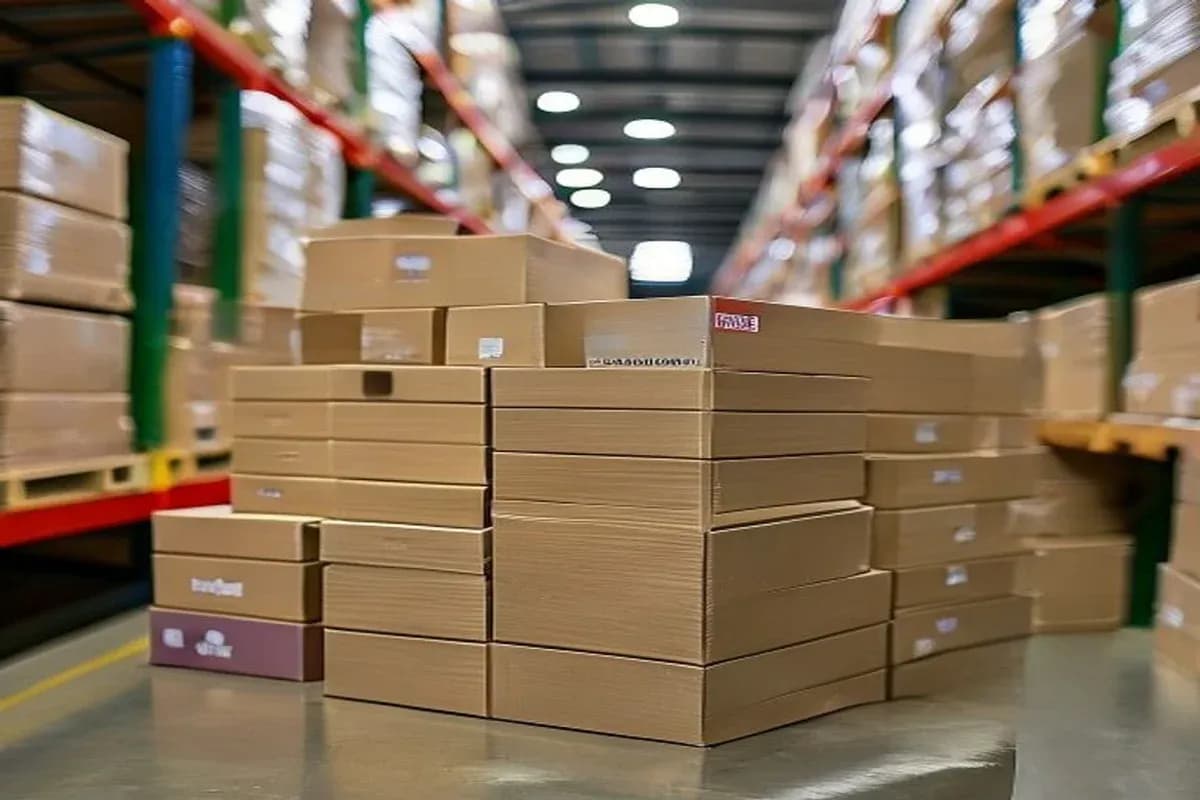
The First Step: Know Exactly What You Spend Today. The majority of Saudi restaurant owners cannot answer the question "how much do you spend monthly on packaging?" with precision. They have rough estimates, but not itemized per-unit costs by SKU. This imprecision is expensive — because you cannot reduce a cost you have not measured. Calculate your current monthly packaging cost in three steps: Step 1 — List every packaging item you currently use (cups, boxes, bags, sauce cups, napkins, wrapping paper, accessories). Step 2 — For each item, record the last purchase price per unit and quantity purchased. Step 3 — Estimate your weekly consumption per item by counting your actual usage for one week. Multiply by 4 to get monthly consumption. Multiply monthly consumption by unit cost to get monthly spending per item. Sum all items for your total monthly packaging cost. Divide by your monthly order count to get your per-order packaging cost. This number — per-order packaging cost as a percentage of average order value — is your baseline. Industry benchmark: 3-6% of order value for dine-in restaurants, 5-8% for delivery-focused operations.
| Item | Low Volume (500-1,000) | Medium Volume (3,000-5,000) | High Volume (10,000+) |
|---|---|---|---|
| Paper cup 8oz double wall — plain | 0.55–0.75 | 0.40–0.55 | 0.30–0.42 |
| Paper cup 8oz double wall — custom printed | 0.75–1.00 | 0.50–0.70 | 0.38–0.52 |
| Burger box medium — plain | 0.32–0.48 | 0.22–0.32 | 0.17–0.25 |
| Burger box medium — custom printed | 0.48–0.72 | 0.32–0.48 | 0.24–0.35 |
| Kraft bag medium — plain | 0.60–0.90 | 0.42–0.62 | 0.32–0.48 |
| Kraft bag medium — custom printed | 1.25–1.80 | 0.90–1.30 | 0.70–1.00 |
| Sauce cup 2oz — plain | 0.08–0.14 | 0.06–0.10 | 0.04–0.07 |
| Paper napkin — standard | 0.03–0.06 | 0.02–0.04 | 0.01–0.03 |
Create a spreadsheet with every packaging item you use. Columns: item name, specifications (size/type), current supplier, last purchase price, units per order, estimated weekly consumption. This is your packaging inventory baseline — the starting point for all cost optimization.
Count every item that goes into an average order: primary container, bag, sauce cup, napkin, any wrapping or accessories. Add up the unit costs. Compare this total to your average order value — this is your packaging cost ratio. Most restaurants discover this ratio is 20-40% higher than they estimated.
Sort your packaging inventory by total monthly spend (unit cost × monthly volume). The top 3-4 items typically account for 70-80% of your total packaging spend. Focus optimization efforts here first — a 20% cost reduction on your top item saves more than a 50% reduction on your lowest-cost item.
For each of your top 3 high-spend items, approach 3 different Saudi packaging suppliers with your exact specification. Specify: item dimensions, material gsm, coating type, print requirements, and quantity at your actual monthly volume. Compare the total landed price including all fees and delivery.
If you currently order from 3-5 different suppliers in small quantities from each, evaluate consolidating into 1-2 suppliers at higher combined volumes. The per-unit price reduction from consolidation frequently exceeds 15-25% — more than any individual item negotiation typically achieves.
Packaging ordered 6-8 weeks ahead of consumption consistently costs less than packaging ordered on a short-lead emergency basis. Rush fees, expedited shipping, and premium small-quantity pricing are all eliminated with advance planning. Calculate your reorder point: when you reach 3 weeks of remaining stock, place the next order.
Choosing the Right Packaging Type for Each Menu Item. One of the most impactful packaging cost decisions is matching the packaging specification to the actual requirement — not over-specifying out of caution or under-specifying out of short-term cost pressure. A common over-specification: using 350gsm coated kraft boxes for a product that performs identically in 250gsm uncoated kraft. A common under-specification: using single-wall cups for hot beverages without sleeves because they are cheaper — until the customer complaints and reputation damage are accounted for. The right framework: for each packaging item, define the minimum specification that delivers an acceptable customer experience with no failures. Then order that specification at sufficient volume to access competitive pricing. Never order a specification above this minimum — and never order one below it.
Seasonal and Peak Period Packaging Planning. Packaging costs and demand behave very differently during Saudi Arabia's peak commercial periods — and failure to plan for these periods is a direct cost increase for unprepared operators. Ramadan: the highest-demand delivery period in Saudi Arabia. Delivery orders during Ramadan increase 40-80% above normal volume for most Saudi restaurants. Packaging demand increases proportionally. Operators who order their Ramadan supply 6-8 weeks in advance pay standard rates. Operators who order with 2-week lead times pay 15-25% more for the same items — when supply is available at all. National Day (September 23): a 1-3 week peak period with accelerated takeaway demand. Pre-ordering seasonal branded packaging (special edition boxes and bags with National Day design elements) requires 8-10 week advance planning to allow for custom production. Pre-Hajj and Umrah periods: relevant specifically to restaurants in Makkah, Madinah, and Jeddah, where demand spikes are tied to the volume and timing of pilgrim arrivals.
| Order Quantity | Per-Unit Cost | Monthly Cost (60 orders/day) | Annual Cost |
|---|---|---|---|
| 500 units | SAR 0.68 | SAR 1,224 (1,800 boxes) | SAR 14,688 |
| 2,000 units | SAR 0.48 | SAR 864 | SAR 10,368 |
| 5,000 units | SAR 0.36 | SAR 648 | SAR 7,776 |
| 10,000 units | SAR 0.28 | SAR 504 | SAR 6,048 |
| Savings — 500 vs 5,000 | SAR 0.32/box | SAR 576/month | SAR 6,912/year |
Managing Your Supplier Relationship for Long-Term Cost Advantage. The most consistently cost-effective Saudi restaurants are not necessarily the largest — they are the ones with the strongest supplier relationships. A supplier who views you as a reliable, predictable, volume customer consistently offers better pricing, priority production scheduling, and preferential treatment during supply constraints than a supplier who sees you as an occasional, price-shopping order. Building a productive supplier relationship requires: consistent communication about your expected volume and schedule, prompt payment (suppliers favor customers with clean payment history), early contact when your requirements change (design updates, volume changes, new SKUs), and providing specific, detailed feedback when quality issues occur rather than simply switching suppliers without explanation. The Saudi packaging market is relationship-driven — a restaurant that has been a consistent G-Pack customer for 12 months typically receives 8-15% better pricing on reorders than a new customer ordering the same quantities.
The 5 Most Expensive Packaging Procurement Mistakes
1. Ordering small quantities because it "feels safer" — pays 36%+ more per unit than a 5,000-unit order. 2. Using 4 cup sizes when 2 would serve the menu — doubles minimum order quantities, storage space, and procurement complexity. 3. No advance Ramadan planning — pays 15-25% emergency premium on the highest-volume month of the year. 4. No backup supplier — a single-supplier stockout stops your operation. 5. Never auditing per-unit costs — overpaying by 20-30% for years because the original supplier relationship was never renegotiated.
Pull your last 3 months of packaging invoices. Calculate per-unit cost for each item. Calculate your monthly spend per item. Rank by total monthly cost. This audit typically reveals 2-3 items where you are significantly overpaying.
For each of your top 5 packaging items by monthly spend, calculate: monthly consumption × 6 = optimal order quantity for 6-week supply. Compare this quantity to your current order size. If you are ordering less than 50% of this optimal quantity, you are leaving significant savings on the table.
Without switching suppliers, approach 2 new suppliers with your exact specification for your top 3 cost items. This benchmarking exercise consistently reveals whether your current pricing is competitive — and gives you data to negotiate better terms with your existing supplier.
Once you have competitive benchmarks, approach your preferred supplier with a volume commitment offer: "I will guarantee X units per month for 6 months in exchange for pricing at the Y tier." Suppliers consistently respond positively to predictable volume commitments.
Set a calendar reminder for 8 weeks before Ramadan begins each year. This single planning step eliminates the most predictable and most avoidable packaging cost premium Saudi restaurants face annually.
Once per month, calculate your actual per-order packaging cost and compare it to your target. Track this metric alongside food cost percentage. A packaging cost increase that predates a food cost change is a signal to investigate pricing, specification, or ordering pattern changes.
Industry benchmark: 3-5% of revenue for dine-in restaurants with limited takeaway, 5-8% for delivery-focused operations and cloud kitchens. Custom printed packaging adds approximately 0.5-1.5 percentage points versus plain stock packaging. If your packaging cost exceeds 8% of revenue, systematic cost optimization (primarily volume ordering and specification review) can typically reduce it to 5-6% without quality compromise.
The single highest-impact action is consolidating your orders to larger quantities — from typical small-restaurant ordering of 500-1,000 units at a time to 3,000-5,000 units per order. This typically reduces per-unit cost by 30-45% with no other change. The second most impactful action is supplier consolidation: ordering all major items from one supplier at combined volume unlocks better pricing than fragmented multi-supplier ordering.
Ensure all quotes cover identical specifications: item dimensions, material gsm, coating type, color count, and quantity. Request that all fees are included (setup, plates, delivery). Then compare total landed cost per unit — not the headline per-unit price, which often excludes setup and delivery. A quote that looks 15% cheaper before adding plate fees and delivery may actually be more expensive in total.
For any restaurant planning to operate for more than 6 months: custom printed packaging is consistently more cost-effective than branded sticker labels applied to plain stock, and significantly stronger for brand building. The printing premium — SAR 0.05-0.20 per unit — is the most ROI-efficient marketing spend available to a restaurant. Start with custom bags and cups; these two items generate the most brand impressions and justify the investment most clearly.
Place your Ramadan packaging order 8-10 weeks before the first day of Ramadan. This allows 3-4 weeks for custom printing production (if you are ordering branded Ramadan edition packaging) and 2-3 weeks buffer for delivery and storage setup. Restaurants that order with 2-3 week lead times before Ramadan consistently pay 15-25% more for standard items — and sometimes cannot get custom printed items at all.
G-Pack analyzes your current packaging costs and identifies specific savings opportunities before you place any order. Free consultation and optimized quote within 24 hours for Saudi restaurants of any size.
Get a Free Quote