Complete packaging guide for restaurants and cafes in Al-Jawf 2026 — olive culture heritage branding, 10-week buffer stock management, Dumat Al-Jandal tourism season planning, gift packaging for olive and date products, and G-Pack delivery to Sakaka.
Al-Jawf Region — the land of olive trees, date palms, and ancient ruins in northern Saudi Arabia — is one of the Kingdom's most distinctive and historically rich regions. Bordering Jordan, Al-Jawf is defined by its extraordinary agricultural heritage: the region produces the majority of Saudi Arabia's olive oil, with olive groves that stretch across the landscape and a cultural relationship with this crop that goes back thousands of years. The date palm groves are equally prominent, giving Al-Jawf a lush, productive agricultural identity that contrasts with the surrounding northern desert. For restaurant and cafe owners in Al-Jawf, this agricultural and cultural identity is both a market context and a brand opportunity. The region's food identity — olive oil-based dishes, date products, traditional northern Saudi cuisine — deserves packaging that honors this heritage. The logistics of packaging supply in one of Saudi Arabia's more geographically remote regions require careful planning. And the growing domestic tourism interest in Al-Jawf's archaeological sites — including Sakaka and Dumat Al-Jandal — creates a brand visibility opportunity for restaurants that position themselves professionally. This guide addresses all three dimensions of packaging strategy for Al-Jawf restaurants.
Who This Guide Is For
Restaurant and cafe owners in Sakaka, Dumat Al-Jandal, and the broader Al-Jawf region who want packaging that reflects the region's exceptional agricultural and cultural identity, manages the logistics challenges of a geographically remote location, and builds brand recognition for a market that domestic tourism is beginning to discover.
Al-Jawf's Market Context — Olive Culture, Date Heritage, and Emerging Tourism. Al-Jawf's restaurant market has unique characteristics shaped by the region's agricultural identity and growing tourism profile: Traditional Al-Jawf cuisine restaurants: the regional food identity of Al-Jawf is centered on olive products and dates — olive oil is used extensively in cooking, olive branches feature in cultural celebrations, and the quality of local olive oil is a point of regional pride. Restaurants serving traditional Al-Jawf cuisine have an authentic story that packaging can tell. Modern cafes in Sakaka: Sakaka is the largest city in Al-Jawf and has a growing young population with access to national cafe culture trends. These customers expect the quality standards of Riyadh and Jeddah cafes. Archaeological tourism restaurants: Dumat Al-Jandal is home to Marid Castle, one of the most complete ancient fortifications in Saudi Arabia, and is a UNESCO World Heritage candidate site. Tourists visiting these sites are predominantly high-income, culturally motivated domestic travelers. Border and agricultural sector: Al-Jawf's active border trade with Jordan and its large agricultural workforce create demand for practical, high-volume functional packaging.

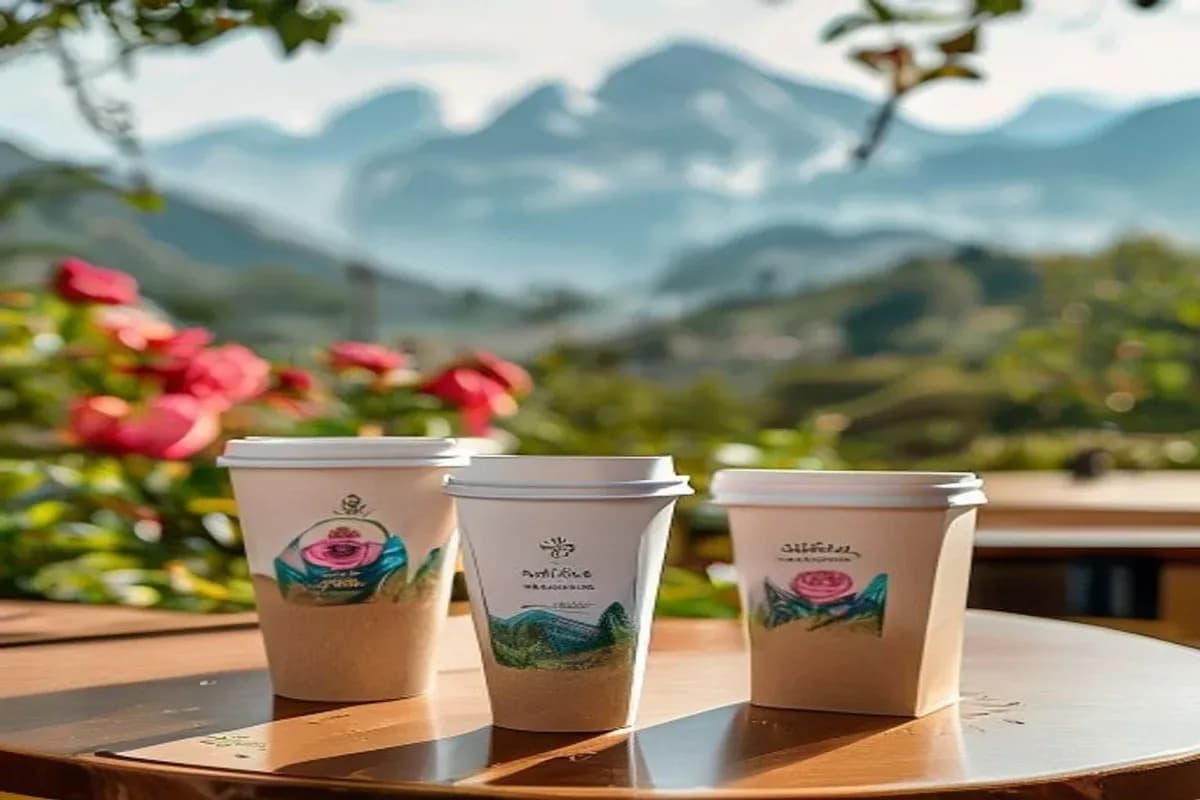
Complete packaging guide for restaurants and cafes in Taif 2026 — tourism season planning, rose-themed custom packaging, summer peak stock strategy, honey gift packaging, mountain resort specifications, and G-Pack delivery via Jeddah to Taif.

Complete packaging guide for restaurants in Rabigh 2026 — industrial workforce packaging, PetroRabigh catering, pilgrimage transit packaging, seafood requirements, and G-Pack delivery from Jeddah to Rabigh in 1-2 days.
| Item | Small Volume (500-1,000) | Medium Volume (3,000) | Large Volume (5,000+) | Notes |
|---|---|---|---|---|
| Paper cup 8oz double wall — plain | 0.63–0.90 | 0.47–0.67 | 0.38–0.54 | Riyadh/Tabuk logistics routes; 5-8 days delivery |
| Paper cup 8oz — custom printed 1 color | 0.90–1.20 | 0.63–0.85 | 0.49–0.66 | 22-30 day lead time to Al-Jawf delivery |
| Kraft bag medium — plain | 0.70–1.05 | 0.50–0.74 | 0.40–0.58 | Dry northern climate — no humidity concerns |
| Olive oil product jar bag — small-medium | 0.52–0.78 | 0.37–0.54 | 0.29–0.42 | Al-Jawf olive products retail packaging need |
| Gift bag (large, premium) — plain | 0.92–1.35 | 0.65–0.95 | 0.51–0.75 | Date and olive gift packaging for tourism market |
| Aluminum tray large | 0.56–0.84 | 0.42–0.58 | 0.32–0.44 | Traditional large-portion northern meals |
Al-Jawf's Logistics Challenge — Distance, Lead Times, and Buffer Planning. Al-Jawf's location in the far north of Saudi Arabia — approximately 1,100km from Riyadh and accessible via routes through the northern desert — creates logistics challenges that are among the most significant of any Saudi region. Standard stock delivery to Al-Jawf requires 5-8 days from order placement. Custom printed items require 22-30 days total from artwork submission to Al-Jawf delivery — one of the longest lead times in Saudi Arabia. The implications for restaurant operations: maintain a minimum 10-week buffer stock for all critical items, set reorder triggers at 5 weeks remaining supply, place custom print orders 14+ weeks before they are needed, and have Ramadan advance orders submitted 14-16 weeks before the first day of Ramadan. The positive counterpoint: Al-Jawf's dry northern desert climate is among the most benign in Saudi Arabia for packaging storage — low humidity, relatively moderate temperatures compared to the coastal Gulf — meaning packaging can be stored for longer periods without degradation risk.
Al-Jawf requires the most disciplined buffer stock management in Saudi Arabia due to its logistics distance. The system: (1) Count every packaging item weekly. (2) Reorder any item that falls below 5 weeks of remaining stock. (3) Maintain a 10-week safety stock target for all critical items. (4) Set calendar reminders for Ramadan and Eid advance orders 14-16 weeks in advance. This system, consistently applied, eliminates supply emergencies.
Al-Jawf's olive culture is among the most distinctive agricultural identities in Saudi Arabia. Commission packaging that incorporates olive branch imagery, Arabic calligraphy references to the olive (the blessed tree referenced in Islamic tradition), date palm motifs, or the ancient stone architecture of Dumat Al-Jandal. This design creates a brand narrative that is authentically Al-Jawf in a way that creates competitive differentiation no imported generic design can replicate.
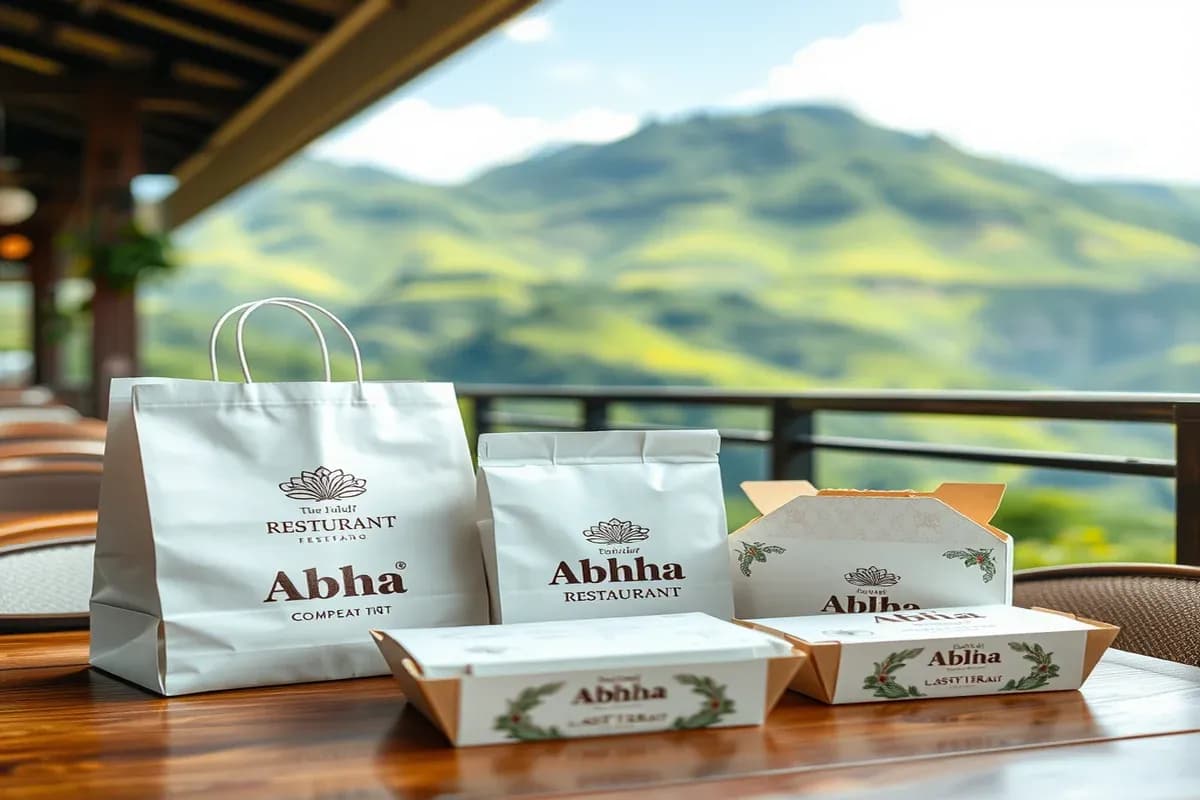
Al-Jawf's restaurants and cafes are often adjacent to or operate alongside the region's premier food products: cold-pressed olive oil, premium dates, traditional foods. If your establishment has any retail or gift component, invest in gift-grade packaging: kraft handle bags in a premium weight, olive oil bottle bags, date gift boxes with window lids, and branded tissue paper. This gift packaging segment represents a high-margin revenue extension that most Al-Jawf food businesses have not yet developed.
Archaeological tourism at Dumat Al-Jandal and Marid Castle peaks during cooler months (October-March). If your restaurant is positioned to serve this tourist segment, place your tourism season advance stock order 10-12 weeks before October. Estimate tourism season daily volume at 1.5-2× your summer baseline.
With a 22-30 day custom print lead time, Najran and Al-Jawf have the most demanding Ramadan ordering timelines in Saudi Arabia. Place your Ramadan packaging advance order 16 weeks before the first day of Ramadan. Set a recurring calendar reminder for this date every year.
The gift packaging requirements for olive oil products (jar bags, bottle carriers, gift boxes) and date products (gift trays, date boxes) are different from standard restaurant packaging. Source these items from G-Pack or specialist gift packaging suppliers and build a separate inventory system for them.
Al-Jawf's active border trade with Jordan and its large agricultural workforce create demand for practical, high-volume group catering packaging. If your restaurant serves this segment, stock: large aluminum trays for group portions, heavy-duty XL bags for bulk takeaway, and cup carriers for group beverage orders. This segment pays reliable volume for consistent quality.
Al-Jawf's border position with Jordan creates a unique tourism dynamic — visitors on overland Jordan-Saudi routes pass through Al-Jawf. A well-branded, professionally presented restaurant in Al-Jawf serves as a quality impression point for both Saudi and international overland travelers. Packaging that looks professional in this context communicates quality to a cross-border audience.
Professional Packaging ROI in Al-Jawf — The First-Mover Advantage. Al-Jawf's restaurant market currently has low penetration of professional branded packaging — most operations use generic, unbranded materials. This means the investment in distinctive, quality packaging creates disproportionate brand recognition precisely because the contrast with competitors is so large. A cafe in Sakaka with beautifully designed cups featuring olive branch motifs and Al-Jawf's heritage imagery stands out in a market where virtually all competitors use plain generic cups. This first-mover advantage is temporary — as the market matures, more operators will invest in branding. The restaurants that invest now capture the recognition premium while competition is still at a low baseline.
Balancing Heritage and Modernity in Al-Jawf Packaging Design. The most effective packaging strategy for Al-Jawf restaurants balances two audiences: the local community that deeply values Al-Jawf's heritage and wants to see it respected, and the national and international visitors who come to Al-Jawf for its unique cultural distinctiveness. Packaging that speaks only to the modern cafe aesthetic without reference to Al-Jawf's identity misses the regional differentiation opportunity. Packaging that is purely traditional without contemporary design quality looks dated to visitors from major cities. The sweet spot: contemporary design execution (clean typography, professional print quality, modern color palette) applied to Al-Jawf-specific design content (olive motifs, ancient stone architecture, date palm references). This combination communicates authenticity to heritage-aware locals and quality to quality-conscious visitors simultaneously.
| Segment | Priority Items | Climate Notes | Heritage Brand Value | Supply Priority |
|---|---|---|---|---|
| Traditional Al-Jawf cuisine | Large trays + XL bags + printed bags | Dry — standard specs adequate | Very High — olive/date identity | Large format + 10-week buffer |
| Modern Sakaka cafe | Printed cups + quality bags | Double-wall for heat | High — contemporary design | Custom print 14 weeks ahead |
| Archaeological tourism | Branded bags + gift packaging | Dry desert — standard adequate | Very High — Dumat Al-Jandal identity | Tourism season advance order |
| Olive/date retail gift | Gift bags + jar bags + date boxes | Dry — long storage OK | Very High — premium product packaging | Specialty gift packaging sourcing |
| Border/agricultural catering | Large trays + heavy bags + carriers | Functional durability | Medium | High volume + reliable supply |
Packaging Management System for Al-Jawf — A Practical Framework. An effective packaging management system for an Al-Jawf restaurant requires more discipline than equivalent operations in major cities, but the framework itself is simple: Inventory: weekly count of all items, recorded in a spreadsheet. Buffer target: 10 weeks × daily consumption for each item. Reorder trigger: any item falling below 5 weeks. Advance orders: Ramadan advance order placed 16 weeks before Ramadan start; tourism season order placed 12 weeks before October. Custom print projects: submitted 14+ weeks before needed. Emergency backup: local Al-Jawf stationery/packaging suppliers documented. This system, applied consistently, makes Al-Jawf packaging management no more stressful than packaging management in Riyadh — it simply requires more lead time built into every decision.
10 Common Packaging Mistakes in Al-Jawf
1. Not budgeting for 22-30 day custom print lead time — the most common cause of new restaurant opening delays in geographically remote cities. 2. Maintaining only 6-week buffer stock — insufficient for Al-Jawf; 10 weeks is the minimum. 3. Missing the olive and date gift packaging opportunity — high-margin revenue that most competitors ignore. 4. Setting reorder triggers at 3-4 weeks — not adequate for Al-Jawf logistics; 5 weeks is the minimum. 5. No Ramadan advance order system — 16-week advance requirement needs annual calendar management. 6. Generic packaging in a market with extraordinary brand heritage material available. 7. Not identifying emergency local backup suppliers before they are needed. 8. Using lightweight bags for traditional large-portion meals — handle failure under weight is the top Al-Jawf customer complaint. 9. Storing packaging in uncovered outdoor spaces — dust and temperature variation degrade adhesive and print quality over time. 10. Pricing packaging choice purely on unit cost without accounting for total landed cost to Al-Jawf.
Count every packaging item. Multiply daily consumption by 70 (10 weeks). Identify every item below this target. Place restock orders for all deficient items immediately. Repeat this audit every month on the same calendar date.
Schedule a design brief session. Prepare reference materials: images of Dumat Al-Jandal, Marid Castle, Al-Jawf olive groves, date palm landscape, traditional northern Saudi architecture. The brief: design packaging that makes Al-Jawf's identity immediately recognizable while maintaining contemporary design quality.
Open your calendar. Set a recurring annual reminder 16 weeks before Ramadan start. Title: "Al-Jawf Ramadan Packaging Advance Order." Calculate the Ramadan start date for the next 3 years and set all three reminders now.
If your restaurant or cafe sells any olive products, dates, or traditional Al-Jawf foods at retail, contact G-Pack to discuss gift packaging options: olive oil jar bags, date presentation boxes, branded tissue paper, and premium handle bags. Calculate the revenue potential from adding professional gift packaging to your retail offerings.
G-Pack delivers to Al-Jawf's Sakaka and broader region via northern logistics routes. Standard plain stock: 5-8 days from order placement. Custom printed items: 22-30 days from artwork submission. G-Pack is the recommended primary supplier for professional packaging in Al-Jawf — no national competitor operates comparable quality delivery to the region.
10 weeks of daily consumption for all critical packaging items — the highest standard recommended for any Saudi city in this guide. This reflects Al-Jawf's 5-8 day standard stock lead time and 22-30 day custom print lead time. Weekly inventory counts with a 5-week reorder trigger prevent stockouts.
Yes — G-Pack's design service can develop packaging with olive branch motifs, Dumat Al-Jandal archaeological imagery, or traditional Al-Jawf agricultural visual elements. Alternatively, you can work with an independent designer to develop artwork that G-Pack then produces. Custom printing is available from 500 units (digital) or 3,000 units (offset).
16 weeks before the first day of Ramadan for custom printed items. For plain standard items: 10-12 weeks before Ramadan. These timelines are longer than for major Saudi cities because of Al-Jawf's logistics distance and because Ramadan production schedules fill up across Saudi Arabia during the 8-12 week pre-Ramadan window.
G-Pack offers: olive oil bottle carrier bags (kraft, 1-bottle and 2-bottle formats), date presentation trays with lid, premium gift handle bags (kraft or coated, 250×120×280mm standard), tissue paper (branded or plain), and gift box packaging for food products. Contact G-Pack to discuss your specific product dimensions and packaging requirements for Al-Jawf olive oil or date retail products.
There are stationery and supply shops in Sakaka that carry basic plain packaging items — unbranded cups, generic bags, basic boxes. These are suitable only for emergency purchases of 50-200 units of basic items. They do not offer custom printing and cannot reliably supply Ramadan or seasonal volumes. G-Pack remains the only recommended source for professional packaging supply in Al-Jawf.
The tourism peak is October-March. Place your advance stock order 10-12 weeks before October (early July). Estimate tourism season volume at 1.5-2× summer baseline. Ensure your packaging design reflects Al-Jawf's heritage identity for maximum impact with the culturally motivated high-income domestic tourists who visit Dumat Al-Jandal.
Three key differences: (1) Buffer stock — 10 weeks in Al-Jawf vs. 6 weeks in Riyadh. (2) Custom print lead time — 22-30 days in Al-Jawf vs. 10-14 days in Riyadh. (3) First-mover branding advantage — still fully available in Al-Jawf vs. a more competitive branding environment in Riyadh. Otherwise, packaging quality standards and pricing are comparable.
G-Pack delivers to Al-Jawf on northern logistics routes. Custom printing, olive-themed design, gift packaging for olive and date products, large-format traditional meal packaging. Free consultation and quote for Al-Jawf packaging needs.
Get a Free Quote