Complete guide to food delivery boxes for Saudi restaurants 2026 — box types compared, structural and grease resistance specs, fries delivery solutions, printed pricing benchmarks, and how to pass the 5-point delivery test before ordering at scale.
Food delivery boxes in Saudi Arabia are not created equal — and the difference becomes painfully visible when a customer opens their order. A delivery box that has deformed under its own weight, soaked through with grease, collapsed and mixed the burger with the fries, or arrived with the lid sprung open is not just a packaging failure — it is a direct cause of 1-star delivery ratings, refund requests, and lost repeat customers. The Saudi food delivery market has grown explosively: Hungerstation, Jahez, Mrsool, and Noon Food handle millions of orders daily across Saudi cities, and the star rating that separates a 4.8-star restaurant from a 3.9-star competitor is partially determined by packaging quality. This guide is the comprehensive resource for choosing, specifying, and ordering the best food delivery boxes for your Saudi restaurant in 2026 — covering box types, material grades, printing options, pricing benchmarks, and the critical delivery performance tests every box must pass before you order at scale.
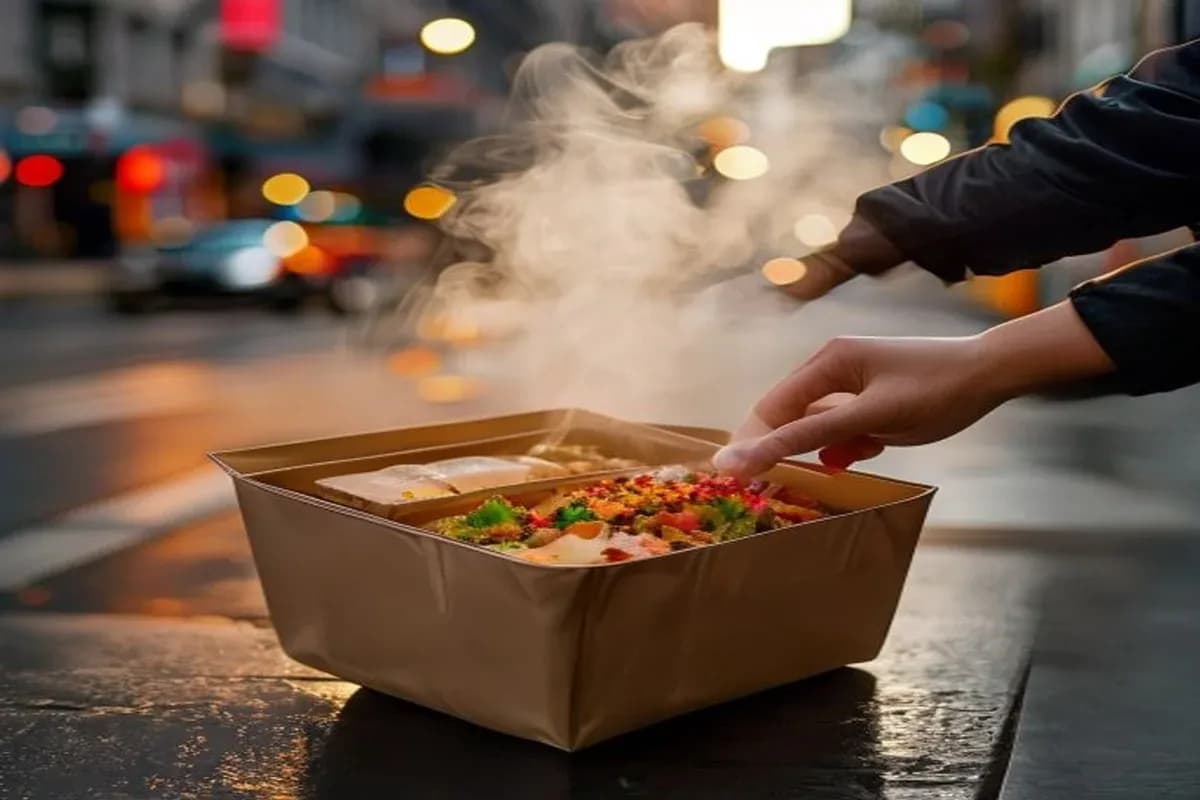
What Makes a Food Delivery Box Different from a Dine-In Box? The requirements of a delivery box are fundamentally different from a dine-in container. A dine-in box goes from kitchen counter to table — a journey of 30 seconds. A delivery box must survive a 15-30 minute journey by motorcycle across Saudi city traffic: stacked in an insulated bag with other orders, vibrating on motorcycle handlebar fixtures, potentially tipped at angles, and arriving in the heat of a Saudi summer at the customer's door. The critical performance requirements for Saudi delivery boxes: structural rigidity (the box must not deform under the weight of contents or stacking pressure — corrugate cardboard (E-flute or B-flute) outperforms plain paperboard for tall or heavy items), grease resistance (oil from fried food must not seep through the box wall — PE or clay-coated interior lining is required for fried items), steam venting (trapped steam from hot food collapses cardboard and makes food soggy — venting holes in the lid are essential for fried chicken, burgers, and fries), tamper evidence (the customer must be able to verify the box has not been opened — a security sticker or interlocking closure provides this confidence), and heat retention (the box must slow heat loss to keep food at acceptable serving temperature over the delivery window).

The complete guide to food delivery packaging best practices for Saudi restaurants in 2026 — delivery physics, material selection by food type, leak prevention, tamper-evident sealing, thermal bag requirements, and how packaging directly determines your app rating.

Complete guide to wholesale packaging discounts for Saudi restaurants 2026 — annual contracts, volume discount tiers, multi-item consolidation, upfront payment discounts, Ramadan pre-order strategy, and G-Pack wholesale pricing.

| Box Type |
|---|
| Best For |
|---|
| Grease Resistance |
|---|
| Steam Venting |
|---|
| Print Quality |
|---|
| Price Range SAR/unit (3,000) |
|---|
| Single-wall paperboard (300gsm+) | Light items: sandwiches, wraps, light meals | Low — needs PE lining for oily food | None standard — requires custom venting | Excellent — smooth surface | 0.27–0.42 |
| Double-wall corrugated (E-flute) | Medium meals: burgers, main courses | Medium — wax or PE liner needed | Vent holes available | Good — corrugated texture | 0.35–0.55 |
| B-flute corrugated (2-layer) | Heavy items: large meals, rice dishes | Good with PE liner | Vent holes available | Moderate — ribbed texture | 0.40–0.62 |
| Bagasse (sugarcane pulp) | Eco restaurants, bowls, main courses | Excellent — natural resistance | Moderate — domed lid | Limited to sticker/label | 0.52–0.78 |
| Aluminum foil tray + cardboard lid | Catered group meals, rice dishes | Excellent — natural | N/A — open tray format | Label only | 0.55–0.82 |
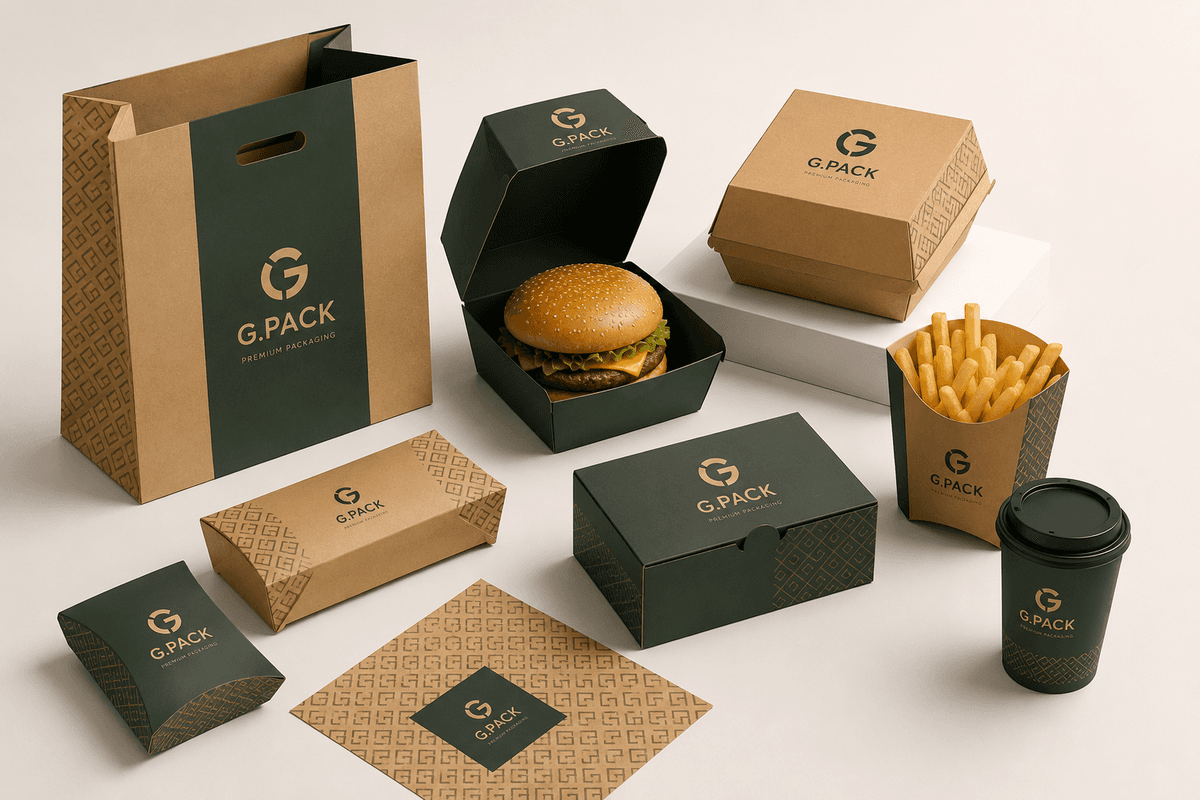
Delivery Box Types and Their Best Applications. Understanding which box type matches each menu item is the foundation of a professional delivery packaging system. Single-wall paperboard boxes (300gsm+): best for sandwiches, wraps, light meals that do not produce significant oil. The smooth outer surface accepts high-quality offset printing with sharp colors and fine detail — the best print surface of all box types. With PE inner lining, they handle moderate grease. Corrugate E-flute boxes: the workhorse of fast food delivery — the standard burger box, chicken box, and medium meal container. Double-wall construction resists deformation under stacking pressure in delivery bags. Available with vent holes for steam management. B-flute corrugated boxes: for heavier items where structural strength is paramount — large chicken portions, full meal combos, group orders. The additional corrugation provides superior rigidity at the cost of slightly reduced print quality on the outer surface. Bagasse (sugarcane pulp) containers: the eco-friendly alternative, with natural grease and moisture resistance that eliminates the need for chemical liners. Excellent for bowls, curries, and food-forward concepts where the packaging materials story is part of the brand narrative.
| Criterion | What to Measure | Low Performance | High Performance |
|---|---|---|---|
| Structural strength | Stack test: place 3 identical filled boxes, wait 10 min | Box deforms or lid pops open | Box holds shape, lid stays closed |
| Grease resistance | Grease spot test: oil dish contact for 20 min | Oil visible on exterior | No seepage, box surface clean |
| Steam management | Vent test: hot fried item in sealed box for 15 min | Lid collapses, food soggy | Lid firm, food texture maintained |
| Tamper evidence | Visual check on closure method | No evidence of opening/closing | Sticker seal or interlocking closure visible |
| Heat retention | Temperature at 25 min | Below 50°C at delivery | Above 60°C at delivery |
French Fries — The Biggest Delivery Challenge in the Saudi Restaurant Market. No food item tests delivery packaging more severely than French fries. Fries are the highest-selling side item in Saudi fast food and casual dining — and they are notoriously difficult to deliver in good condition. The core problem: fries produce significant steam from the initial high-temperature frying. If this steam is trapped inside a closed container, it condenses on the fries within minutes, making them soft and soggy. The solution is not simply a vent hole — it is a combination of the right box geometry, the right venting location, and the right fry-to-air ratio inside the container. Optimal fries delivery box specifications: corrugate or thick paperboard construction (minimum 300gsm), vent holes positioned high on the side walls (allowing steam to escape without letting the box lose structural integrity at the base), an interior PE or clay coating to prevent oil absorption into the cardboard (oil-absorbed cardboard becomes soft and collapses), a sleeve-style open-top format or a wide-aperture lid (allows for continued steam release after packing), and a box height 20-30% taller than the fry fill level (airspace above the fries allows some steam circulation before reaching the vent).
| Box Type / Size | Plain (no print) | 1 Color Print | 2 Color Print | 4 Color Print | Notes |
|---|---|---|---|---|---|
| Burger box small (12×12×8cm) | 320–460 | 480–640 | 620–820 | 820–1,100 | Most common fast food delivery format |
| Burger box medium (15×15×10cm) | 380–540 | 560–740 | 720–940 | 960–1,280 | Standard Saudi combo meal box |
| Meal box large (22×16×8cm) | 420–580 | 600–780 | 780–980 | 1,020–1,380 | Sandwich/wrap delivery standard |
| Chicken bucket corrugate (20×20×18cm) | 520–720 | 760–1,000 | 980–1,280 | 1,280–1,680 | Heavy-duty for fried chicken |
| Rice/biryani box (22×22×8cm) | 460–640 | 680–900 | 880–1,140 | 1,160–1,540 | Flat format for rice-based dishes |
The Good Delivery Box Checklist
Before ordering any delivery box in volume, conduct this physical test: (1) Fill the box with your actual heaviest menu item. (2) Seal the box with your standard closure method. (3) Place it in your delivery bag with 2 other typical order items stacked. (4) Shake the bag for 60 seconds simulating motorcycle vibration. (5) Check: is the lid still closed? Is the box still rigid? Open the box: has the food moved excessively? Is there oil on the exterior? Is the food texture acceptable? Only a box that passes all 5 checks should be ordered in volume.
Conduct the physical delivery test on every box type you currently use. Document which items pass and which fail. This audit generates your upgrade priority list.
For every delivery menu item, document the ideal box: type (paperboard/corrugated/bagasse), dimensions, inner lining, vent holes, closure method, print requirement. This specification sheet is your ordering guide.
Contact G-Pack and request samples of your specified box types. Run the full 5-point delivery test on each sample with your actual food. Only proceed to volume orders for boxes that pass.
Count your delivery order volume per day by box type. Multiply by 45 (6-week buffer). Compare to G-Pack's minimum order quantities. Place your first order at or above MOQ for each item.
Prepare print-ready artwork for each box type. Submit to G-Pack design team for template fitting review. Allow 14-21 days for production of custom printed delivery boxes.
Purchase tamper-evident stickers or security seals. Brief kitchen staff: every sealed delivery box must receive a tamper-evident seal before leaving the kitchen. Track its implementation in your standard delivery checklist.
Record your current delivery platform rating before the packaging upgrade. After 30 days of new packaging, check your rating trend. The quality improvement should be visible in both rating data and customer review text.
Ramadan typically increases delivery volume 2-3× for most Saudi restaurants. Calculate your Ramadan delivery box requirement and place the advance order 8 weeks before Ramadan starts.
E-flute corrugated burger boxes (150×150×100mm standard) with: (1) vent holes in the lid sides, (2) PE-coated interior to prevent grease seepage, (3) interlocking or tuck-lock lid that resists opening during motorcycle vibration, and (4) custom printing on the smooth-finish outer surface. G-Pack standard burger boxes meeting all four criteria cost SAR 0.38-0.55 per unit at 3,000-unit volumes.
Soggy fries on delivery are caused by steam trapped in an enclosed container. The solution: (1) use boxes with vent holes positioned in the upper side wall, (2) ensure there is 30-40% empty airspace above the fry fill level inside the box, (3) do not close the lid too tightly — a slight gap allows continued steam release. Switching from a standard unvented box to a vented format with these practices typically improves fries texture quality by more than any other single change.
Custom 1-color printed burger boxes at 1,000 units: SAR 480-640 per 1,000 (SAR 0.48-0.64 per box). At 3,000 units: SAR 560-740 per 1,000 (SAR 0.56-0.74 per box). Plate setup fee: SAR 600-1,200 for first order. Reorders have no plate fee. G-Pack provides full landed cost breakdown on request.
G-Pack minimum for custom printed delivery boxes: 1,000 units per SKU (box type + size combination). Digital printing is available from 500 units at slightly higher per-unit cost. Most restaurants find 3,000 units is the economical order quantity — 1,000 units at slightly higher price per unit if volume is lower.
Oil staining on the box exterior is caused by inadequate inner lining. Specify: PE (polyethylene) inner coating, clay coating, or wax inner surface on any box used for oily food. Test before ordering: place a piece of grilled or fried food in the box, close it, and wait 20 minutes. If oil appears on the exterior, the lining is insufficient.
Yes — strongly recommended for all Saudi delivery operations. Platform algorithms and customer behavior both reward tamper-evident packaging: it increases food safety confidence, reduces "missing item" complaints, and is becoming an expected standard as Saudi delivery market matures. Use tamper-evident stickers on all sealed delivery boxes. Cost: SAR 0.04-0.08 per sticker — negligible cost for significant customer trust gain.
G-Pack custom printed delivery boxes: 14-21 days from artwork submission to production completion, plus delivery to your city. Total from order placement to received: 16-25 days for most Saudi cities. Plan your reorders accordingly — place the reorder order when 4 weeks of current stock remains, not when you run out.
Step 1: count your average daily delivery orders for each box type. Step 2: multiply by 45 (6-week buffer). Step 3: compare to MOQ. Order the higher of (your 6-week consumption) or (MOQ). For example: 80 burger boxes per day × 45 days = 3,600. MOQ is 1,000. Order 3,600 (your consumption requirement). If daily consumption is only 15 boxes × 45 = 675 — below MOQ — order 1,000 (MOQ minimum).
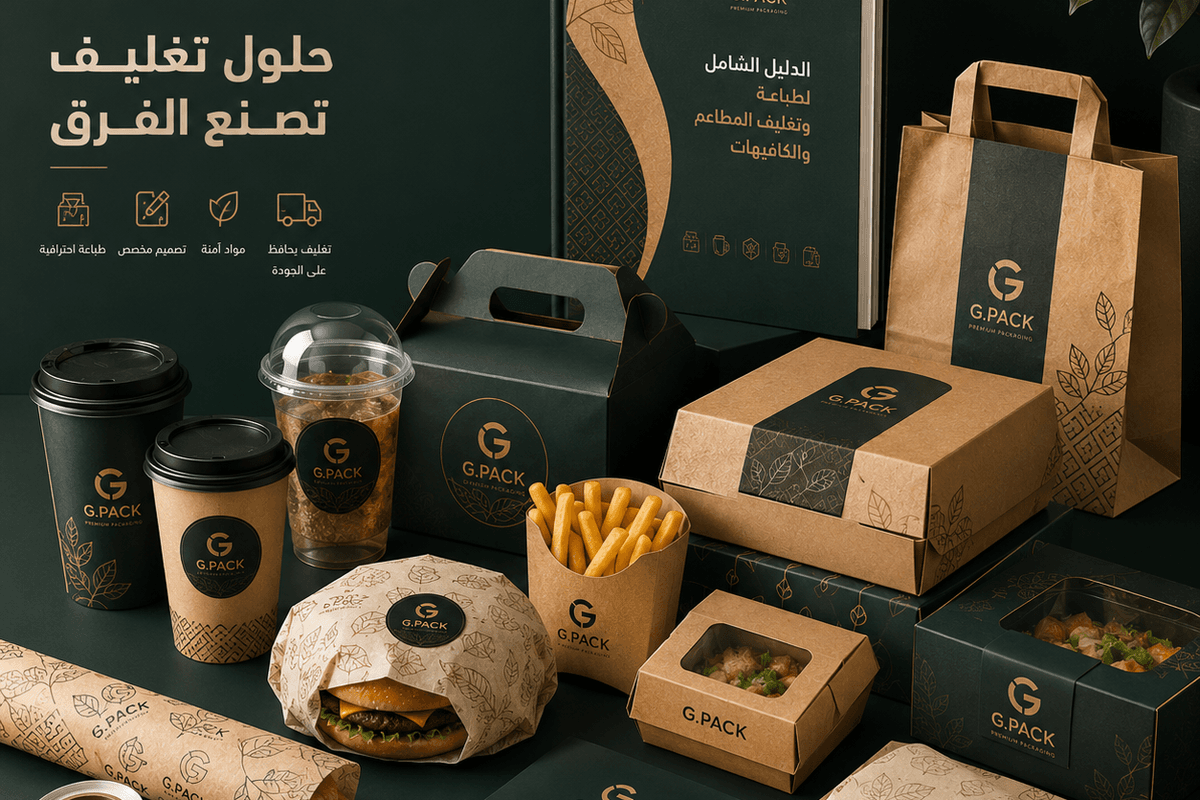
G-Pack supplies custom printed delivery boxes in all types, sizes, and materials. Physical samples provided before volume orders. Vent holes, PE inner lining, tamper-evident closures all available. Free consultation on delivery box specification.
Get a Free Quote