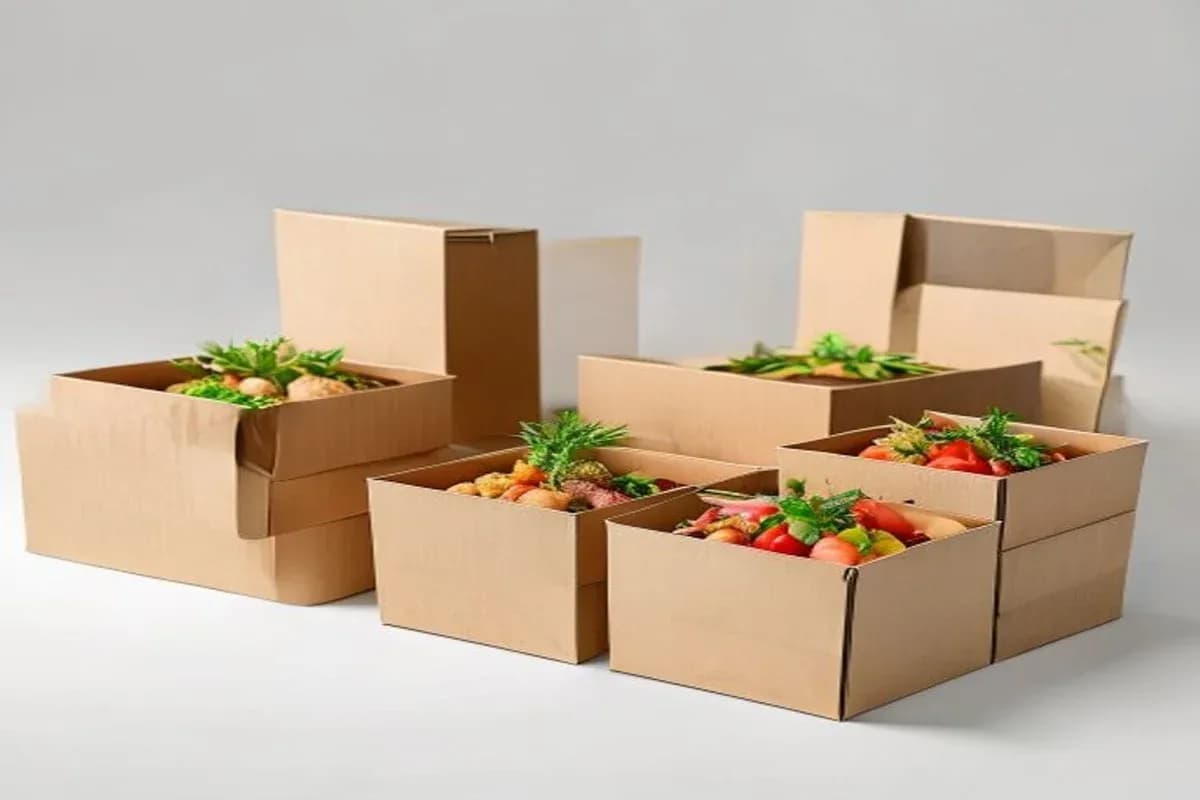
The complete guide to food delivery packaging best practices for Saudi restaurants in 2026 — delivery physics, material selection by food type, leak prevention, tamper-evident sealing, thermal bag requirements, and how packaging directly determines your app rating.
Delivery packaging faces challenges that in-restaurant packaging never encounters — and Saudi restaurants that do not distinguish between the two consistently pay for it in app ratings and customer complaints. In-restaurant packaging travels 30 seconds from kitchen to table. Delivery packaging travels 20-40 minutes through vehicle vibration, temperature changes, and handling by multiple parties before reaching the customer. The food inside must arrive at an acceptable quality level despite this journey. Saudi Arabia's food delivery market has grown into one of the most active in the Middle East — with HungerStation, Jahez, and Talabat processing millions of monthly orders across the Kingdom. Every one of these orders includes a packaging judgment: was it sealed, was it organized, did it arrive intact, was anything spilled, did the hot food stay hot and the cold food stay cold? These packaging outcomes directly determine your app rating — and your app rating determines your order volume. This guide covers the complete best practices for food delivery packaging in Saudi Arabia: the physics of delivery, material selection for each food type, leak prevention, tamper-evident sealing, thermal bag requirements, order arrangement, and the economic case for investing in delivery-quality packaging.
Who This Guide Is For
This guide is for every restaurant that offers food delivery — whether through third-party platforms like HungerStation, Jahez, and Talabat, or through your own in-house delivery. It is specifically relevant for cloud kitchens, cafe delivery programs, and any restaurant where delivery represents more than 20% of orders. The packaging principles covered here directly impact your platform ratings and your customer repeat order rate.
The Physics of Delivery Packaging — Why It Is Fundamentally Different. In-restaurant service: the food is plated, packaged in seconds, and reaches the customer in under 3 minutes. Temperature differential between food and packaging is minimal. No vibration, no movement, no external handling. Delivery service: the food is packaged, held for driver pickup (typically 5-15 minutes), transported on a motorcycle or in a car (vibration, acceleration, braking), potentially held in a delivery bag with other orders, and delivered 20-45 minutes after leaving the kitchen. Three specific physical challenges define delivery packaging performance: (1) Steam and moisture management — hot food generates steam continuously. In a sealed container without ventilation, this steam condenses on the inner surfaces, softening fried foods and making buns soggy within minutes. Ventilation holes prevent this while maintaining temperature. (2) Structural integrity under motion — packaging must hold its form and contents through vibration and movement. A box that opens or deforms during transit damages the food presentation and potentially spills sauce onto other items. (3) Thermal retention — the food must maintain an acceptable serving temperature throughout the delivery journey. This requires both primary container thermal properties and an appropriate outer thermal delivery bag.

Complete guide to food delivery boxes for Saudi restaurants 2026 — box types compared, structural and grease resistance specs, fries delivery solutions, printed pricing benchmarks, and how to pass the 5-point delivery test before ordering at scale.

Complete guide to wholesale packaging discounts for Saudi restaurants 2026 — annual contracts, volume discount tiers, multi-item consolidation, upfront payment discounts, Ramadan pre-order strategy, and G-Pack wholesale pricing.
Choosing the Right Material for Each Food Type. The correct packaging material for delivery depends on the thermal and moisture management requirements of the specific food being delivered. Hot fried food (burgers, fried chicken, fries, samosas): vented cardboard boxes — must have 3-5 ventilation holes in the lid to allow steam escape. Grease-proof inner coating to prevent oil seepage. Structural weight of 350-450gsm to maintain shape. Fries and crispy items must always be in a separate container from sauces and liquids — never combined in one container. Hot rice and stew dishes (kabsa, mandi, jareesh): deep bagasse or aluminum foil trays with locking lids — excellent heat retention, stable under vibration, no off-flavors to food. Soup must be in a double-sealed container with a lid that cannot be vibrated open during transit. Salads and cold items: clear PET containers with a positive snap-lock lid — never use lids that simply rest on top. Dressing always in a separate sealed sauce cup — never pre-applied to the salad. Hot beverages (coffee, tea): cups must have lids specifically designed for delivery — not the same sit-in lid used in-restaurant. Delivery coffee lids must lock securely and should be sealed with a cup sealer film for any order where spillage would ruin other items.
| Food Type | Container Type | Key Delivery Feature | Ventilation | Critical Warning |
|---|---|---|---|---|
| Burger / fried chicken | Vented cardboard clamshell | Steam vents in lid mandatory | 3-5 holes essential | Never seal fried food airtight |
| Fries / crispy items | Separate vented box or paper scoop cup | Must be separate from burger | Yes — critical | Combining with burger = soggy fries in 3 min |
| Rice dishes (kabsa/mandi) | Deep bagasse or aluminum tray + lid | Heat retention 45-60 min | No — retain heat | Lids must lock, not just rest on tray |
| Salad / cold bowl | Clear PET snap-lock container | Airtight freshness seal | No | Dressing always separate |
| Hot beverage | Cup + delivery-grade locked lid + sealer | Sealer film over cup top | No | Unsecured lids = spill risk on all other items |
| Soup / liquid items | Double-sealed container, non-spillable lid | Leak-proof 100% required | No | Most common delivery complaint source |
| Bag Type | Capacity | Temperature Retention | Best For | Approx. Price |
|---|---|---|---|---|
| Small insulated bag (38×38×40cm) | 2-4 item orders | 45-60 min at 70°C start | Standard cafe and fast food delivery | SAR 45–80 |
| Medium insulated bag (45×45×50cm) | 5-8 item orders | 50-70 min at 70°C start | Family meal delivery | SAR 75–130 |
| Large insulated bag (55×55×60cm) | 8-14 item orders | 55-80 min at 70°C start | Multi-order delivery or catering | SAR 120–200 |
| Hot box (rigid, lockable) | Full-tray orders | 75-90 min at 70°C start | Mandi, kabsa, catering platters | SAR 180–350 |
| Refrigerated bag (cooling pouches) | Cold items | Maintains under 10°C for 45 min | Salads, desserts, cold drinks delivery | SAR 80–150 |
Leak Prevention — The Highest-Priority Delivery Packaging Challenge. Leakage is the most common delivery complaint in the Saudi food delivery market and the one that causes the most immediate and lasting damage to app ratings. A single viral photo of a leaked order accompanied by a 1-star review can generate hundreds of impressions that outweigh months of positive reviews. The three leakage risk points in a typical delivery order: (1) The beverage cup: the standard sit-in lid is designed for a stationary environment — it can be vibrated off during a 30-minute motorcycle delivery. Solution: delivery-grade snap-lock lid plus cup sealer film (the thin film heat-sealed over the cup opening that the customer peels off to drink). This combination prevents all cup leakage under normal delivery conditions. (2) The sauce container: a 2oz sauce cup filled with liquid and covered with a snap-on lid can leak under pressure if items are stacked on top of it. Solution: always use sealed sauce cups with foil pull-tab lids — the same type used at ketchup and condiment stations. These cannot leak regardless of orientation or pressure. (3) The outer bag: paper bags that are only tied at the handles can open during transit. Solution: tamper-evident adhesive seals applied to the bag opening, or a tied-and-tucked handle knot that requires deliberate effort to open.
For one full week, track every complaint or negative rating received from delivery orders. Categorize: spilled beverages, soggy food, leaking sauces, incorrect temperature, structural damage, missing items. The frequency and type of complaints directly identify your packaging gaps.
This is the single highest-impact delivery packaging upgrade for any cafe or restaurant delivering hot beverages. Implement delivery-grade snap-lock lids plus cup sealer film on every hot beverage delivery order. This eliminates your highest-frequency delivery complaint category in most operations.
Audit your current order assembly: are fries sharing a container with the burger? Is sauce pre-applied to salads? Does soup share a container with rice? Each of these combinations degrades food quality during delivery. Implement strict separation: each food category in its own container, sauces always in sealed separate cups.
Before enabling on any delivery platform, establish your tamper-evident sealing protocol. Use adhesive tamper-evident stickers, heat-sealed bag closure, or a secure tied-and-tucked knot that customers can see has not been opened. Saudi delivery customers consistently report that sealed packaging increases their confidence in order safety and quality.
Never enable delivery on HungerStation, Jahez, or Talabat before testing your complete delivery packaging with your actual menu. Pack your most complex order, seal it, and physically carry it on a 30-minute simulated delivery journey. Open it and evaluate: temperature, structural condition, any leakage, any sogginess. Fix every failure point before your first live delivery order.
Delivery order assembly is not the same as dine-in order assembly. Create a delivery-specific assembly checklist for your kitchen team: correct primary container for each item, sauce cups filled and foil-sealed, beverages with delivery-grade lid and sealer film, items arranged in thermal bag with heaviest items on base, bag sealed and labeled before handoff to driver.
| Item | Primary Container | Sauce Handling | Lid Type | Outer Bag |
|---|---|---|---|---|
| Burger + fries | Vented burger box + separate fry box | Ketchup in foil-sealed 2oz cup | Box closes securely | Medium kraft bag, tamper sealed |
| Fried chicken meal | Vented chicken box | Sauce in foil-sealed sauce cup | Box must not pop open in bag | Medium-large kraft bag, tamper sealed |
| Kabsa / mandi | Deep aluminum or bagasse tray (large) | Margoog/sauce on side in separate cup | Locking snap lid — must not open in bag | Large bag, tamper sealed |
| Salad bowl | Clear snap-lock PET container | Dressing always separate in foil-sealed cup | Snap-lock — airtight seal | Small-medium bag, tamper sealed |
| Hot coffee | Double-wall cup + delivery lid + sealer film | N/A — lid seals the cup | Sealer film mandatory for all hot delivery | With order bag or separate carrier |
Order Arrangement Inside the Delivery Bag — An Underestimated Factor. The order in which items are placed inside the delivery bag determines whether they arrive in acceptable condition as much as the individual containers do. The correct arrangement from bottom to top: heaviest, most stable items first (rice trays, large boxes), beverages in cup carriers or secured upright (never lying on their side), sauces and small cups in corners where they cannot slide (or in a separate small bag inside the large bag), fragile items (bread, pastries) on top where they are not compressed. Common wrong arrangements that cause delivery complaints: beverages placed upright on top of boxes that collapse under their weight — cups then fall sideways. Sauce cups loose at the bottom of a large bag — they slide and compress under the weight of heavier items, causing leakage. All items in one large bag regardless of category — hot and cold items mixed cause temperature contamination in both directions.
The 6 Most Common Delivery Packaging Failures
1. Oversized containers — food moves and breaks inside during transit. 2. No ventilation — fried food becomes limp and soggy in 5 minutes. 3. Sauce in non-sealed cup with snap lid — leaks under pressure in the bag. 4. Beverages without cup sealer — most common single source of delivery complaints. 5. All items mixed in one unsealed paper bag — everything arrives at the wrong temperature. 6. No tamper-evident seal — customers concerned about order safety give lower ratings regardless of food quality.
How Your App Rating Reflects Your Delivery Packaging Quality. Your food delivery app rating is, to a large extent, a packaging quality rating — not purely a food quality rating. Analysis of Saudi restaurant delivery reviews consistently shows that the most common negative rating triggers are: spilled beverage, soggy fried food, leaking sauce, incorrect temperature, and perceived tamper evidence concerns. Every one of these is a packaging problem, not a cooking problem. Analyze your last 50 delivery ratings: count how many negative comments reference packaging, spilling, temperature, or presentation versus how many reference taste, missing items, or wrong orders. In G-Pack's analysis of Saudi restaurant delivery reviews, 60-70% of 1-3 star delivery ratings cite packaging-related issues. This means that 60-70% of your low delivery ratings are fixable through packaging — independently of food quality.
The Economic Case for Delivery-Quality Packaging. Delivery packaging that eliminates your most frequent complaint categories has a measurable financial return: higher app rating → higher platform visibility → more organic order volume without additional marketing spend. A 0.3-point increase in your HungerStation or Jahez rating (from 4.1 to 4.4, for example) typically produces a 15-25% increase in organic order volume from platform recommendation algorithms. The cost of achieving this rating improvement through packaging upgrades: approximately SAR 0.30-0.80 more per delivery order in better containers, sealer film, and tamper-evident stickers. At 80 delivery orders per day, this is SAR 24-64 per day in additional packaging investment. The return from 20% additional organic orders at 80/day baseline = 16 additional orders/day × SAR 22 average order value = SAR 352 additional daily revenue. The economics are unambiguous: delivery packaging investment is the highest-ROI operational improvement available to Saudi delivery restaurants.
The Future of Delivery Packaging in Saudi Arabia. The direction of delivery packaging development in Saudi Arabia is toward greater intelligence, greater sustainability, and greater brand integration. QR codes on delivery packaging: already used by a minority of Saudi restaurants to direct customers to loyalty programs, menu recommendations, or review requests. The conversion from delivery box to digital touchpoint adds negligible cost and creates a genuinely new brand interaction. Biodegradable packaging: Saudi regulatory direction and customer expectations are moving toward reduced plastic use in food delivery packaging. PLA and bagasse containers are increasingly available from Saudi suppliers at costs only 15-25% above conventional equivalents. Smart temperature indicators: adhesive indicators that change color if a delivery order drops below safe temperature during transit — not yet mainstream in Saudi Arabia but available from specialized suppliers. Brand storytelling on the inner packaging surface: a design element visible only when the order is opened — the inner surface of a burger box or the inside of a delivery bag — creates a private brand moment that customers frequently photograph.
Pull your last 30-50 delivery ratings and categorize all negative comments. How many mention spilling, temperature, sogginess, or leaking? This number is your baseline for delivery packaging improvement impact measurement.
If beverage spills are your #1 complaint: implement cup sealer film this week. If soggy fried food is #1: implement vented containers. If sauce leaking is #1: switch to foil-sealed sauce cups. Address the highest-frequency failure first — it produces the fastest rating improvement.
Pack your most complex typical order in your current packaging. Carry it in your thermal bag for 30 minutes, including up and down stairs. Open it and evaluate every item. This test reveals the failures that written specifications often miss.
Create a printed visual checklist for delivery order assembly: correct container for each item, sauce sealing, beverage sealing, order arrangement in the bag, tamper seal application. Post it at the packaging station in your kitchen.
Tamper-evident adhesive stickers are available from packaging suppliers for SAR 0.05-0.08 each. Apply one to every delivery bag closure before driver handoff. This is the fastest single action to improve customer safety confidence and reduce complaint rates.
After implementing any delivery packaging change, track your app rating weekly for 4 weeks. Saudi food delivery platforms update ratings frequently enough that packaging improvements typically produce measurable rating changes within 2-4 weeks of consistent implementation.
Primary food containers appropriate to the food type (vented boxes for fried food, leak-proof containers for liquids, sealed containers for cold items), tamper-evident outer bag, cup sealer film or delivery-grade lid for beverages, sealed sauce cups, and an appropriate insulated delivery bag for the driver. Platforms like HungerStation and Jahez do not mandate specific packaging specifications, but they do surface rating data that reflects packaging quality outcomes.
Two-step solution: (1) Use a delivery-grade snap-lock lid that cannot be vibrated off during transit (not the standard sit-in coffee shop lid). (2) Apply a cup sealer film — a thin heat-sealed plastic film over the cup opening. The customer peels it off to drink. This combination eliminates virtually all delivery beverage spill complaints. A cup sealer machine costs SAR 150-300; sealer film costs SAR 0.03-0.05 per cup.
Steam from the hot food accumulates inside a sealed container without ventilation. This steam condenses on cold surfaces (including the food) within 5-10 minutes, softening fried textures completely. Solution: use containers with 3-5 ventilation holes in the lid. These holes allow steam to escape while maintaining food temperature. Always purchase delivery-grade vented containers, not standard in-restaurant boxes.
Yes. An insulated delivery bag is not optional for maintaining food quality during Saudi delivery journeys that average 20-45 minutes in warm ambient temperatures. The minimum specification for a delivery bag: 30mm thick insulation, closure that seals completely, and size appropriate for your largest typical order. Replace bags that show insulation compression (reduced thickness) — they lose their thermal retention significantly.
Three actions: (1) Use insulated delivery bags — hot food in a non-insulated bag loses temperature in 10-15 minutes in warm weather. (2) Box the order as close to driver pickup time as possible — minimizing the time the food sits packaged before it begins the journey. (3) Use containers with appropriate thermal properties for each food type (bagasse and aluminum retain heat well; single-wall cardboard does not).
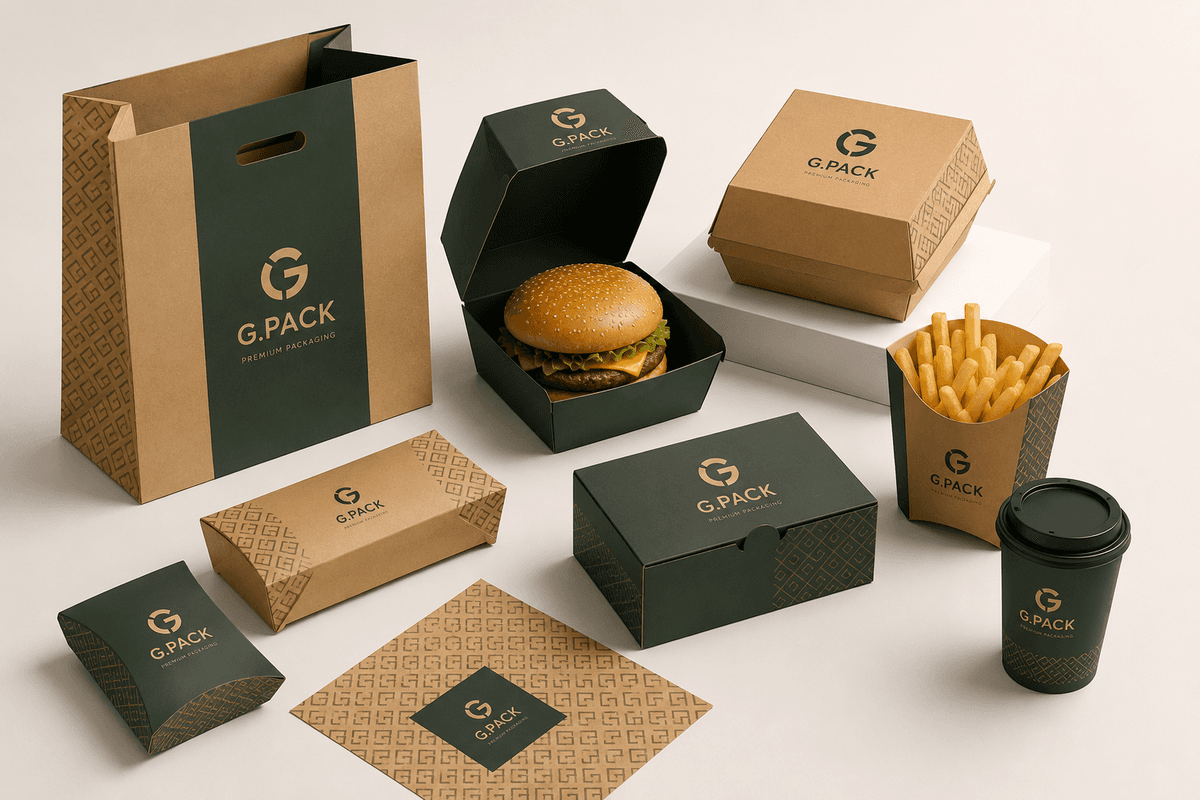
G-Pack provides complete delivery-optimized packaging for Saudi restaurants: vented containers, foil-sealed sauce cups, cup sealer film, tamper-evident stickers, and insulated delivery bags. Free consultation and same-week delivery on in-stock items.
Get a Free Quote