Complete paper cup sizes guide for Saudi cafes and restaurants 2026 — oz to mL conversion, hot vs cold cup differences, double-wall specifications, printing costs, and how to order the right cup for every menu item.
Paper cup sizes — the complete 2026 guide for Saudi restaurants and cafes. Selecting the wrong cup size is one of the most common and costly packaging mistakes in the restaurant industry. Too small, and customers feel shortchanged. Too large, and you are giving away margin on every hot drink served. In Saudi Arabia, where specialty coffee culture has grown explosively and cafe menus now routinely span 8-12 beverage sizes, getting your cup specification exactly right — in both ounces and milliliters — is a foundation of operational profitability. This guide provides the complete 2026 reference for paper cup sizes in Saudi Arabia: the standard sizes, the measurement confusion between oz and mL, the difference between hot and cold cup materials, how to match cup sizes to your menu, and pricing benchmarks for every size.
Oz vs mL — Why This Causes Problems with Suppliers
The fluid ounce (oz) and milliliter (mL) confusion is the most common source of cup ordering errors in the Saudi market. Key conversions: 4oz = 120mL (espresso/short), 6oz = 180mL (flat white/cortado), 8oz = 240mL (standard latte/cappuccino), 12oz = 355mL (medium takeaway), 16oz = 480mL (large takeaway), 20oz = 590mL (extra-large). When ordering from a supplier, always specify BOTH oz and mL — never assume the supplier's "8oz" matches your expected 240mL. There is no universal industry standard: some manufacturers measure oz capacity filled to the brim, others to the recommended fill line (which leaves 10-15mm headspace for lids). Always request a physical sample and measure the volume yourself before placing a volume order.

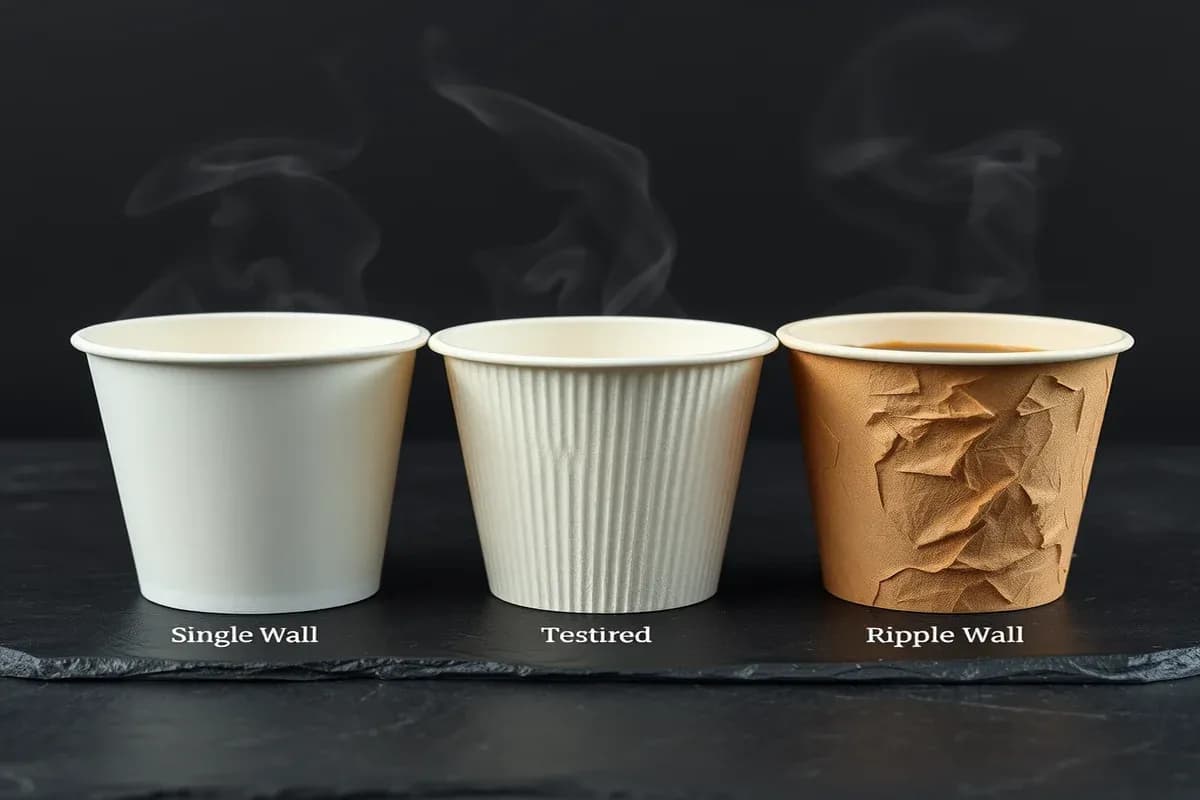
The definitive comparison of single-wall, double-wall, and ripple-wall paper cups for Saudi cafes in 2026 — heat insulation, custom printing, true cost analysis, and exactly which type to choose for your specific menu and brand positioning.

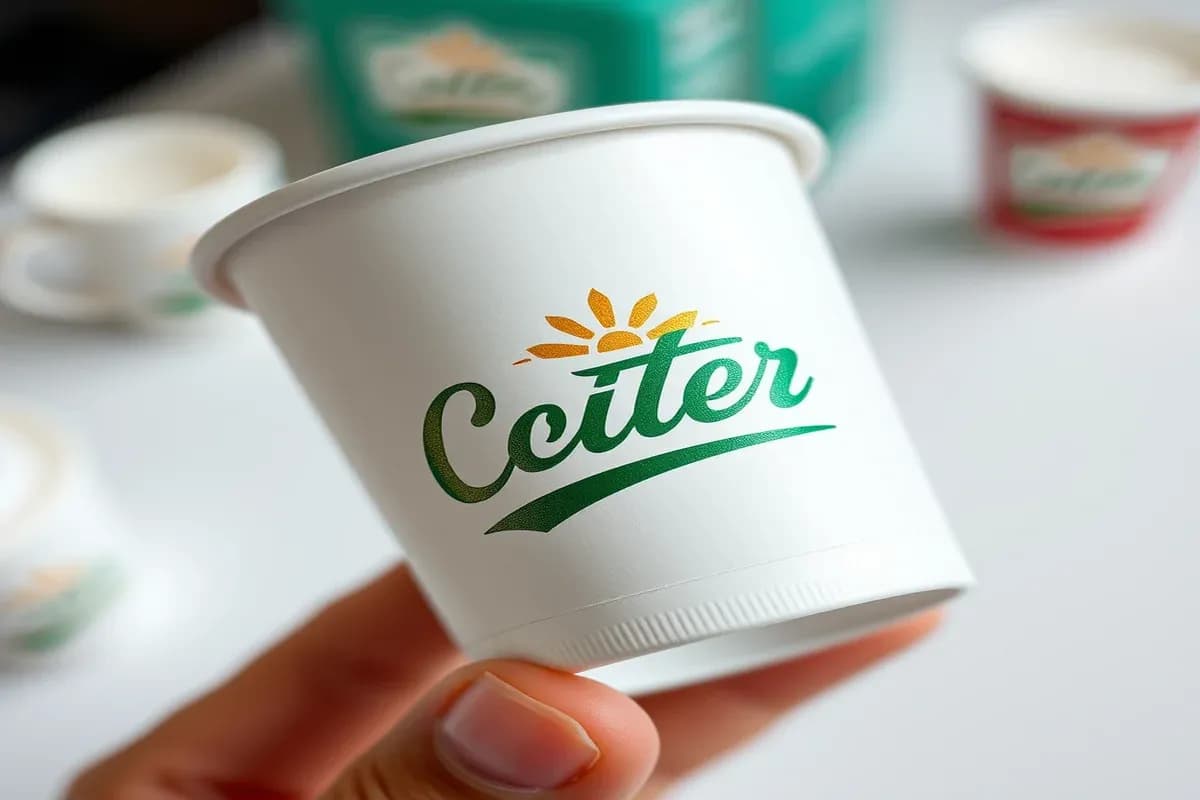
The complete guide to custom printed paper cups for Saudi cafes and restaurants in 2026 — cup types, printing methods, design rules, pricing across quantity tiers, ROI analysis, sustainability options, and the 10 most expensive ordering mistakes to avoid.
| Size Name | Oz | mL (to brim) | mL (fill line) | Common Use in Saudi Cafes | Lid Diameter |
|---|---|---|---|---|---|
| Espresso/Short | 4oz | 120mL | 100mL | Single espresso, macchiato | 60mm (standard espresso) |
| Small / Cortado | 6oz | 180mL | 155mL | Cortado, flat white, ristretto | 80mm |
| Standard / Regular | 8oz | 240mL | 205mL | Cappuccino, standard latte, Americano | 80mm |
| Medium | 10oz | 295mL | 255mL | Medium latte, medium hot chocolate | 90mm |
| Large | 12oz | 355mL | 310mL | Large latte, large cappuccino | 90mm or 100mm |
| Extra Large | 16oz | 480mL | 415mL | Large takeaway hot, large iced | 90mm or 100mm |
| Jumbo | 20oz | 590mL | 510mL | Smoothies, large cold drinks, family tea | 100mm |
| Tea/Soup | 8-12oz | 240-355mL | 205-310mL | Tea service, soup cups, hot broth | 80-90mm |
Hot Cups vs Cold Cups — Completely Different Materials. One of the most important cup selection decisions is distinguishing between hot and cold cup specifications. Using the wrong cup type for the wrong beverage is both a quality failure and a customer safety risk. Hot paper cups: designed for beverages above 60°C. Constructed with a polyethylene (PE) or plant-based (PLA) inner lining that prevents hot liquid from penetrating the paper and maintains structural integrity. Available in single-wall (requires sleeve) and double-wall (no sleeve needed) construction. Single-wall cups are cheaper but transfer heat to the customer's hand — a burn risk for drinks above 70°C. Double-wall cups provide insulation that makes the cup comfortable to hold with no sleeve required. Cold paper cups: designed for iced beverages. Constructed with a PE outer coating on the exterior of the cup that prevents condensation from the cold beverage making the cup damp and soggy. Cold cups are NOT suitable for hot beverages — the outer PE coating is on the wrong surface and the inner lining is optimized for cold rather than hot liquid contact. Using a cold cup for a hot beverage will make the cup damp and structurally weakened within minutes.
Never Use Hot and Cold Cups Interchangeably
Hot cups without outer coating will become damp and lose structural integrity when filled with iced beverages. Cold cups with outer coating will not provide adequate insulation for hot beverages and will appear damp and unprofessional when steaming coffee is poured inside. Always specify the cup type (hot or cold) clearly when ordering. Never use remaining hot cup stock for cold drinks to use up inventory — the quality failure is immediately visible to customers.
| Feature | Single-Wall Hot Cup | Double-Wall Hot Cup | Cold Paper Cup | PLA-Lined Eco Cup |
|---|---|---|---|---|
| Temperature range | Hot: 60-95°C | Hot: 60-95°C | Cold: 0-10°C | Hot or cold: 0-95°C |
| Condensation resistance | None | None | High — outer PE coat | Moderate |
| Hand comfort (hot) | Low — burns at >70°C | High — insulated | Not applicable | High (hot) |
| Environmental profile | PE lined (not recyclable) | PE lined (not recyclable) | PE lined | PLA lined (compostable) |
| Sleeve required | Yes (for hot >70°C) | No | No | No |
| Price differential | Base price | +25-45% vs single-wall | Base price | +30-55% vs standard PE |
Which Cup Size Fits Your Restaurant Type? Matching cup size selection to your service model and menu is essential for both operational efficiency and customer satisfaction. Specialty coffee shops: the standard set is 6oz (small/flat white), 8oz (standard), 12oz (large), 16oz (extra-large). Most specialty cafes in Saudi Arabia stock 3-4 hot cup sizes. For cold beverages, add matching cold cup sizes at 12oz, 16oz, and 24oz for refreshers and cold brew. Saudi traditional cafe / qahwa: the standard serving is a small 4-6oz cup for Arabic coffee, plus 8-12oz for tea. Traditional cafes typically require 2-3 sizes. Fast food and casual dining: 12oz and 16oz are the primary sizes for carbonated beverages and iced drinks. Hot beverages in these contexts are typically 8oz-12oz. Cloud kitchens and delivery: cups must be sealed. The most common sizes are 8oz, 12oz, and 16oz. Always use double-wall cups for delivery — the additional time in the delivery bag before the customer receives them makes insulation more important.
| Restaurant Type | Primary Hot Sizes | Primary Cold Sizes | Recommended Sleeve | Priority Spec |
|---|---|---|---|---|
| Specialty coffee shop | 6oz + 8oz + 12oz | 12oz + 16oz + 24oz | None (double-wall) | Double-wall, branded print |
| Saudi traditional / qahwa cafe | 4oz + 6oz + 8oz | 12oz for tea-cold | Optional | Standard hot, branded if volume |
| Fast food / casual dining | 8oz + 12oz hot | 12oz + 16oz + 22oz cold | Optional for hot | Standard hot + cold specified |
| Delivery / cloud kitchen | 8oz + 12oz + 16oz | 12oz + 16oz sealed | Not applicable | Double-wall + sealer film |
| Hotel / resort F&B | 6oz + 8oz + 12oz | 12oz + 16oz | None (double-wall) | Premium double-wall, branded |
Printing on Paper Cups — Free Marketing That Reaches Every Home. Custom printed paper cups are one of the most cost-effective marketing investments available to a Saudi restaurant or cafe. A standard 8oz custom-printed cup costs SAR 0.43-0.62 at 3,000-unit volume versus SAR 0.33-0.48 for the same plain cup — an incremental investment of SAR 0.10-0.14 per customer. For this SAR 0.10-0.14, every customer receives your logo, brand colors, and visual identity in their hand for the duration of their beverage — typically 15-30 minutes for a hot drink, longer for an iced drink. Cups carried out of the restaurant and onto the street, into offices, and into cars create additional brand impressions for every person who sees them. Cups photographed and posted on Instagram or TikTok create brand impressions that reach thousands of followers. The economics are clear: custom printing on cups is not a cost — it is the lowest-cost marketing channel available to most Saudi food service operators.
| Cup Size | Plain (no print) | 1 Color Print | 2 Color Print | 4 Color Print | Notes |
|---|---|---|---|---|---|
| 4oz espresso | 0.22-0.32 | 0.34-0.48 | 0.44-0.60 | 0.60-0.80 | Low consumption, consider digital print |
| 6oz small | 0.26-0.38 | 0.40-0.55 | 0.51-0.68 | 0.68-0.90 | Standard flat white size |
| 8oz regular | 0.33-0.48 | 0.43-0.62 | 0.56-0.76 | 0.74-1.00 | Highest volume size — most economical at scale |
| 12oz large | 0.40-0.58 | 0.52-0.74 | 0.67-0.90 | 0.90-1.20 | Second highest volume in Saudi market |
| 16oz extra-large | 0.48-0.70 | 0.62-0.88 | 0.80-1.08 | 1.08-1.44 | Cold drink and large takeaway |
| Double-wall premium | 0.58-0.84 | 0.73-1.02 | 0.93-1.28 | 1.24-1.68 | Add 35-45% vs single-wall equivalent |
List every beverage on your menu. For each, write the name and the serving volume in mL. Then match each to the correct oz size. This cup menu specification is your ordering document — share it with your supplier verbatim.
Before placing any volume cup order, request physical samples in every size. Fill each sample to your intended fill line. Verify the capacity matches your expectation in mL. Confirm the lid fits. Only then confirm the volume order.
Stock hot and cold cups in clearly labeled, physically separate storage locations. Brief all staff: hot cups for hot drinks, cold cups for cold drinks. Never mix the two categories.
Decide: single-wall with sleeves, or double-wall without sleeves? For specialty coffee with beverages above 70°C, double-wall is the professional standard. Calculate the total cost of single-wall plus sleeve versus double-wall alone before deciding on economics.
Prepare your logo and brand design at the correct cup diameter (flat sheet width before forming). Submit to G-Pack with cup size, quantity per size, and print color specification. Allow 14-21 days for production.
For each cup size, calculate daily consumption and multiply by 45 (6-week buffer). This is your minimum reorder quantity per size. Set reorder triggers at 3 weeks remaining for standard cities, 5 weeks for remote locations.
For all delivery and takeaway beverages: invest in a cup sealer machine (SAR 150-300) and sealer film. Sealed cups are a premium quality signal for delivery customers and prevent spills. Mandatory for near-mosque operations in Makkah and Madinah.
Ramadan increases hot and cold beverage volume at most Saudi cafes. Calculate your projected Ramadan daily cup consumption (typically 1.5-3x normal) and place the advance order 8 weeks before Ramadan starts.
The 8oz (240mL) cup is the highest-volume cup size in Saudi Arabia — it corresponds to the standard latte, cappuccino, and Americano serving size that forms the core of most Saudi specialty coffee menus. The 12oz is the second most popular for large takeaway orders. Most specialty cafes in Saudi Arabia stock 6oz, 8oz, and 12oz as their core three sizes, with 16oz added for large iced and blended beverages.
They are physically the same size but made with different material specifications. Hot cups have a PE or PLA inner lining to prevent hot liquid from penetrating the paper and to maintain the cup structure at temperatures up to 95°C. Cold cups have a PE outer coating to prevent condensation from cold beverages making the exterior damp. Using a hot cup for cold drinks causes a damp exterior. Using a cold cup for hot drinks provides inadequate insulation and creates a damp appearance inside the cup.
Key Saudi market conversions: 4oz = 120mL, 6oz = 180mL, 8oz = 240mL, 10oz = 295mL, 12oz = 355mL, 16oz = 480mL, 20oz = 590mL. Always specify both oz and mL when ordering and request a physical sample before confirming volume, as manufacturer fill-line conventions differ by up to 10-15%.
For specialty coffee serving drinks above 70°C: double-wall is the professional standard. The total cost difference is small: double-wall 8oz at SAR 0.73-1.02 versus single-wall 8oz at SAR 0.43-0.62 plus sleeve at SAR 0.13-0.22, making the total SAR 0.56-0.84 — comparable or cheaper than double-wall at volume. Double-wall also provides a better customer experience (no assembly required, better insulation) and is increasingly the expected standard at Saudi specialty cafes.
G-Pack minimum: 1,000 units per cup size for digital printing, 3,000 units for offset printing. For most cafes, the 3,000-unit minimum for offset represents 10-30 days of stock depending on volume — a practical order quantity. For lower-volume operations, 1,000-unit digital printing is available at slightly higher per-unit cost.
Yes — lid diameter must match cup rim diameter exactly. Standard Saudi market lid sizes: 60mm (4oz espresso cups), 80mm (6oz and 8oz standard), 90mm (10oz, 12oz), 100mm (16oz, 20oz). When changing cup supplier or size, always verify the lid diameter and order matching lids. A 1-2mm mismatch causes lids to not seal properly — which creates spill risk and a poor customer experience.
Yes — G-Pack supplies matching cups and lids together, ensuring diameter compatibility across your complete cup range. This simplifies ordering, eliminates compatibility risk, and allows consistent brand printing across both cups and lids. Contact G-Pack for cup-and-lid bundle pricing.
Always specify: (1) size name (e.g., "medium"), (2) oz capacity, (3) mL capacity to fill line, (4) hot or cold cup type, (5) single-wall or double-wall, (6) rim diameter in mm, (7) print requirement (plain or custom). This 7-point specification eliminates all common ordering errors and ensures you receive exactly what your menu requires.
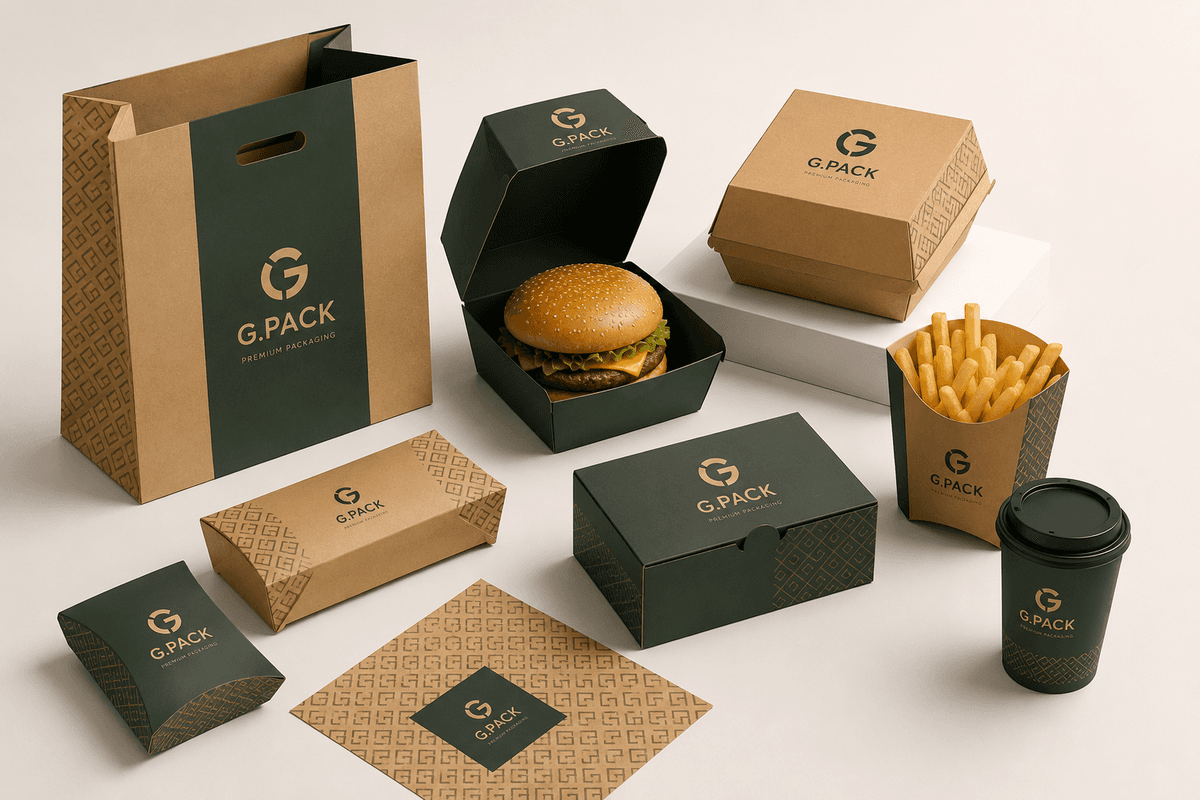
G-Pack supplies custom printed paper cups in all sizes from 4oz to 24oz. Hot and cold specifications, single-wall and double-wall, PLA eco options. Physical samples before volume orders. Free cup size consultation.
Get a Free Quote