Complete packaging guide for restaurants and cafes in Madinah 2026 — serving international pilgrimage visitors, Ramadan season planning, group order packaging, near-mosque quality standards, and reliable G-Pack supply to Al-Madinah Al-Munawwarah.
Madinah is one of Saudi Arabia's most unique and dynamic food service markets — host to millions of pilgrims and Umrah visitors throughout the year, with a resident population that reflects the full diversity of the Islamic world. This convergence of local residents and international visitors creates a food service environment unlike any other Saudi city. Restaurants in Madinah near Al-Masjid an-Nabawi serve customers from over 180 countries simultaneously — a customer base with extremely high expectations for quality and cleanliness, particularly in food presentation and packaging. For restaurant and cafe owners in Madinah, packaging decisions carry additional weight: the packages your customers carry leave your city and reach homes and offices across the Muslim world, where they represent your brand and Madinah's hospitality. This guide addresses packaging specifically for Madinah's restaurant sector — the unique requirements of serving a pilgrimage city market, the seasonal demand patterns driven by Umrah and Hajj seasons, the price environment, and how to build a packaging system that serves both your local community and your international visitors with equal excellence.
Who This Guide Is For
This guide is for every restaurant and cafe owner in Madinah who wants to optimize their packaging — whether a new operation opening near Al-Masjid an-Nabawi, an established local restaurant managing seasonal demand spikes, or a franchise seeking to meet international visitor expectations. It covers pricing, supplier logistics, Ramadan and pilgrimage season planning, and the specific packaging requirements of Madinah's diverse customer profile.
Madinah's Diverse Restaurant Sector and Its Packaging Requirements. The Madinah restaurant market segments by customer type and location in ways that demand differentiated packaging strategies. Near-mosque restaurants (within 500m of Al-Masjid an-Nabawi): serve an international customer base that includes visitors from Southeast Asia, South Asia, Africa, and the Arab world. These customers expect international quality standards in food presentation. Takeaway packaging must be durable enough to carry food back to hotels (sometimes 10-15 minutes walk) and visually professional enough to meet the elevated quality expectations of pilgrimage visitors. Traditional Saudi cuisine restaurants: serving kabsa, mandi, and traditional dishes to both local families and international visitors seeking authentic Saudi food experiences. Large-format packaging (family-size trays, large bags) is the primary requirement — individual portion sizes are less common than group servings. Fast food and international concepts: competing directly with the international chains present throughout Madinah, requiring equivalent quality packaging. Cafes and beverage concepts: serving both local customers and international visitors, often near hotel districts, with strong takeaway volume. Delivery-focused operations and cloud kitchens: growing rapidly in Madinah, serving the local residential community — a delivery packaging focus distinct from pilgrimage visitor packaging.

Complete packaging guide for restaurants and cafes in Taif 2026 — tourism season planning, rose-themed custom packaging, summer peak stock strategy, honey gift packaging, mountain resort specifications, and G-Pack delivery via Jeddah to Taif.

Complete packaging guide for restaurants in Rabigh 2026 — industrial workforce packaging, PetroRabigh catering, pilgrimage transit packaging, seafood requirements, and G-Pack delivery from Jeddah to Rabigh in 1-2 days.
| Item | Small Volume (500-1,000) | Medium Volume (3,000) | Large Volume (5,000+) | Notes |
|---|---|---|---|---|
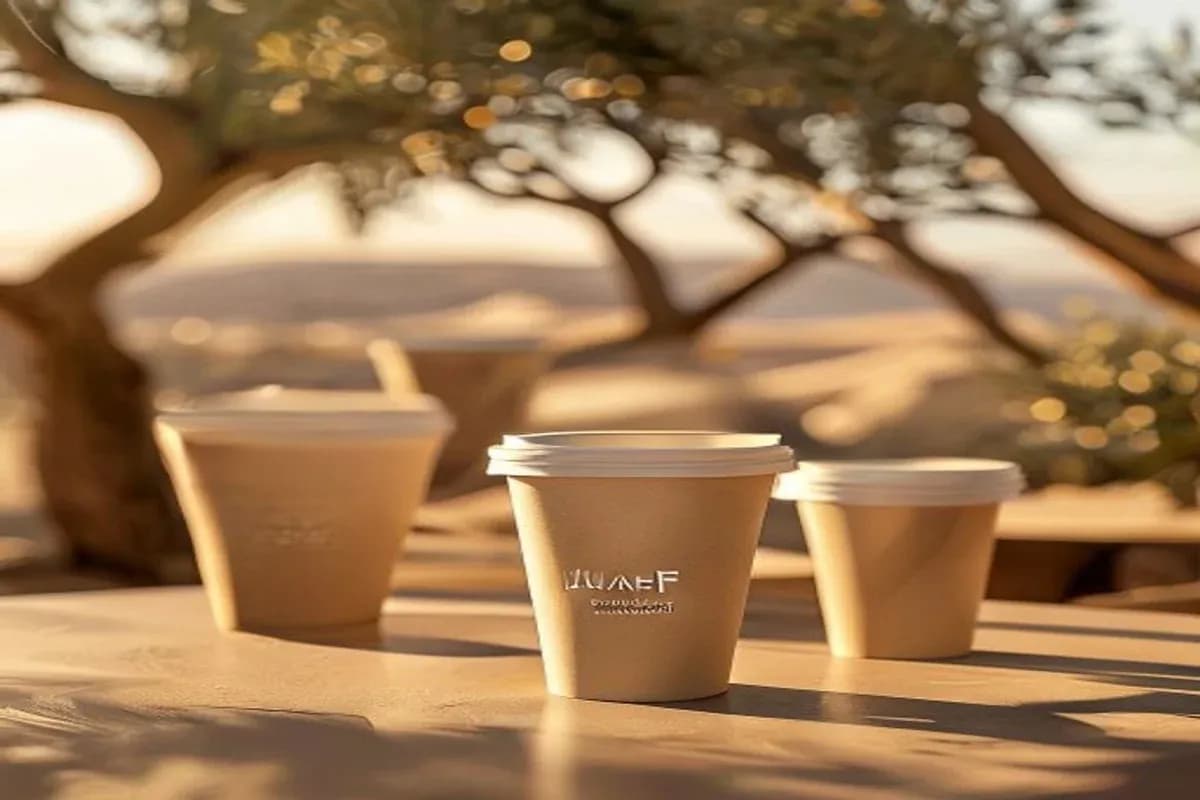
| Paper cup 8oz double wall — plain | 0.58–0.80 | 0.42–0.58 | 0.33–0.46 | Delivery to Madinah adds SAR 0.02-0.04/unit vs Riyadh prices |
| Paper cup 8oz — custom printed 1 color | 0.80–1.05 | 0.55–0.72 | 0.42–0.55 | Lead time 14-21 days including delivery to Madinah |
| Burger box medium — plain | 0.35–0.52 | 0.25–0.35 | 0.19–0.27 | Standard specifications available from G-Pack |
| Burger box medium — custom printed | 0.52–0.75 | 0.35–0.52 | 0.27–0.40 | Plate setup SAR 600-1,500 one-time |
| Kraft bag medium — plain | 0.65–0.95 | 0.46–0.65 | 0.36–0.52 | Include greaseproof liner for oily items |
| Kraft bag medium — custom printed | 1.35–1.90 | 0.95–1.35 | 0.75–1.05 | 2-week production lead time |
| Deep tray (kabsa/mandi) aluminum | 0.45–0.65 | 0.32–0.45 | 0.25–0.35 | Essential for traditional Saudi cuisine delivery |
Packaging Considerations Unique to Madinah Restaurants. Madinah restaurant packaging decisions must account for factors that are specific to this city and its customer base. International visitor durability requirements: pilgrimage visitors frequently carry takeaway food back to their hotels on foot, sometimes covering 10-20 minutes of walking. Packaging must maintain structural integrity through this journey — bags must have handles strong enough for 15-minute carrying, boxes must not collapse, and liquids must be fully sealed for walking transport. Cleanliness as a religious and cultural priority: Madinah visitors from across the Muslim world place high emphasis on visible cleanliness. Packaging that looks clean, sealed, and professionally presented meets a quality expectation beyond mere aesthetics — it signals respect and care. Always use sealed packaging for any food served near Al-Masjid an-Nabawi. Large-format capacity for international visitor groups: pilgrimage visitors typically travel in groups — families, tour groups, community delegations. Packaging for large group meals (6-15 portions) is a significant part of Madinah restaurant sales that many operators underestimate. Stock large-format bags (40×20×50cm), large tray lids, and multi-cup carriers.
Identify your primary customer types: near-mosque pilgrimage visitors (international standards, strong handles, sealed packaging), local families (large-format, volume options), delivery customers (delivery-grade standards). Each segment has different primary packaging requirements.
Near-mosque restaurants frequently receive orders for 4-8 beverages simultaneously — from prayer groups and tour groups. Stock 4-cup and 6-cup cardboard carriers. This one item eliminates one of the most common operational frustrations for both staff and international customers.
Visitors to Al-Masjid an-Nabawi carry exceptionally high hygiene expectations. Every item served in takeaway format should be visibly sealed — cup sealer film on beverages, sealed bags, sealed sauce cups. This is not optional for maintaining your reputation near the mosque.
Packaging logistics to Madinah can have longer lead times than Riyadh or Jeddah. Identify your primary packaging supplier and confirm their Madinah delivery lead times, minimum order values, and delivery frequency. Maintain a minimum 6-week buffer stock to absorb any delivery delays.
Ramadan in Madinah produces an exceptional demand surge — Umrah visitor arrivals peak during Ramadan and iftar delivery volume multiplies. Order your Ramadan packaging supply 8-10 weeks before Ramadan. Do not wait until 4 weeks before — suppliers will be at capacity.
Consider Arabic calligraphy elements or subtle Islamic geometric design motifs that communicate cultural connection and respect to your international visitor customer base. These design elements — available at the same cost as standard custom printing — create a memorable, culturally resonant brand impression for international visitors.
Packaging Quality and Its Direct Impact on Delivery Platform Ratings in Madinah. Madinah's delivery market is active and growing — the local residential community uses HungerStation and Jahez actively, and hotel district restaurants increasingly fulfill hotel-room delivery orders. Packaging quality for Madinah delivery follows exactly the same principles as Saudi national best practices — but with one amplification: Madinah residents include a significant proportion of expatriate workers who have arrived from countries with highly developed delivery food quality expectations. These customers set high baseline packaging expectations and are among the most vocal reviewers on delivery platforms. The practical implication: packaging quality standards that might be acceptable in lower-expectation markets are not sufficient for Madinah's diverse, internationally experienced customer base. Invest in sealed beverages, vented hot food containers, and tamper-evident bag closures from the first day of delivery operations.
Word of Mouth Across the Muslim World — A Unique Marketing Multiplier for Madinah Restaurants. A restaurant in Madinah that creates an exceptional experience for pilgrimage visitors sends brand ambassadors to every country in the world they return to. A Madinah restaurant that a Malaysian tour group loves will be recommended to other Malaysian pilgrims before their own journey. An Indonesian family that photographs your beautifully packaged takeaway outside Al-Masjid an-Nabawi and posts it on social media reaches an audience of potentially millions of followers who will perform Umrah in the coming years. This word-of-mouth marketing channel — unique to Madinah among all Saudi cities — makes packaging investment in Madinah more valuable than anywhere else in the Kingdom. A SAR 0.10 investment in a sealed, well-printed cup that an international visitor photographs and shares on social media reaches a potential customer base that no paid advertising budget can replicate. The cultural, spiritual, and emotional context of Madinah amplifies the impact of every positive brand interaction your packaging creates.
| Restaurant Type | Primary Packaging Needs | Volume Characteristic | Priority Packaging Item |
|---|---|---|---|
| Near-mosque takeaway | Strong handles, sealed packaging, multi-cup carriers | High volume, group orders, walking transport | Multi-cup carrier — every group order |
| Traditional Saudi cuisine | Large aluminum trays, large-format bags, soup containers | Family and group servings dominant | Large tray with locking lid for delivery |
| Hotel district delivery | Delivery-grade all items, sealed beverages, tamper-evident | Consistent volume, international quality expectations | Cup sealer film — every beverage order |
| Cafe / specialty coffee | Double-wall cups (all sizes), pastry bags, cake boxes | Strong beverage focus, takeaway dominant | Double-wall cups with custom print |
| Cloud kitchen delivery | Vented containers, tamper bags, delivery-grade all items | Delivery-only, high rating sensitivity | Vented boxes + tamper-evident sticker |
Inventory Management in Madinah — Planning for Two Levels of Demand. Managing packaging inventory in Madinah requires planning at two distinct levels simultaneously: daily operational level (maintaining adequate stock of all standard items for daily service) and seasonal level (preparing in advance for Umrah season peaks, Ramadan, Hajj, and national holidays). Standard operational inventory: maintain 6-week supply of all primary packaging items at all times. This buffer absorbs Madinah's delivery logistics lead times without causing stockouts. Calculate your daily consumption per item and multiply by 42 days for your target inventory level. Seasonal planning: Ramadan — order 2× your typical weekly volume multiplied by 5 weeks, placed 8-10 weeks before Ramadan. Hajj season — relevant for restaurants near the pilgrimage corridor; order 6-8 weeks before peak Hajj arrival dates. National Day and public holidays — order 4-6 weeks ahead; demand increase is more moderate (20-30%) than Ramadan but still requires advance planning.
The 5 Most Expensive Packaging Mistakes for Madinah Restaurants
1. Ordering in small quantities — paying 36% more per unit when volume pricing is available. 2. Not planning for Ramadan 8 weeks ahead — stockout during the highest-demand period of the year. 3. No tamper-evident sealing near the mosque area — damages hygiene perception with the customers who have the highest hygiene standards. 4. Single supplier dependence — longer delivery distances to Madinah amplify the impact of any supplier delay. 5. Serving group orders without multi-cup carriers — a common operational failure that frustrates international visitors and their tour guides.
Ramadan Season in Madinah — Exceptional Demand, Exceptional Opportunity. Ramadan in Madinah is the single most important commercial period for most of the city's restaurants — and the most demanding packaging management challenge of the year. Umrah visitor arrivals spike significantly during Ramadan, as it is considered the most spiritually rewarding time to perform the pilgrimage. Combined with the standard Saudi-wide Ramadan delivery boom (40-80% delivery volume increase nationally), Madinah restaurants near Al-Masjid an-Nabawi may experience 2-3× their normal order volumes during Ramadan. The packaging implications: (1) Volume — order your full Ramadan supply 8-10 weeks before Ramadan starts. (2) Product — special Ramadan packaging elements (crescent and star motifs on bags, date gift packaging for customers who give dates as Sunnah) drive meaningful additional sales. (3) Iftar timing — the 30-45 minute window at iftar is the highest-pressure service period of the year. All packaging must be organized and immediately accessible — no rummaging for supplies during iftar rush. (4) International visitors — Ramadan brings Madinah visitors from Indonesia, Malaysia, Pakistan, and the wider Muslim world who may not be returning next year. Make their experience with your brand unforgettable.
Calculate your expected Ramadan daily order volume (typically 1.5-2× your normal daily volume for near-mosque restaurants). Multiply by 35 days for your full Ramadan packaging supply. Place this order 8-10 weeks before the first day of Ramadan — without exception.
Group iftar orders are the dominant order type during Ramadan near Al-Masjid an-Nabawi. Stock sufficient 4-cup and 6-cup carriers for your projected Ramadan volume. These are the most commonly out-of-stock item for unprepared Madinah restaurants during Ramadan.
The 30-45 minute iftar window is the highest-pressure service moment of the year. Organize your packaging storage so that every item needed for iftar orders is at hand level, organized by type, and immediately accessible without searching. Do this reorganization 1 week before Ramadan starts.
Even simple Ramadan design additions — a crescent moon printed on the bag, or branded date gift boxes for customers who purchase dates — create memorable experiences for international visitors. Order these 8-10 weeks before Ramadan alongside your standard packaging.
If your primary supplier runs out of any key item during Ramadan, you need an alternative source ready. Identify at least one backup supplier for each critical packaging item and confirm they can deliver to Madinah within 72 hours.
Ramadan consumption typically depletes stock faster than projected. Immediately after Eid, audit your remaining inventory and place your next reorder. Post-Ramadan Umrah continues at elevated levels — do not allow stockout to occur in Shawwal.
G-Pack delivers to Madinah on established logistics schedules, with lead times of 3-7 days for standard stock items and 14-21 days for custom printed items from placement date. We serve restaurants in Madinah with the same quality and pricing as in Riyadh and Jeddah. Contact us for a Madinah-specific delivery schedule and minimum order information.
International pilgrimage visitors near the mosque have high expectations for cleanliness and professional presentation. Minimum standards: sealed beverages (cup sealer film), tamper-evident outer bag closure, containers with secure lids that cannot open during walking transport, and clean, professional appearance without visible grease or liquid seepage. Custom branded packaging creates a positive impression that international visitors share on social media across the Muslim world.
Order 1.5-2× your normal weekly consumption, multiplied by 5 weeks (for a full Ramadan supply), placed 8-10 weeks before Ramadan. Madinah Ramadan demand is significantly higher than normal due to combined pilgrimage visitor spikes and standard Saudi delivery demand increases. Underestimating Ramadan packaging needs is the single most expensive mistake for Madinah restaurant operators.
Yes — group order packaging is more important in Madinah than in most Saudi cities. Stock multi-cup carriers (4-cup and 6-cup), large aluminum or bagasse trays for rice dishes, large-format bags (40×20×50cm) for group meal orders, and large soup containers. Tour groups and family pilgrim groups regularly order 8-15 portions at once — packaging for individual portions only creates operational problems for this order type.
Yes — especially for restaurants near Al-Masjid an-Nabawi. International pilgrimage visitors photograph and share their Madinah food experiences widely on social media. A beautifully branded cup or bag in a Madinah context reaches a global Muslim audience. The marketing value of a custom printed cup photographed in front of the mosque by an international visitor exceeds the cost of the entire custom printing run many times over.
G-Pack delivers packaging to Madinah on reliable schedules — cups, bags, boxes, trays, and custom printing. Free consultation and competitive quote for Madinah restaurants. Ramadan advance orders accepted 10 weeks before.
Get a Free Quote