Complete packaging guide for restaurants in Tabuk 2026 — NEOM project packaging requirements, extreme desert climate specifications, double-wall cup standards, pricing benchmarks, lead time planning, and G-Pack delivery to Tabuk.
Tabuk Region sits at the northwestern gateway of Saudi Arabia — a geographically vast area bordering Jordan and Egypt, defined by dramatic desert landscapes, the Gulf of Aqaba coastline, and the ancient Nabataean ruins of Al-Ula and Hegra within its broader cultural sphere. Tabuk city itself is a growing military and commercial hub, while the region's coastline on the Gulf of Aqaba — anchored by projects like NEOM, Sharma El-Sheikh, and the growing Tabuk tourism corridor — represents one of the most dramatic Vision 2030 development concentrations in Saudi Arabia. For restaurant and cafe owners in Tabuk, this dual context creates a paradox: the city is both a mid-size provincial market with standard local service patterns and the doorstep to a SAR-trillion tourism development zone that is bringing an influx of international workers, project visitors, and advance-wave tourists. Packaging decisions in Tabuk therefore require strategy that serves both realities. This guide covers Tabuk-specific packaging requirements, the influence of extreme desert geography on packaging performance, pricing benchmarks for 2026, and how to position your restaurant's packaging for the NEOM-era growth that is already beginning in the region.
Who This Guide Is For
Restaurant and cafe owners in Tabuk city and the broader Tabuk region — including operations near construction project areas, military installations, tourism sites, and the growing residential commercial districts of the city. The guide covers the full Tabuk packaging landscape: pricing, NEOM project catering needs, desert geography requirements, and the golden window for early brand positioning.
Tabuk's Diverse Customer Segments and Their Packaging Needs. Tabuk's restaurant market serves an unusually diverse set of customer profiles: Local Tabuk residents: the city's permanent population has grown significantly with government investment in infrastructure and services. Standard Saudi food quality and packaging expectations apply, with growing preference for modern cafe experiences. Military and government sector: Tabuk hosts major Saudi military facilities and a significant government workforce. This segment values practical, reliable packaging — large portion containers, functional bags, group ordering. Project workers and contractors: the NEOM megaproject and associated developments in the Tabuk region employ tens of thousands of workers at various levels, from international engineers and consultants staying in Tabuk hotels to large-scale construction crews. These workers have widely varying packaging quality expectations but generally high volume needs. Tourism advance wave: a growing cohort of international visitors, journalists, researchers, and tourism industry professionals visit Tabuk as part of the NEOM-era discovery wave. These visitors bring high packaging quality expectations from international markets. Desert adventurers and outdoor tourists: Tabuk's dramatic landscape — Wadi Disah, Tabuk Castle, Gulf of Aqaba beaches — attracts outdoor tourism. Packaging for these customers must perform in extreme outdoor conditions.

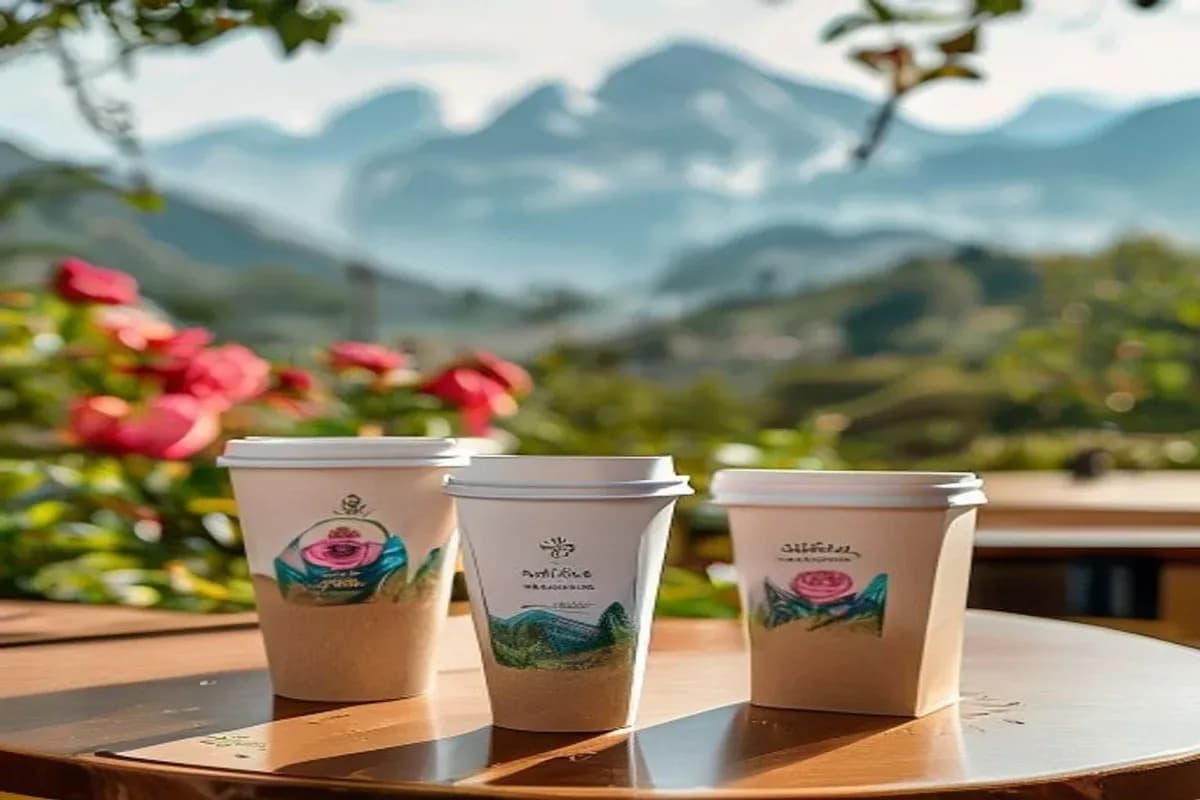
Complete packaging guide for restaurants and cafes in Taif 2026 — tourism season planning, rose-themed custom packaging, summer peak stock strategy, honey gift packaging, mountain resort specifications, and G-Pack delivery via Jeddah to Taif.

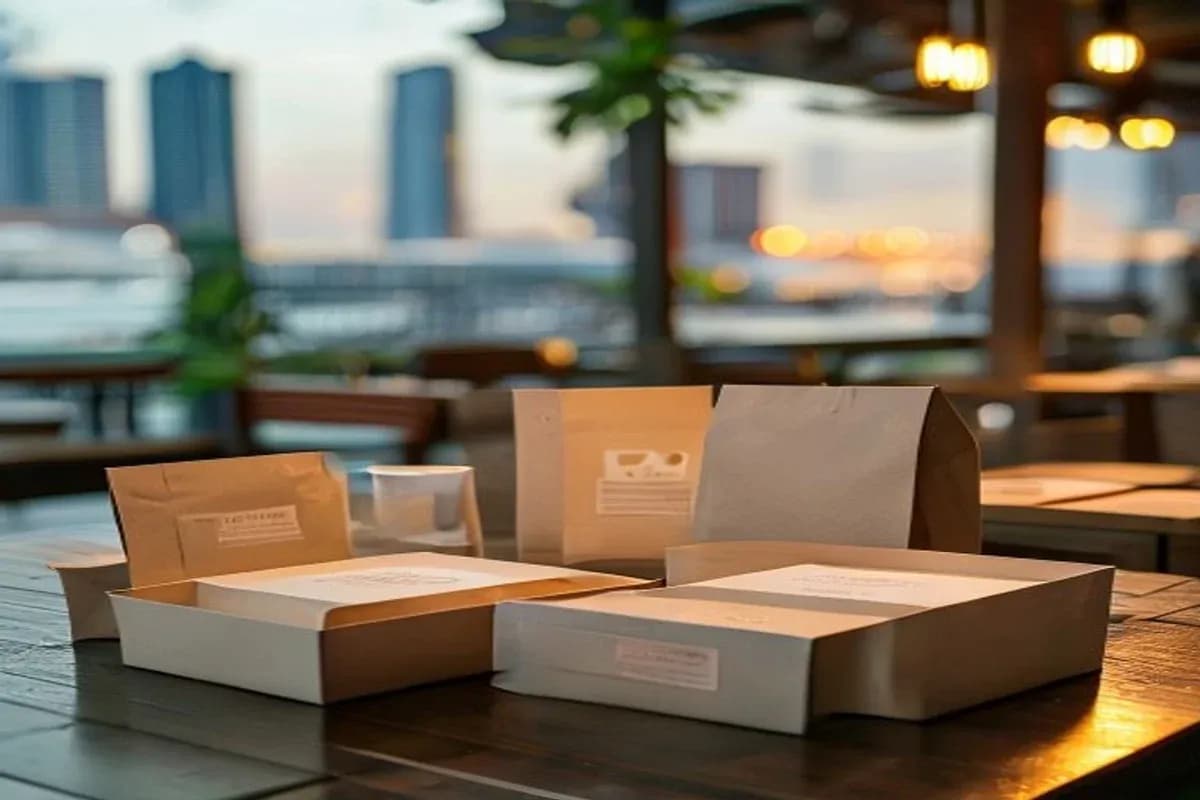
Complete packaging guide for restaurants in Rabigh 2026 — industrial workforce packaging, PetroRabigh catering, pilgrimage transit packaging, seafood requirements, and G-Pack delivery from Jeddah to Rabigh in 1-2 days.
| Item | Small Volume (500-1,000) | Medium Volume (3,000) | Large Volume (5,000+) | Notes |
|---|---|---|---|---|
| Paper cup 8oz double wall — plain | 0.60–0.84 | 0.44–0.62 | 0.35–0.50 | Shipping from Riyadh/Jeddah adds 3-5 days |
| Paper cup 8oz — custom printed 1 color | 0.85–1.12 | 0.59–0.78 | 0.46–0.61 | Production + Tabuk delivery: 18-26 days total |
| Burger box medium — plain | 0.37–0.56 | 0.27–0.38 | 0.21–0.30 | UV-resistant ink for extreme heat exposure |
| Kraft bag medium — plain | 0.68–1.00 | 0.48–0.70 | 0.38–0.55 | Moisture-barrier inner lining recommended |
| Heat-retaining cup sleeve (separate) | 0.18–0.28 | 0.13–0.20 | 0.10–0.16 | Critical for outdoor desert service |
| Insulated delivery bag (reusable) | 24–38 | 18–28 | 14–22 | Tabuk extreme temperatures make insulation critical |
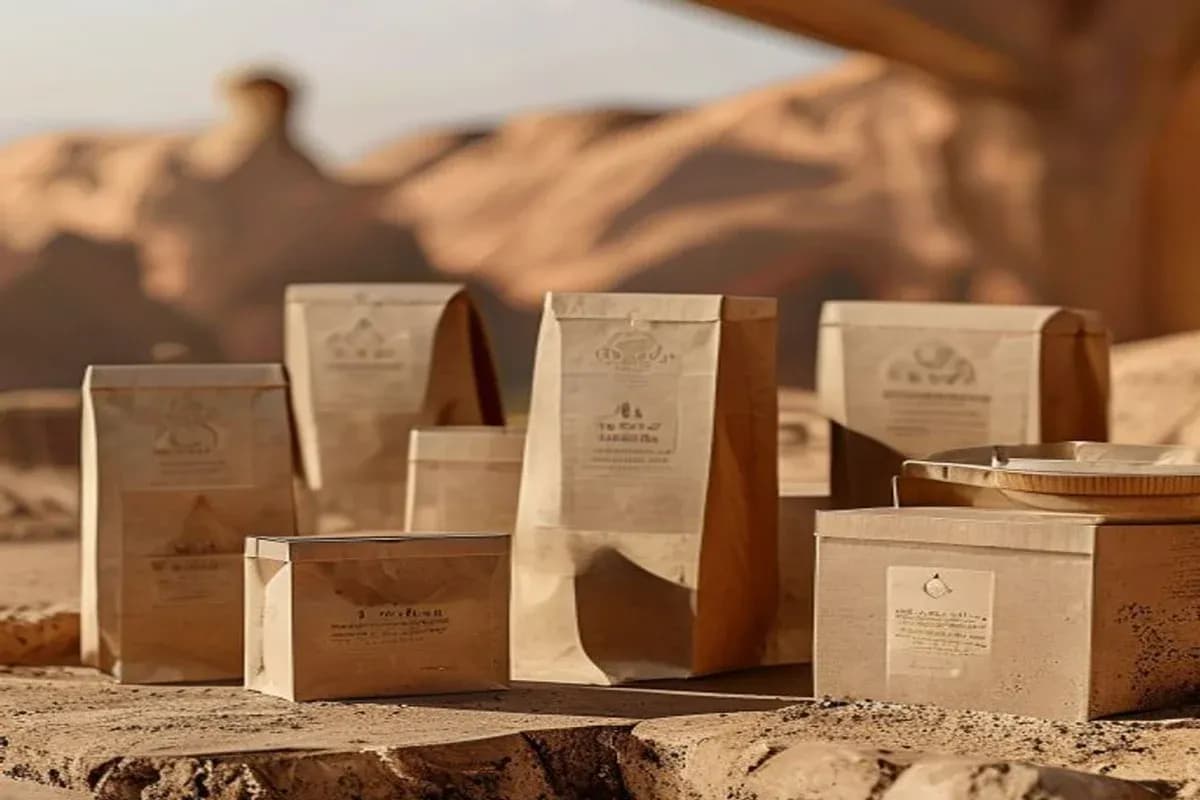
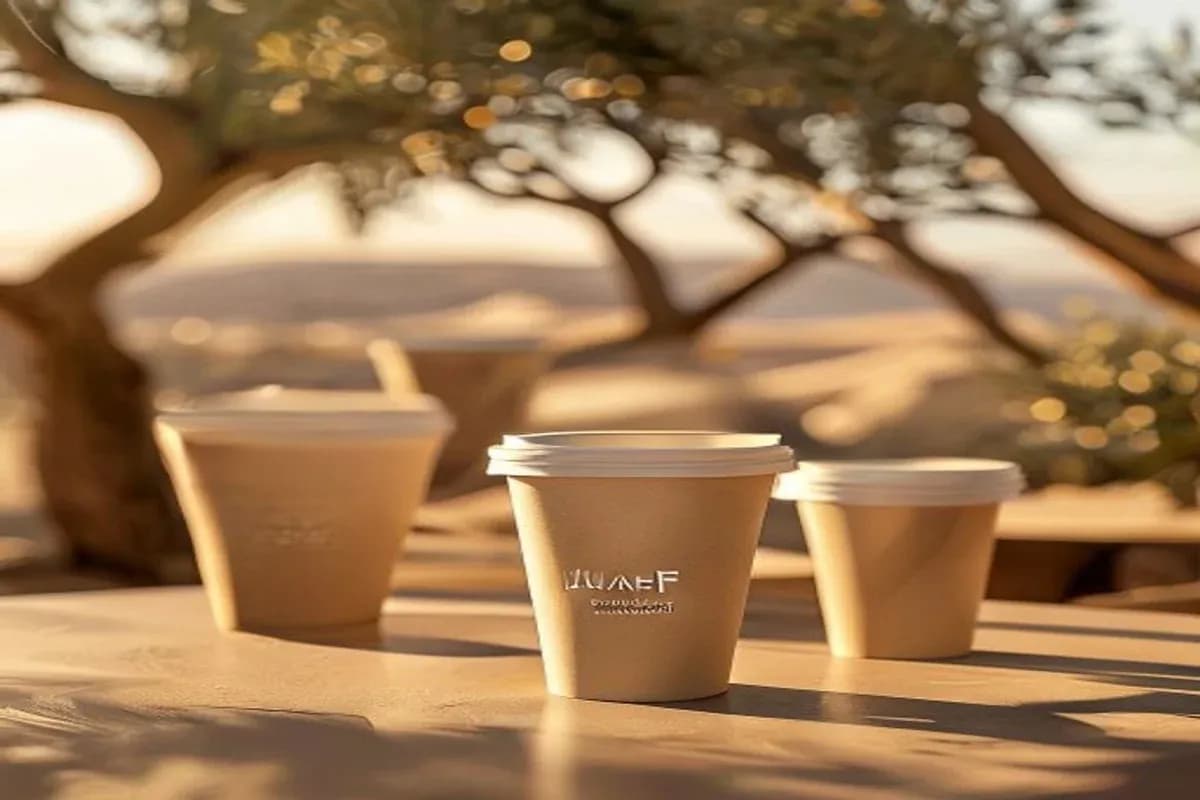
Tabuk's Geographic Environment and Its Impact on Packaging Performance. Tabuk's extreme desert environment places specific performance demands on packaging that most other Saudi cities do not face at the same severity. Summer temperatures: Tabuk summer temperatures regularly exceed 42°C and in direct sunlight can surface-heat to above 60°C. Paper cups placed in vehicle cup holders or outdoor settings heat rapidly. Standard single-wall cups become uncomfortable to hold within minutes. Double-wall cups are not merely preferable in Tabuk — they are functionally necessary. Bag degradation: direct desert sun exposure degrades adhesive bonds on bag handles and closures faster than in coastal cities. Bags for outdoor tourist contexts in Tabuk should have extra-strong adhesive handles and be made from heavier kraft stock. Hot food temperature maintenance: during summer, food placed in containers outdoors or in parked vehicles loses or gains heat faster than in air-conditioned environments. For delivery operations in Tabuk, properly insulated packaging and delivery bags are essential to arrive at acceptable serving temperature. Dust and sand exposure: Tabuk's desert winds mean that any packaging left in outdoor areas can become coated in fine dust. Sealed packaging — tamper-evident bags, sealed cup lids — is especially important for outdoor consumption contexts.
In Tabuk's climate, single-wall cups are not adequate. Double-wall paper cups (SAR 0.44-0.62 for medium volumes) prevent burn risk for customers carrying hot drinks in 42°C+ ambient temperatures. Specify double-wall as your baseline cup specification — not single-wall or sleeve-equipped single-wall.
Before ordering large volumes of any packaging item, conduct a physical performance test in actual Tabuk summer conditions: fill cups with hot coffee and carry them for 10 minutes outdoors, place meal boxes in a car for 20 minutes and check structural integrity, fill bags with typical order weights and carry for 15 minutes. Packaging that fails these tests should be upgraded before bulk ordering.
If your restaurant is positioned to serve NEOM project worker or visitor demand, study the project workforce deployment cycles — major project phases bring waves of workers with lunch and dinner catering requirements. Build inventory for these waves, especially for large-format group catering packaging (aluminum trays, large bags, cup carriers).
Tabuk is about to become internationally famous as the gateway to NEOM, Amaala, and Sharma El-Sheikh. Restaurants that develop distinctive, internationally-oriented branded packaging now are building brand identity in a market that will receive growing international visitor attention. A Tabuk restaurant with beautiful branded packaging tells the first-wave international visitors a brand story they carry home with them.
NEOM-related project teams and military installation catering often involves group orders of 10-30 portions. Stock large aluminum trays, multi-portion boxes, XL bags, and cup carriers for 6-8 beverages. Being prepared for group orders separates professional catering-ready restaurants from unprepared ones.
Tabuk's logistics distance from major production centers means custom printed packaging requires 18-26 days from artwork submission to Tabuk delivery. Plan accordingly — begin your custom packaging project 11-12 weeks before your opening date.
The NEOM Discovery Phenomenon and Tabuk Restaurant Branding. Tabuk is experiencing what tourism researchers call the "discovery phenomenon" — the phase when a destination transitions from being unknown to becoming one of the most talked-about places on Earth. NEOM, Amaala, and the Red Sea Project have put the Tabuk region on the radar of the global travel industry, architecture community, and affluent tourism market in a way that will only intensify over the next decade. In this discovery phase, every restaurant and cafe in Tabuk that serves the project visitors, international journalists, and advance-wave tourists is being evaluated against the highest international standards — and a memorable, beautifully branded cup or bag that an international visitor photographs and shares creates global brand awareness for a Tabuk restaurant at zero incremental media cost. The window to establish a recognized, distinctive branded identity in Tabuk's food service market — before it reaches mainstream tourism maturity — is narrow and currently open. Restaurants that invest in professional branded packaging now will be the ones international visitors associate with "the best in Tabuk" when they share their discovery experiences.
Custom Printing as a NEOM-Era Strategic Investment for Tabuk Restaurants. The economic logic of custom printed packaging is especially compelling for Tabuk restaurants in the current period. Custom printing at 3,000 units (the standard minimum for offset printing) costs approximately SAR 0.59-0.78/cup versus SAR 0.44-0.62/cup for plain — an incremental cost of SAR 0.15-0.16/cup. For a restaurant serving 200 customers per day, this incremental cost is SAR 30-32 per day — less than SAR 1,000 per month. The brand value created by consistent, professionally designed packaging across 200 daily customer touchpoints, amplified by social media sharing from international visitors, is worth multiples of this cost. Digital printing options (from 500 units) are also available for restaurants not yet ready for the 3,000-unit minimum of offset printing — digital printing costs approximately SAR 1.05-1.40/cup but allows brand packaging from day one with minimal upfront commitment.
| Segment | Priority Item | Heat/Environment Need | Custom Print Value | Group Order Prep |
|---|---|---|---|---|
| Local Tabuk residential | Cups + bags + meal boxes | Double-wall cups essential | High — brand building | Standard family-size bags |
| NEOM project professionals | Premium cups + quality bags | Insulated delivery critical | Very High — global impressions | Large bags + cup carriers |
| Military/government sector | Large meal boxes + bags | Durable heat-resistant | Medium | Large trays + XL bags |
| Desert/outdoor tourists | Sealed bags + strong cups | Heat-resistant + dust-sealed | High — social media | Outdoor-carry durable format |
| Tourism discovery visitors | Premium brand experience | Full insulation + sealed | Very High — international reach | Group catering capability |
Three Criteria for Evaluating Packaging Suppliers as a Tabuk Restaurant. Because Tabuk's distance from major production centers creates specific logistics challenges, supplier evaluation for Tabuk restaurants should focus on three criteria above the standard checklist: Delivery reliability and frequency: does the supplier deliver to Tabuk on a reliable, established schedule? What is the minimum order for Tabuk delivery? What is the realistic door-to-door lead time from order placement? Advance order capability: can the supplier accept Ramadan, Hajj season, and major project deployment advance orders placed 10-12 weeks ahead? Heat-specification compliance: does the supplier offer double-wall cups, UV-stable inks, and insulated delivery options that meet Tabuk's extreme climate requirements? A supplier that cannot confirm all three of these criteria is not the right supplier for a Tabuk restaurant regardless of pricing.
The 5 Most Expensive Tabuk Packaging Mistakes
1. Using single-wall cups in Tabuk summer — burn complaints and brand damage are guaranteed. Double-wall is the minimum. 2. Not accounting for Tabuk logistics lead time — ordering with Riyadh timelines and facing stockouts because the extra 3-5 days delivery was not factored in. 3. Missing the NEOM-era branding window — the discovery phase is happening now; plain packaging during this period means losing brand recognition to the first restaurant that invests. 4. No large-format group order packaging — NEOM project teams and military catering require group formats; being unprepared means losing high-value catering orders. 5. Inadequate buffer stock — Tabuk's resupply challenges mean that a 4-week stockout can become a 2-week crisis if ordering was not done in advance.
Tabuk's Future and the Packaging Investment Decision. Tabuk is positioned to be one of the most significant growth stories in Saudi Arabia over the next decade. The NEOM megaproject alone will bring hundreds of thousands of workers and eventually millions of tourists to the region. The Red Sea Project and Amaala will create a luxury tourism corridor on the Gulf of Aqaba that will become one of the world's premier dive and adventure tourism destinations. The restaurants and cafes that establish strong brand identities and professional operational infrastructure — including packaging — in 2026 will be the established brands when the tourism wave fully arrives in 2027-2030. The investment decision is not "should I spend more on packaging?" — it is "do I want to be one of the recognized Tabuk brands when this market reaches its full growth?" The answer for any restaurant serious about building long-term value in this region is clear.
Check every packaging item you currently use: is your cup double-wall? Is your bag handle rated for 3kg+ carry in heat? Is your meal box structurally sound after 30 minutes in a hot car? Replace any item that fails. This audit is the starting point for your Tabuk-appropriate packaging system.
Take your daily consumption of each item, multiply by 70 days (10-week buffer). This is your Tabuk-specific stock target. Compare to what you currently hold. If you are below this level, place a replenishment order immediately — your current stock may be dangerously low given Tabuk's lead times.
If commissioning custom packaging design, brief your designer on Tabuk's specific visual identity: the dramatic landscape, the NEOM context, the destination tourism positioning. Packaging that reflects Tabuk's unique geography and future tourism identity creates a culturally authentic brand story for international visitors.
Contact G-Pack and confirm: Tabuk delivery schedule and frequency, minimum order quantities for Tabuk delivery, lead times for standard stock and custom printed items, advance order process for Ramadan and seasonal peaks. Establish this relationship before you need it urgently.
Monitor publicly available NEOM project news for major construction phase launches, completion events, and investor visits. These events drive concentrated visitor demand. Use this intelligence to time packaging pre-orders 10-12 weeks ahead of anticipated high-demand windows.
Designate a cool, dry storage location for all packaging inventory — away from kitchen heat, direct sunlight, and outdoor-facing walls. In Tabuk's climate, packaging stored in non-cooled spaces can degrade significantly faster — cups lose their print quality, adhesive seals weaken, and bag handles become brittle.
Double-wall cups are the required minimum in Tabuk's climate. Single-wall cups without a sleeve create a burn risk when ambient temperatures are 40°C+ and the cup is filled with hot coffee. Double-wall cups (SAR 0.44-0.62 for medium volumes) eliminate this risk and also provide better thermal retention for both hot and cold beverages in extreme heat.
G-Pack delivers to Tabuk on a regular logistics schedule via the Tabuk delivery route. Standard stock items arrive within 4-7 days from order placement. Custom printed items (cups, bags, boxes) require 18-26 days total from artwork submission to Tabuk delivery. Contact G-Pack to confirm your specific delivery window and minimum order requirements.
Stock large-format packaging: deep meal boxes for large protein portions (XL 24-29cm containers), heavy-duty kraft bags with flat handles rated for 3kg+, 4-cup and 6-cup carriers for group beverage orders, and large aluminum trays for catered group orders. NEOM project workers typically order in groups of 4-20 people, often on compressed lunch schedules. Having the right group-format packaging ready converts these high-value orders — they cannot be fulfilled with standard single-portion packaging.
Strongly yes — and specifically now. Tabuk is in its discovery phase as an international destination tied to NEOM. International workers, project visitors, and early tourism pioneers are visiting Tabuk now and forming their first impressions of the city's food service quality. A restaurant with professional, distinctive branded packaging makes a premium impression in this first-wave audience and builds brand recognition before competition has caught up.
Using single-wall cups and not planning for Tabuk-specific lead times. Single-wall cups are a quality failure in Tabuk's climate. And ordering with Riyadh-style 7-day assumptions when Tabuk actually needs 10-15 days causes preventable stockouts. Both mistakes are common and both are easily fixed: upgrade to double-wall cups and add 7 days to all your lead-time planning.
G-Pack delivers to Tabuk on established routes — double-wall cups, heat-spec bags, large-format catering packaging, and custom printing. NEOM project operator discounts available for high-volume recurring orders.
Get a Free Quote