Complete packaging guide for restaurants and cafes in Yanbu 2026 — seafood packaging requirements, industrial zone needs, pricing benchmarks, supply logistics from Yanbu, and how to build your packaging system in a growing coastal city market.
Yanbu is undergoing rapid economic and urban transformation as part of Vision 2030 — evolving from its historical identity as a fishing and industrial port city into a multi-sector destination with growing commercial, industrial, and tourism activity. The restaurant and cafe sector in Yanbu reflects this transformation: alongside the established traditional seafood restaurants that have served the city for generations, a growing wave of modern cafes, fast food concepts, and cloud kitchens is entering the market to serve Yanbu's expanding residential and professional community. For restaurant and cafe owners in Yanbu, packaging decisions carry specific considerations tied to the city's unique character: the industrial worker community that represents a significant portion of the food service customer base, the coastal and seafood restaurant segment with its specific packaging requirements, and the logistics reality of sourcing packaging in a city geographically distant from the major Saudi supply centers. This guide addresses packaging specifically for Yanbu — pricing benchmarks, supplier logistics, seafood packaging requirements, and how to build a packaging system that positions your restaurant competitively in Yanbu's growing market.
Who This Guide Is For
This guide is written for restaurant and cafe owners in Yanbu who want to understand their packaging options, pricing, and logistics — whether you are opening a new operation, reviewing your current packaging costs, or preparing for expansion. It covers pricing benchmarks, the specific requirements of Yanbu's restaurant segments, and the logistical realities of packaging supply in this city.
Yanbu's Restaurant Segments and Their Packaging Requirements. Yanbu's restaurant market divides into segments with distinct packaging needs. Seafood restaurants: Yanbu's coastal identity means seafood is the dominant traditional dining category. Seafood packaging requirements are specific — containers must resist high moisture and oil from grilled and fried seafood, must be structurally strong for heavy portions, and must maintain heat without trapping excessive steam. Bagasse and aluminum trays are the standard for traditional seafood platters. Industrial area restaurants: Yanbu houses one of Saudi Arabia's major industrial cities with tens of thousands of workers in petrochemical and manufacturing facilities. These workers require practical, high-volume takeaway packaging — fast service, durable bags, and generous portion containers. The priority is functional reliability over premium brand expression. Residential community cafes and modern restaurants: the newer residential and commercial districts of Yanbu support a growing modern cafe scene serving the young professional and family demographic. These customers expect the same packaging quality standards as in Riyadh and Jeddah. Tourism and corniche restaurants: Yanbu's corniche and marina are growing tourism destinations. Takeaway packaging from these locations travels — to the beach, on boats, in park areas — requiring structural durability and strong handles.

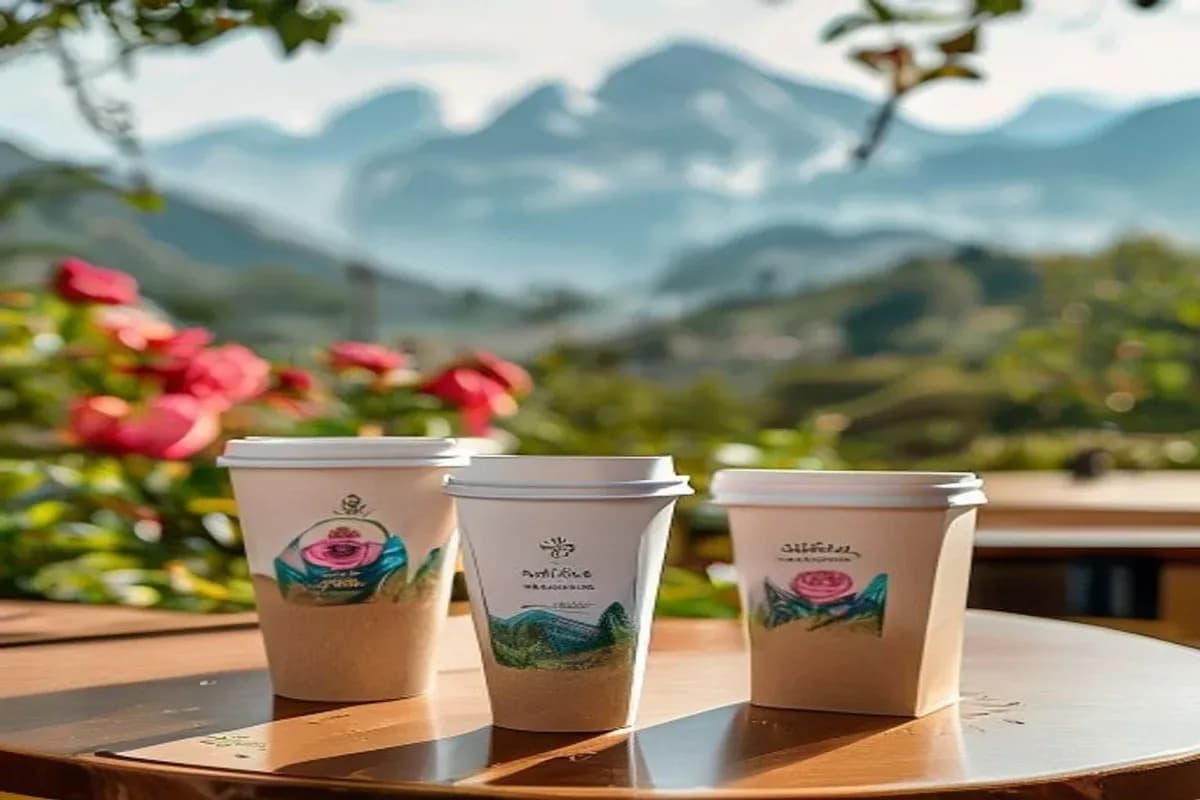
Complete packaging guide for restaurants and cafes in Taif 2026 — tourism season planning, rose-themed custom packaging, summer peak stock strategy, honey gift packaging, mountain resort specifications, and G-Pack delivery via Jeddah to Taif.

Complete packaging guide for restaurants in Rabigh 2026 — industrial workforce packaging, PetroRabigh catering, pilgrimage transit packaging, seafood requirements, and G-Pack delivery from Jeddah to Rabigh in 1-2 days.
| Item | Small Volume (500-1,000) | Medium Volume (3,000) | Large Volume (5,000+) | Notes |
|---|---|---|---|---|
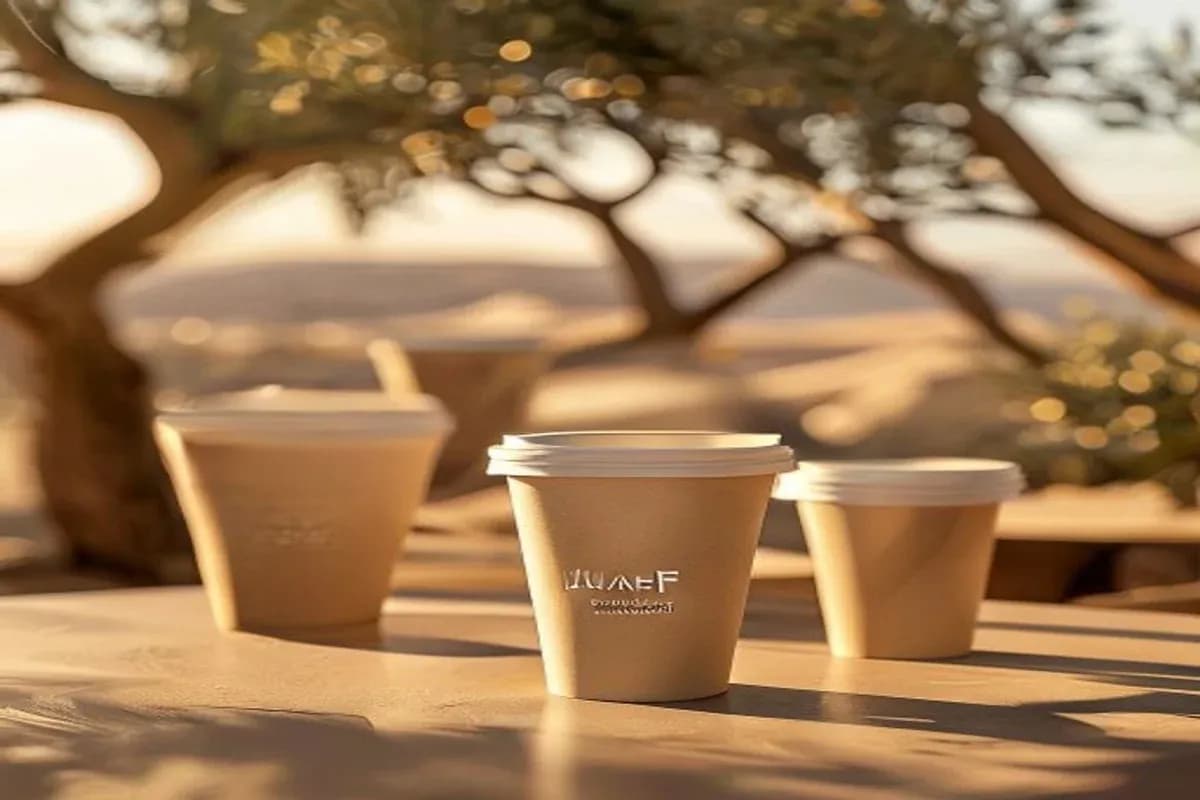
| Paper cup 8oz double wall — plain | 0.58–0.80 | 0.43–0.60 | 0.34–0.48 | Delivery to Yanbu adds SAR 0.02-0.05/unit |
| Paper cup 8oz — custom printed 1 color | 0.82–1.08 | 0.57–0.75 | 0.44–0.58 | Production in Riyadh/Jeddah, 14-21 days incl. delivery |
| Burger box medium — plain | 0.36–0.54 | 0.26–0.36 | 0.20–0.28 | Available from G-Pack standard inventory |
| Kraft bag medium — plain | 0.67–0.98 | 0.47–0.67 | 0.37–0.54 | Greaseproof liner essential for seafood |
| Aluminum foil tray large — seafood | 0.55–0.80 | 0.40–0.55 | 0.30–0.42 | Heat retention critical for seafood portions |
| Bagasse tray deep — plain | 0.52–0.75 | 0.38–0.52 | 0.28–0.38 | Eco option, excellent heat retention |
Packaging Challenges Unique to New Restaurants in Yanbu. New restaurants in Yanbu face specific packaging challenges that differ from opening in Riyadh or Jeddah. Supply logistics: the majority of custom printed packaging is produced in Riyadh, Jeddah, or Eastern Province. Yanbu's logistics lead time adds approximately 1-3 days to standard production timelines — increasing the total lead time for custom printed packaging to 17-25 days. This means new Yanbu restaurants need to begin their packaging procurement process 10 weeks before opening, not the 8 weeks recommended for major cities. Buffer stock requirements: given longer resupply lead times, Yanbu restaurants should maintain a minimum 8-week buffer stock rather than the standard 6-week recommendation. Competition differentiation: Yanbu's cafe market is in a growth phase — early adopters of professional branded packaging capture a disproportionate share of brand recognition while competition is still forming. The window for establishing a first-mover packaging identity in Yanbu's growing modern cafe segment is now.
List every packaging item required for your menu: cup sizes, container types, bag sizes, seafood-specific items. For seafood restaurants, add to this list: large aluminum trays, moisture-resistant bags, seafood portion containers. Complete this specification before approaching any supplier.
Add 3-5 days to all standard packaging lead times for Yanbu delivery. Plan accordingly: submit custom printing artwork 11 weeks before your opening date (not 8 weeks). Establish your 8-week buffer stock target before your first day of service.
Seafood dishes produce more moisture and oil than standard food. Containers for grilled and fried seafood must have a grease-resistant inner lining. Bags holding seafood portions must be moisture-resistant on the outer surface. Test all seafood packaging with your actual dishes before ordering in volume.
If your restaurant serves the Yanbu industrial city customer base, group lunch orders of 4-8 beverages are common. Stock 4-cup carriers and ensure they are always available during peak industrial lunch hours (11:30am-1:30pm).
Yanbu's modern restaurant market is in an early growth phase. Restaurants that establish branded packaging identity now build recognition before their competitors. Custom digital printing from 500 units allows brand packaging from day one without large volume commitment.
Identify your primary packaging supplier and confirm Yanbu delivery schedules, minimum orders, and lead times before you open — not after you run out. Identify a secondary local supplier in Yanbu for emergency small-quantity purchases.
Yanbu's Growing Competition — How Branded Packaging Creates Differentiation. Yanbu's cafe and restaurant market is entering a phase of rapid competitive intensification — new concepts are opening monthly as the city's residential development accelerates. In a market where competition is growing faster than customer habit formation, early brand recognition through packaging is a strategic advantage. A Yanbu cafe that establishes a distinctive, consistently applied cup and bag design in 2026 is building brand recognition equity in a market where most competitors are still using plain generic packaging. The recognition value of a distinctive cup brand accumulates with every customer who sees it — on the corniche, in the office tower, in the industrial facility cafeteria. This accumulation effect means that starting custom printed packaging early costs the same but produces disproportionately greater brand value than starting later when all competitors are also doing it.
Industrial Zone Restaurants in Yanbu — Specific Requirements. The Yanbu Industrial City hosts a large working population with unique food service requirements during working shifts. Industrial zone restaurant packaging must prioritize: Volume and speed — high-throughput ordering during 45-60 minute lunch breaks requires packaging that staff can assemble quickly. Durability — food packaging carried through large industrial facilities must withstand being placed on machinery surfaces, carried in tool bags, and handled roughly. Large portions — industrial workers typically order larger portions than standard restaurant servings, requiring larger primary containers and stronger bags. Practicality over aesthetics — while branded packaging still adds value, the primary requirements are functional reliability: bags that don't split, boxes that don't collapse, lids that stay closed.
| Segment | Primary Container | Bag Requirement | Priority Feature | Custom Print Value |
|---|---|---|---|---|
| Seafood restaurant | Aluminum or bagasse tray (large) | Moisture-resistant large bag | Grease resistance + heat retention | Medium — corniche visibility |
| Industrial area restaurant | Deep meal box or aluminum tray | Heavy-duty large bag | Durability + large volume | Lower — functional priority |
| Modern cafe | Double-wall cups (3-4 sizes) | Medium kraft bag | Brand quality + delivery seal | High — brand differentiation |
| Corniche/marina takeaway | Clamshell box + cup + bag | Strong-handle large bag | Structural durability for outdoor carry | High — social media visibility |
| Cloud kitchen | Vented container + tamper bag | Delivery-grade bag | Delivery seal + leak prevention | Medium-High — rating impact |
Professional Packaging Systems for Yanbu Restaurants. A professional packaging system for a Yanbu restaurant balances three requirements: quality that meets the expectations of Yanbu's growing professional and modern-consumer segment, cost efficiency that reflects the economic realities of a mid-size market, and supply continuity that accounts for the logistics of a geographically peripheral city. The minimum professional packaging system for a Yanbu restaurant: 2-3 primary container types covering your full menu (cups in 2 sizes, meal boxes in 2 sizes, bags in 2 sizes), all items with greaseproof or moisture-resistant specifications where required for your food types, a custom printed bag with your logo as your primary branded item, and an 8-week buffer stock of all critical items at all times.
The 5 Most Expensive Yanbu Packaging Mistakes
1. Not accounting for Yanbu logistics lead time — ordering with Riyadh timelines and facing stockouts because you forgot the extra 3-5 days delivery time. 2. Using standard bags for seafood — moisture seeps through unlined bags, damaging your brand presentation. 3. Ordering too-small quantities — Yanbu's smaller local supply market makes emergency restocking harder and more expensive than in major cities. 4. No backup supplier — a stockout in Yanbu has fewer fast resolution options than a stockout in Riyadh. 5. Missing the early branded packaging window — Yanbu's cafe market is still forming; first-mover packaging identity is far easier to establish now than in 2 years when competition has caught up.
Yanbu's Future — The Case for Investing in Professional Packaging Now. Yanbu's development trajectory under Vision 2030 makes it one of the most promising investment environments for food service in Saudi Arabia. The Yanbu Waterfront development, expanded tourism infrastructure, and continued industrial zone growth are all driving population growth and increasing disposable income spending in the food service sector. Restaurants that build strong brand identity and professional packaging systems in 2026 are positioning themselves for the growth wave that Yanbu's development pipeline promises. A restaurant that looks professional and distinctive today — through consistently branded packaging, sealed delivery, and quality presentation — will capture a disproportionate share of customer loyalty as Yanbu's market grows larger. The investment cost is the same today as it will be in 2028 — but the competitive benefit is far greater when taken before the market reaches full maturity.
Count every packaging item used across one full week of service. Divide by 7 for daily consumption. Multiply by 56 (8 weeks) for your Yanbu-specific buffer stock target. This higher buffer than standard cities accounts for Yanbu's extended resupply lead times.
If your menu includes any seafood, source your seafood packaging (moisture-resistant trays, grease-resistant bags) separately and test specifically with your seafood dishes. Do not assume standard restaurant packaging handles seafood adequately — test physically.
Submit your artwork and specifications 10 weeks before your target opening date. This 10-week lead time accounts for: design approval (2 weeks), production (3 weeks), delivery to Yanbu (1 week), and buffer (4 weeks). Do not compress this timeline.
Visit local packaging suppliers in Yanbu and confirm what standard items they carry in stock. These suppliers are your emergency backup for any item that runs out before your G-Pack delivery arrives. Document their contact information and stock availability before you need it.
Allocate storage space adequate for 8 weeks of your projected volume for every packaging item. Ensure the storage area is dry, cool, and away from cooking heat. Cups in particular must be stored in sealed cartons away from moisture to maintain print quality.
Every week, count your remaining stock of each packaging item. Compare to your 8-week buffer target. Any item that falls below 4 weeks remaining stock triggers an immediate reorder. This early trigger prevents the extended Yanbu lead time from causing a stockout.
G-Pack serves Yanbu from its national production and logistics network with regular delivery schedules. Standard stock items arrive within 3-7 days of order placement. Custom printed items (cups, bags, boxes) require 17-25 days total including production and Yanbu delivery. Contact G-Pack for your specific Yanbu delivery schedule and minimum order requirements.
Yes — significantly. Seafood dishes produce much more moisture and grease than standard food. Trays and containers for seafood must have a grease-resistant or foil interior lining. Outer bags must have moisture resistance on the exterior to prevent seepage and bag softening during a 10-20 minute walk to the customer's destination. Test all seafood packaging with your actual dishes before placing large orders.
Yes — and specifically now, while Yanbu's modern cafe and restaurant market is still in an early growth phase. The brand recognition value of establishing a distinctive cup and bag design now, before most Yanbu competitors have done so, is disproportionately high. Custom digital printing from 500 units makes branded packaging accessible for new and small-volume operations.
Three practices: (1) Maintain an 8-week buffer stock (not the standard 6-week) of all primary items. (2) Place reorders when you reach 4 weeks of remaining stock, not 3 weeks. (3) Identify one local Yanbu supplier for emergency purchases of basic items. These three practices eliminate virtually all supply risk for a Yanbu restaurant.
Strong-handle kraft bags (flat paper handles, not twisted — twisted handles can tear under extended carrying), structural meal boxes that don't collapse when carried at an angle or placed on outdoor surfaces, beverage cups with secure lids that won't vibrate off when carried, and tamper-evident bag sealing. Corniche customers carry packaging for 15-30 minutes in outdoor conditions — durability is a primary requirement.
G-Pack delivers packaging to Yanbu on established schedules — cups, bags, boxes, seafood trays, and custom printing. Free consultation and competitive quote. Long-lead orders and Ramadan advance orders welcome.
Get a Free Quote