The complete packaging checklist for opening a new restaurant in Saudi Arabia 2026 — what to order, in what quantities, on what timeline, how to budget, and how to build a professional brand identity from your very first day of service.
Opening a new restaurant in Saudi Arabia requires months of careful preparation — location, licensing, menu development, staff hiring, and interior design all demand enormous attention. Yet packaging is one of the most consistently overlooked elements until the final two weeks before opening, when it becomes an emergency. The predictable pattern: invest heavily in food quality and ambiance, then scramble for packaging days before launch and settle for whatever plain stock is available locally — undermining the professional image built over months of preparation. This guide is the definitive packaging checklist for opening a new restaurant in Saudi Arabia. It covers exactly what to order, in what quantities, on what timeline, how to calculate your budget, which packaging decisions must be made before day one and which can wait, and how to use packaging to communicate a professional brand identity from your very first order. Every recommendation here is built on G-Pack's experience helping hundreds of new Saudi restaurants launch with packaging systems that support their growth from day one.
Start Packaging 8 Weeks Before Opening
Restaurants that order packaging in the final week before opening face two choices: delay the opening or use whatever generic unbranded stock is available. Custom printed packaging — the cups and bags with your logo that make your restaurant look professional — requires 14-21 days of production time. Add 1-2 weeks for design approval and sample review, and the process requires 8-10 weeks from start to delivery. Begin the packaging process today, not the week before your opening.
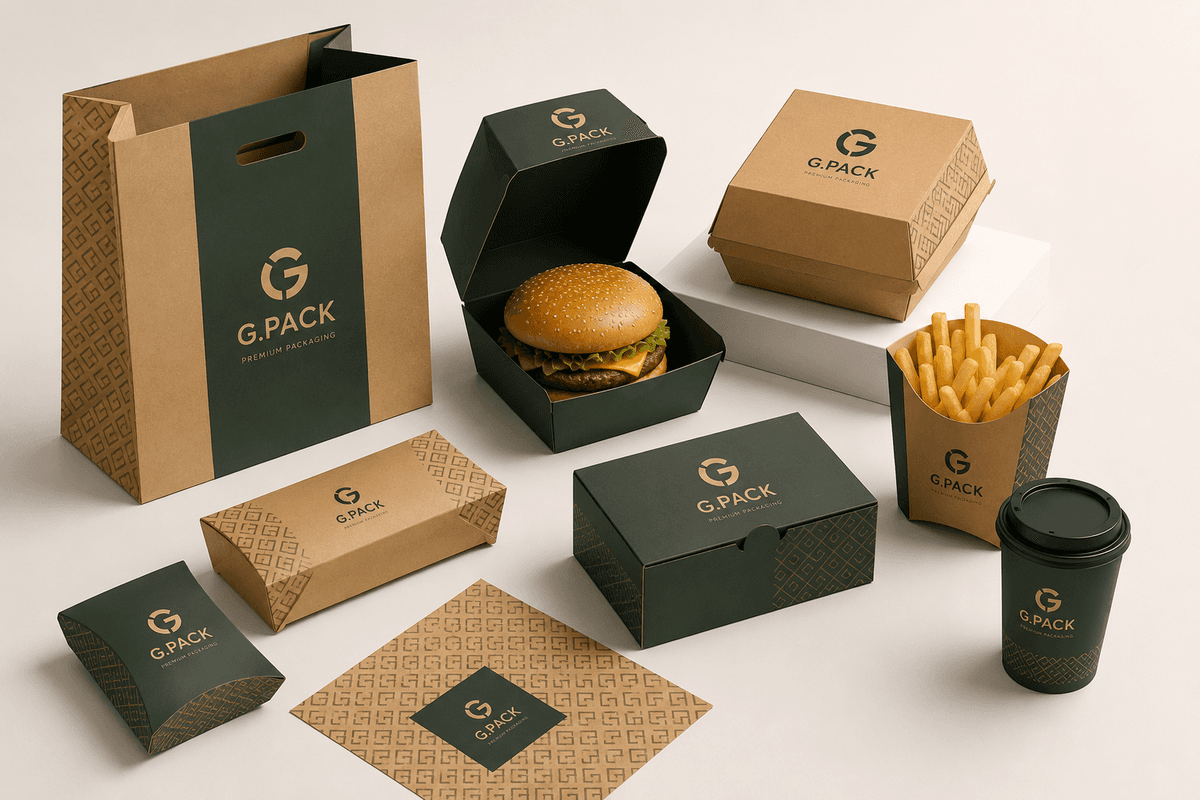
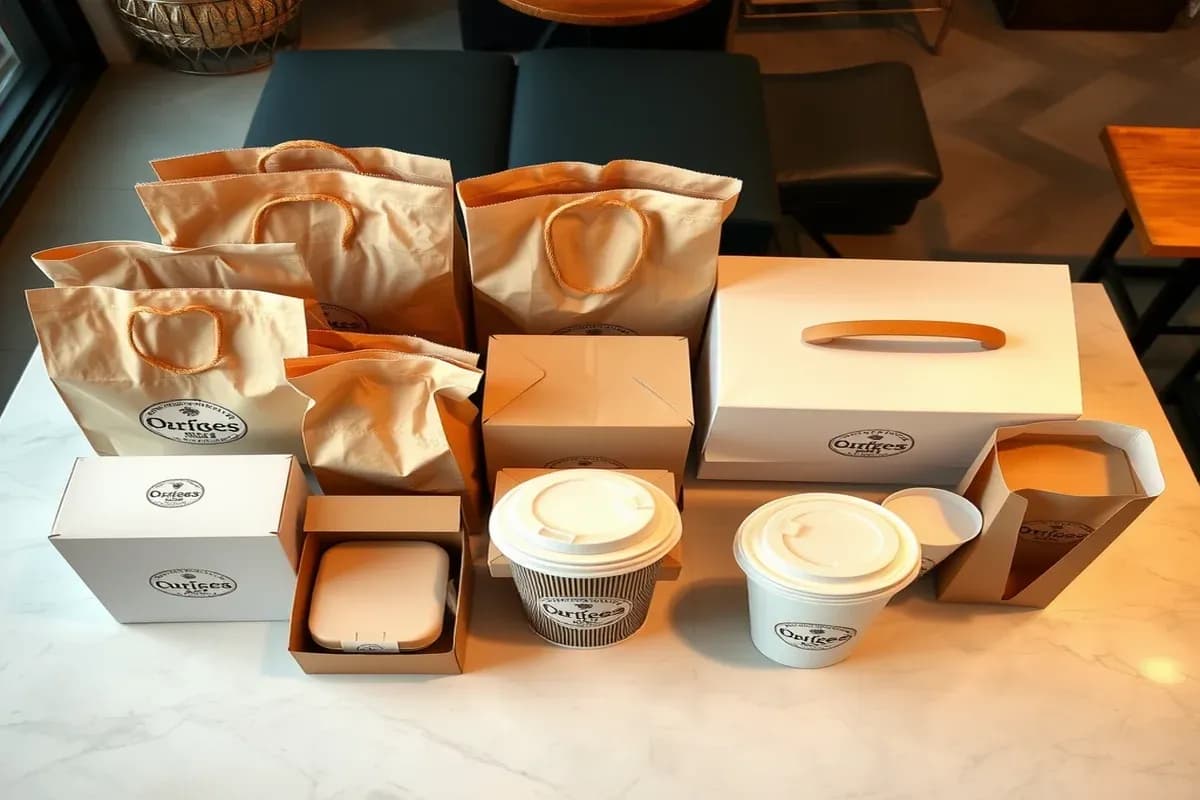
The Complete Packaging List for a New Saudi Restaurant. Cups: map every beverage on your menu to the correct cup size. A cafe needs 4oz for espresso, 8oz for cappuccino, 12oz for regular coffee, and 16oz for large cold drinks. A traditional restaurant serving Arabic coffee and juices may need only 4oz and 12oz. The wrong cup size forces staff to overfill or underfill on every order — a daily operational frustration that is entirely preventable. Food boxes: every hot food item needs a correctly sized primary container. Order at minimum 2 sizes — regular and large. A single universal size never works across an entire menu. Carry bags: in 2 sizes minimum — medium for individual orders and large for family orders. The outer bag is your most publicly visible branded item. Wrapping paper: for any sandwiches, shawarma, or items that need wrapping — kraft paper or food-grade white wrap. Accessories: sauce cups in 2oz (ketchup, tahini) and 4oz (salad dressings, larger condiments). Napkins: underestimated until the first rush — restaurants that run out of napkins during service create complaints disproportionate to the actual inconvenience.

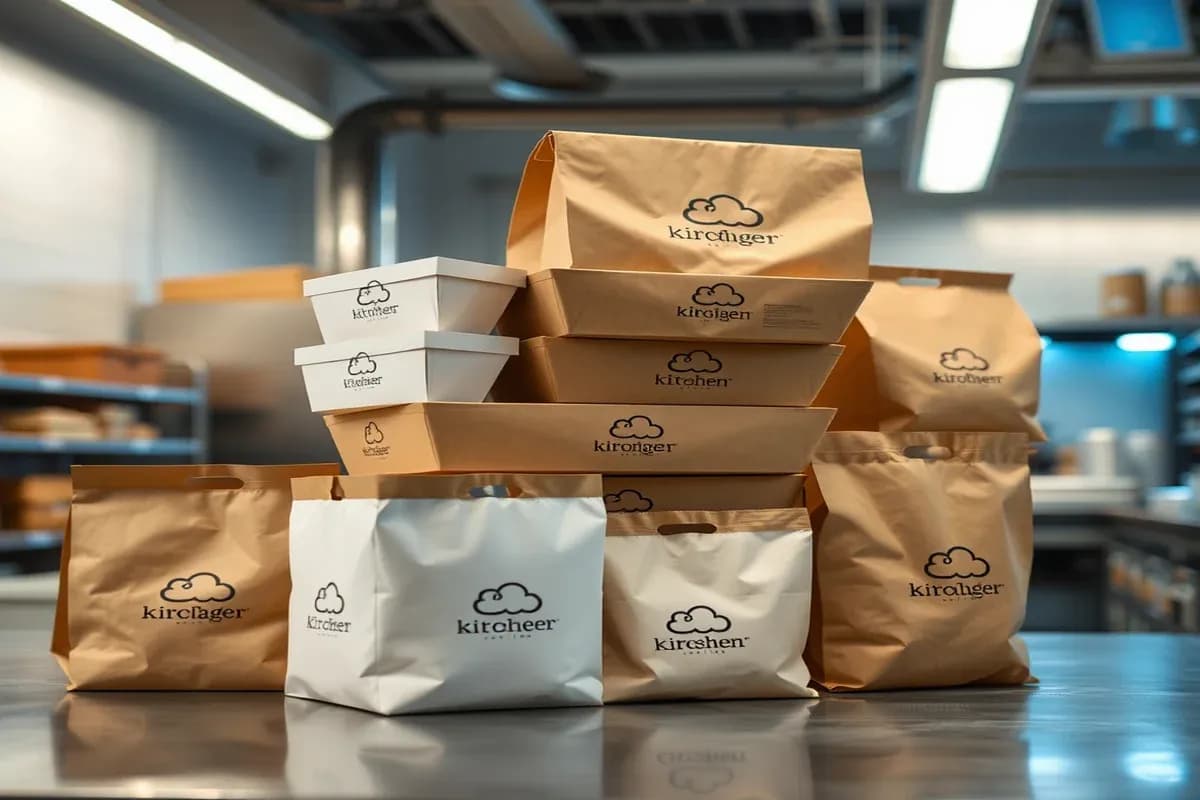
The complete packaging guide for Saudi cloud kitchens in 2026 — delivery-optimized containers, tamper-evident sealing, building brand identity without a storefront, food-type packaging strategies, and cost planning for every order volume.

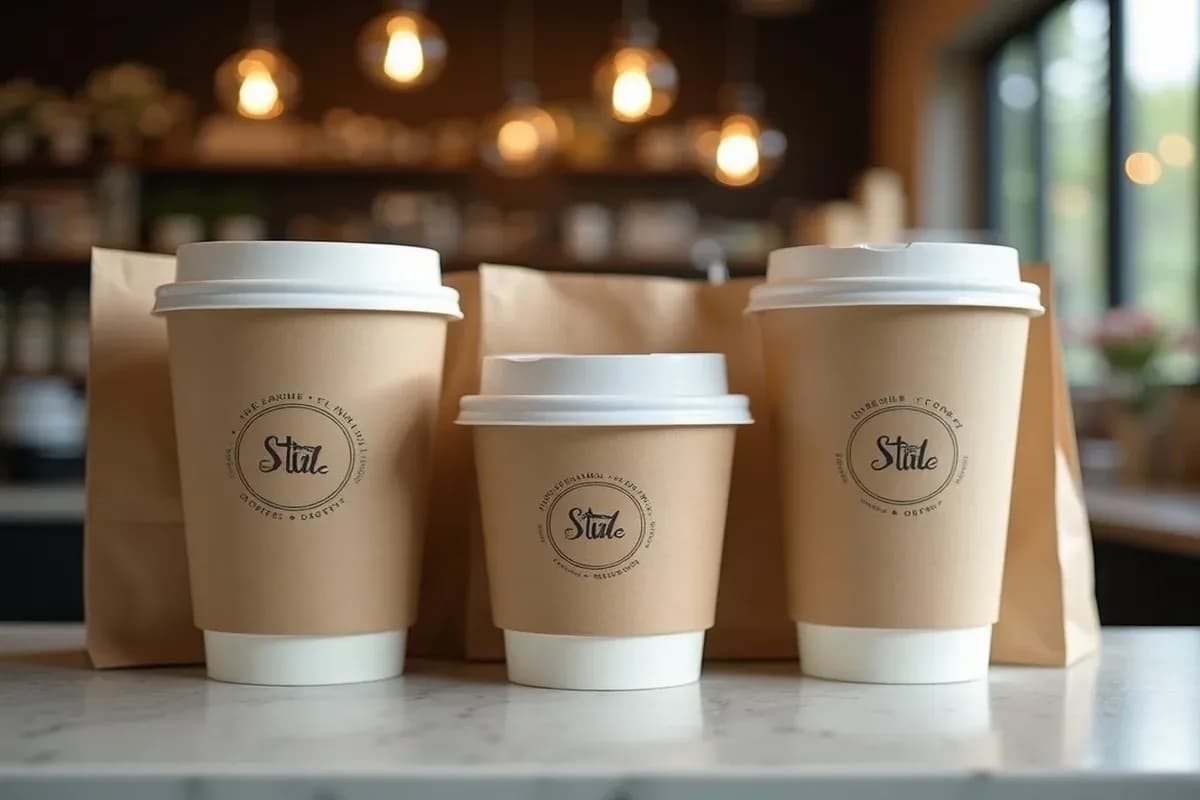
The definitive packaging guide for Saudi cafes and coffee shops in 2026 — from choosing the right cup sizes and wall types to pastry boxes, takeaway bags, delivery sealing, and building a complete cafe visual identity through packaging.
| Restaurant Type | Essential Packaging | Custom Print Priority | Can Add Later |
|---|---|---|---|
| Burger & Fast Food | Burger boxes, bags, sauce cups, paper cups | Bags + cups from day 1 | Seasonal packaging |
| Specialty Cafe | Double-wall cups (4 sizes), pastry bags | Cups from day 1 — highest priority | Window cake boxes |
| Saudi Traditional | Deep containers, foil trays, large bags | Bags priority, then cups | Ramadan gift boxes |
| Pizza Restaurant | Pizza boxes (3 sizes), carry bags | Pizza boxes + bags | Dessert packaging |
| Cloud Kitchen | Vented boxes, tamper bags, sauce cups, inserts | Bags priority — brand identity | Full box custom printing |
How to Calculate Your Initial Packaging Quantities. The simple formula: your estimated daily orders in the first week (be conservative) × 45 days = your starting order quantity for each packaging item. Why 45 days? Your first order should cover 6 weeks — long enough to observe actual consumption patterns and place a second, more accurate order before running out. A new restaurant expecting 50 orders per day × 45 days = 2,250 units of each primary container. Round up to the nearest supplier quantity tier (typically 500 or 1,000 units). Order high during your opening month. New restaurants typically run special opening promotions and experience higher-than-normal volumes for the first 2-3 weeks — which is exactly when running out of packaging would be most damaging to your brand and operations.
| Item | Priority | Timeline | Reasoning |
|---|---|---|---|
| Primary food containers | CRITICAL — Day 1 | 8 weeks before opening | No packaging = no service possible |
| Beverage cups — 3 sizes | CRITICAL — Day 1 | 8 weeks before opening | Every drink order requires the right cup |
| Carry bags — 2 sizes | CRITICAL — Day 1 | 8 weeks before opening | Every takeaway order requires a bag |
| Sauce cups 2oz + 4oz | HIGH — Before opening | 4-6 weeks ahead | Customer experience staple |
| Napkins | HIGH — Before opening | 2-4 weeks ahead | Basic service standard |
| Custom branded cups | HIGH — Plan early | Submit design 6 weeks ahead | Builds brand from first cup |
| Custom branded bags | HIGH — Plan early | Submit design 6 weeks ahead | Most visible branded item outdoors |
| Gift boxes, seasonal packaging | LOW — Optional | Add in month 2-3 | No impact on day-1 operations |
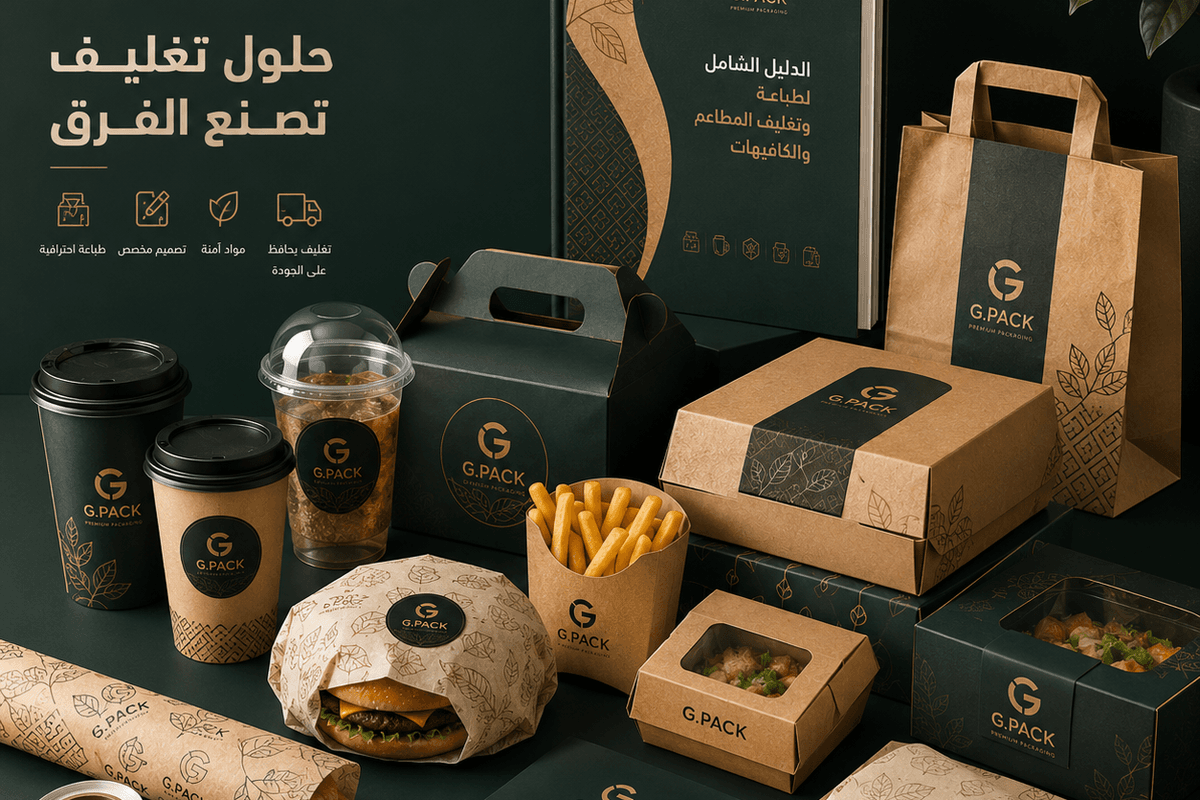
Visual Brand Identity From Day One. Branded packaging from your opening day creates an immediate, lasting impression of professionalism that plain packaging cannot replicate regardless of food quality. A customer who receives their first order in a cup printed with your logo and colors experiences a completely different level of trust and perceived value than one receiving it in a plain white cup. This first impression sets the price expectation and quality frame for every subsequent visit. You don't need to brand every packaging item from day one. The minimum effective investment: branded cups and branded carry bags. These two items carry the majority of your public visual exposure — on streets, in offices, in social media photos. Everything else can be added progressively as your volume justifies minimum order quantities. Plain stock packaging for the first 2-3 weeks before custom printing arrives is acceptable; beyond 4 weeks, it actively costs you brand equity.
Packaging Decisions That Cannot Be Delayed vs. Those That Can Wait. Decisions that must be finalized before ordering any packaging: cup wall type — single-wall for cold-only, double-wall for all hot beverages (this determines your entire cup ordering structure). Primary container sizes — measure your actual plated food before ordering any boxes. A box 1cm too small ruins your burger presentation on every single order. Your supplier relationship — confirm at least one supplier who has provided samples you have tested with your actual food. Your custom printing design brief — the earlier you start, the more revision rounds you can afford before your opening date. Decisions that can wait until after opening: premium seasonal packaging for Ramadan and National Day — plan 8 weeks ahead when the season approaches. Eco-packaging upgrades — transition gradually once your baseline packaging is stable. Gift packaging and catering presentation boxes — add when you identify demand. Specialty portion-control packaging — based on actual menu data after 30 days of service.
| Restaurant Scale | Daily Orders (Estimated) | Monthly Budget (SAR) | Per-Order Packaging Cost |
|---|---|---|---|
| Small cafe or fast food | 20-40 orders | 600–1,200 | SAR 1.50–2.80 |
| Mid-size restaurant | 60-120 orders | 1,500–3,500 | SAR 1.80–3.20 |
| Large restaurant or chain branch | 150-300 orders | 3,500–8,000 | SAR 1.50–2.50 |
| High-volume cloud kitchen | 100-200 delivery orders | 2,500–6,000 | SAR 2.00–4.00 |
Pre-Opening Packaging Final Checklist
✓ Cups ordered in 3+ sizes with 6-week supply confirmed ✓ Primary food containers in 2+ sizes with 6-week supply ✓ Carry bags in small and large with 6-week supply ✓ Sauce cups 2oz and 4oz ordered ✓ Napkins ordered ✓ All items physically sample-tested with actual food ✓ Custom branded cups ordered with design submitted 6 weeks before opening ✓ Custom branded bags ordered with design submitted 6 weeks before opening ✓ Backup supplier identified and contacted
List every food and beverage item on your menu and assign the exact packaging it requires: cup size, container type and dimensions, bag size, and whether any items need wrapping paper. This map is your complete packaging specification before you contact any supplier.
Estimate your conservative daily order count for week 1. Multiply by 45 days for each packaging SKU. Round up to the nearest supplier quantity tier. Order high rather than low — running out in week 2 is far more costly than having 20% extra stock.
Reach out to at least 2-3 packaging suppliers with your complete specification. Request physical samples of every item you plan to order. Never order in quantity without holding and testing the actual product with your food.
Work with a designer to prepare your logo and brand identity in print-ready vector format. Submit to your supplier for a digital proof review, then a physical sample review. Allow at least 2 rounds of revision before approving production.
Once samples are approved and design is finalized, place your complete opening inventory order. Confirm production timeline in writing. 4 weeks before opening gives standard production time plus buffer for any delay.
Prepare a clean, dry, ventilated storage space adequate for your full opening inventory. Set up a simple inventory count system — daily check of key items like cups, boxes, and bags to catch approaching stockouts before they happen.
Order a 45-day supply of each item based on your conservative estimated daily orders. For a restaurant expecting 50 orders per day: 2,250 units per primary container SKU. Round up to your supplier's quantity tier (500 or 1,000 units). Start high — running out in week 2 of operations is far more expensive than holding 20% extra inventory.
Begin your packaging process 8-10 weeks before your target opening date. Custom printed packaging (cups and bags with your logo) requires 6-8 weeks from design submission to delivery. Plain stock packaging requires 1-3 weeks. If you want custom branding on day one — which you should — start 8-10 weeks ahead.
Budget SAR 3,000-8,000 for your initial 6-week packaging supply for a restaurant doing 30-80 orders per day. This covers cups, food containers, bags, sauce cups, and napkins. Custom printed items add SAR 1,500-4,000 for initial plate fees and minimum quantity printing. Your monthly recurring packaging cost will be SAR 800-3,500 depending on your volume.
Use custom branded packaging from day one if at all possible. The first impression customers form of your restaurant — including your packaging quality and brand presence — is extremely difficult to change later. Customers who associate your brand with plain packaging during your opening weeks carry that association. Submit your design files 6 weeks before opening and have branded packaging ready for your launch.
First: identify a backup supplier before opening — one who can fulfill plain-stock emergency orders within 24-48 hours. Second: set daily inventory count triggers — when you drop to 3 days of supply for any item, trigger an emergency reorder immediately. Third: for the immediate crisis, any food-grade plain-stock packaging from local suppliers is better than sending orders in unsuitable containers.
G-Pack helps new Saudi restaurants build their complete packaging system from scratch — from checklist to first delivery. Free consultation, sample testing, and your quote within 24 hours.
Get a Free Quote