The ultimate restaurant packaging guide for Saudi Arabia 2026 — covering the four core materials, custom printing as a marketing tool, seasonal planning, budget optimization, and how to build an integrated packaging system from scratch.
Packaging is not just a container that carries food from the kitchen to the customer's hands. It is the first thing your customer touches, smells, and sees before taking the first bite — and the last thing they remember after finishing. In Saudi Arabia's restaurant market, which hosts over 70,000 restaurants and cafes in 2026, packaging is the difference between a brand that leaves a lasting impression and one that is forgotten the moment the box closes. The biggest mistake restaurant owners make is treating packaging as a simple purchase decision — searching for the cheapest option and ordering. But wrong packaging carries hidden costs far greater than any savings: food losing heat quickly generates negative reviews, leaking packaging triggers delivery complaints, and wrong sizing wastes storage capital. These costs never appear on a supplier invoice but are tallied at month end. This guide is the most comprehensive reference for restaurant packaging in Saudi Arabia. It covers the four core materials and how to choose between them, how to calculate the right packaging budget, how to build a brand identity through packaging, how to handle seasonal demand, and the costliest mistakes restaurants make — all built on G-Pack's decade of experience supplying Saudi restaurants since 2015.
Packaging = 3–5% of Your Revenue
The benchmark used by Saudi restaurant management experts is a maximum of 3-5% of monthly revenue for packaging costs. A restaurant generating SAR 50,000 per month should not exceed SAR 2,500 in packaging spend. This covers everything: cups, boxes, bags, napkins, and utensils. Tracking this ratio monthly identifies both overspend and under-investment in your packaging program.

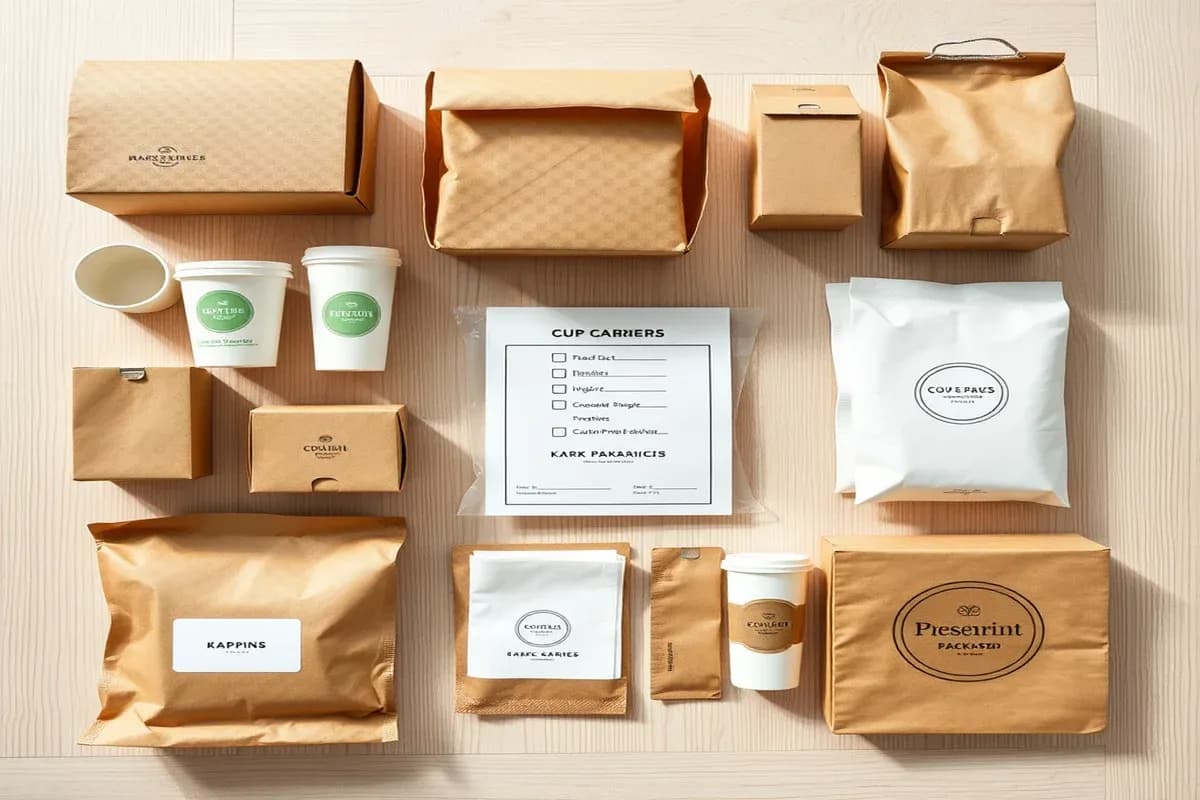
The complete packaging checklist for opening a new restaurant in Saudi Arabia 2026 — what to order, in what quantities, on what timeline, how to budget, and how to build a professional brand identity from your very first day of service.

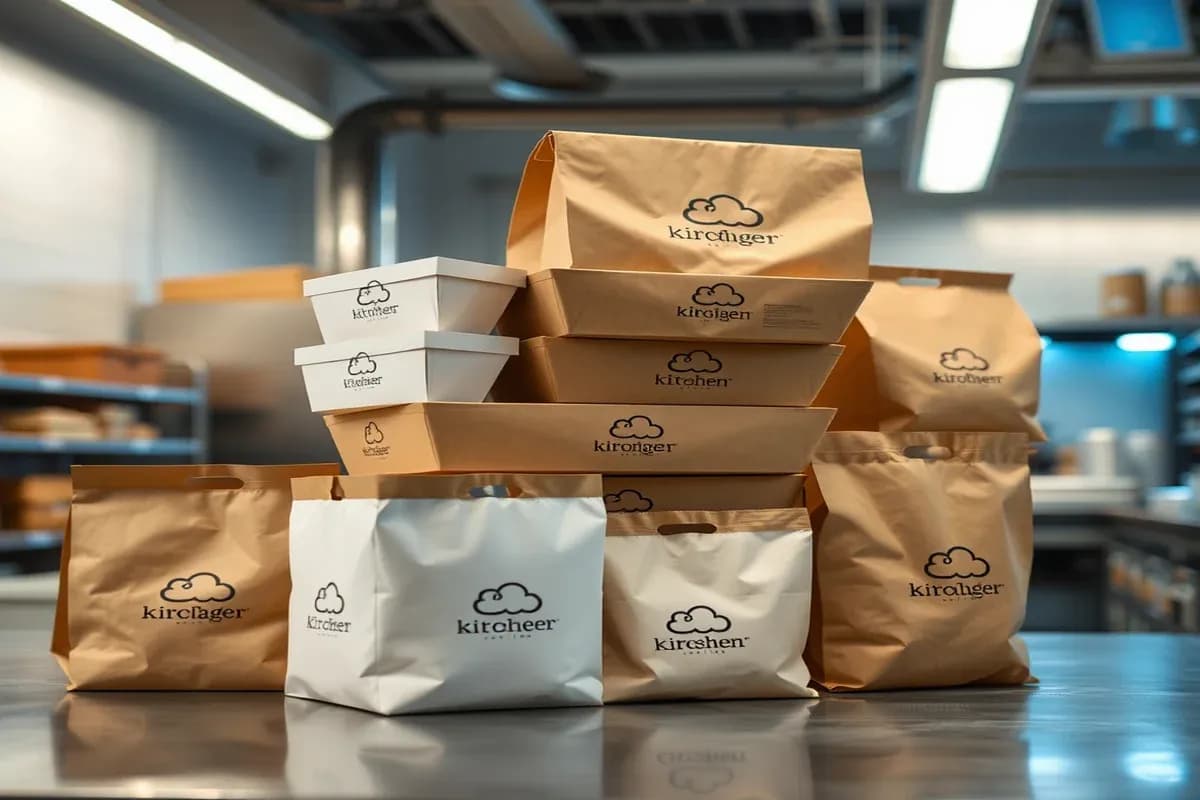
The complete packaging guide for Saudi cloud kitchens in 2026 — delivery-optimized containers, tamper-evident sealing, building brand identity without a storefront, food-type packaging strategies, and cost planning for every order volume.
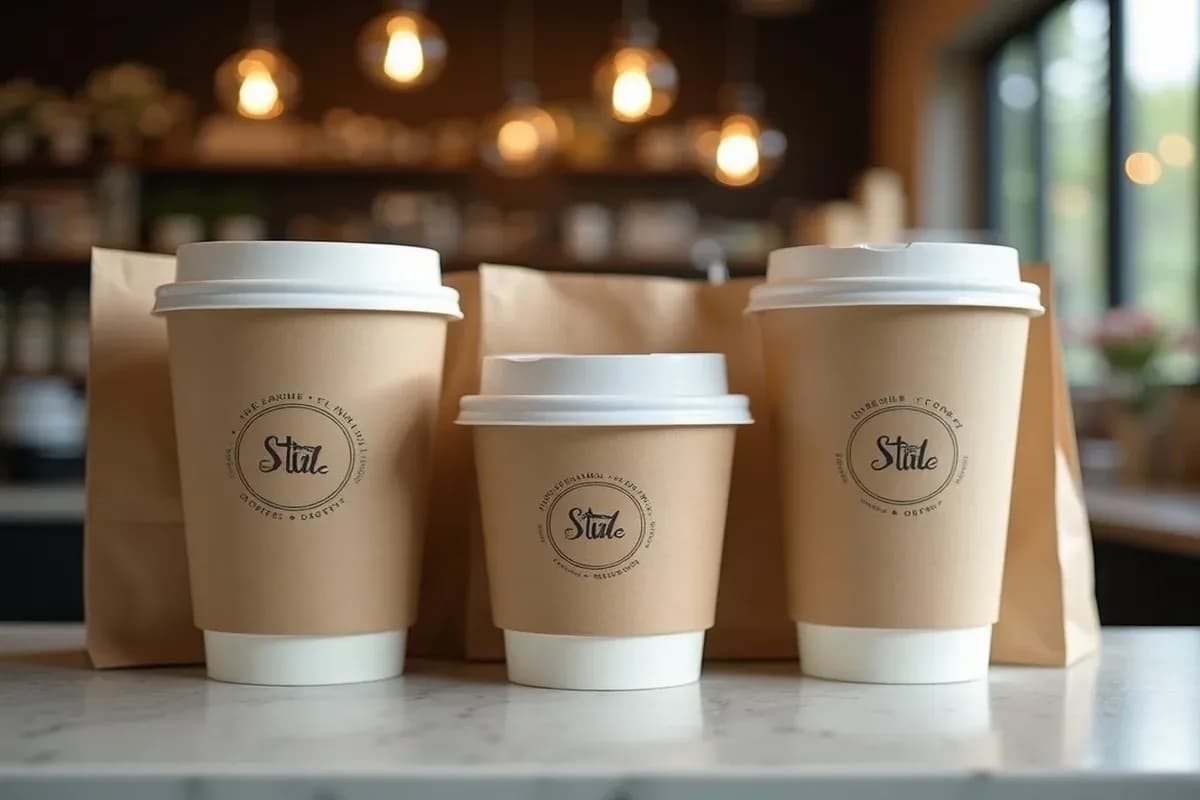
The 4 Core Packaging Materials — And How to Choose Between Them. The Saudi market relies on four primary materials for restaurant packaging. Understanding the real differences — not just price — is the foundation of every correct packaging decision. Kraft Paper is the most versatile: its natural brown color creates a warm, authentic look suited to burger restaurants, sandwich shops, and traditional food outlets. Kraft works well for delivery bags, tray liners, and light food boxes, but moisture resistance is moderate — it struggles with sauce-heavy items unless PE-lined. Paperboard and Cardboard is the primary material for food boxes — burger boxes, fried chicken containers, pizza boxes, and paper cups. It prints exceptionally well, resists heat adequately, and delivers a professional appearance. Measured in GSM — higher GSM means greater strength. For meal boxes, 300-350gsm is the Saudi standard. Bagasse (sugarcane fiber) is the leading eco-friendly alternative for hot food: fully compostable, microwave-safe to 150°C, and increasingly price-competitive. Aluminum Foil containers deliver maximum heat retention, ideal for rice dishes, kabsa, mandi, and grilled platters requiring 45-60 minutes of sustained temperature during delivery.
| Material | Best Applications | Printable? | Eco Rating | Price (SAR/100 pcs) |
|---|---|---|---|---|
| Kraft Paper | Delivery bags, sandwich wraps, tray liners | Yes — Flexo/Digital | ★★★ | 8–18 |
| Paperboard/Cardboard | Burger boxes, pizza boxes, cups | Yes — all methods | ★★★ | 15–45 |
| Bagasse (Sugarcane Fiber) | Hot food plates, bowls, deep boxes | Limited | ★★★★★ | 25–60 |
| Aluminum Foil | Rice dishes, kabsa, mandi, grills | No | ★★★ | 20–50 |
The Right Packaging for Each Food Type. The golden rule: packaging follows the food, not the other way around. The most common problem is choosing packaging that looks good, then discovering it doesn't suit the food. Shawarma and sandwiches need kraft paper or white sandwich paper — flexible enough to wrap irregular shapes and fast enough for high-volume service. An inner PE liner prevents sauce from soaking through. Full meal combo boxes are better for multiple items but slower to assemble. Burgers and fried chicken need a cardboard box whose lid retains steam to keep food hot and maintain crispness. A bottom-load box is faster to fill and preserves the burger's shape better during delivery. Classic Saudi dishes — mandi, kabsa, jareesh, grilled platters — need deep containers that withstand high heat and moisture: bagasse or PE-coated cardboard is the right choice. Outer bags for rice platters must be reinforced kraft because the weight collapses standard bags. Cold beverages need transparent PET or PP cups with secure dome or flat lids — dome lids for blended drinks, flat lids for still cold drinks.
| Food Type | Recommended Packaging | Critical Feature | What to Avoid |
|---|---|---|---|
| Shawarma & Sandwiches | Kraft or white sandwich paper | Flexible + oil-resistant inner liner | Rigid boxes without sauce protection |
| Burgers & Fried Chicken | Cardboard box with secure lid | Steam retention + structural strength | Thin cardboard that collapses under weight |
| Saudi Rice Dishes (Kabsa/Mandi) | Deep bagasse or PE-coated cardboard | 60-min heat retention | Shallow containers that overflow during delivery |
| Cold Beverages | Clear PET/PP cup + dome or flat lid | Leak-proof + transparent presentation | Paper cups that go limp with cold drinks |
| Hot Coffee (60°C+) | Double-wall paper cup | Thermal insulation to protect hands | Single-wall cups that burn customer hands |
Essential Packaging Starter List for Every Saudi Restaurant
Minimum categories every restaurant needs before opening: (1) Primary food containers matched to each menu item, (2) Cups in 3 sizes — small, medium, large, (3) Delivery bags in 2 sizes, (4) Sandwich wrap paper, (5) Sauce cups in 2oz and 4oz, (6) Napkins. These six categories cover 95% of all restaurant needs. Start with plain stock, then add custom printing once your menu and volume stabilize.
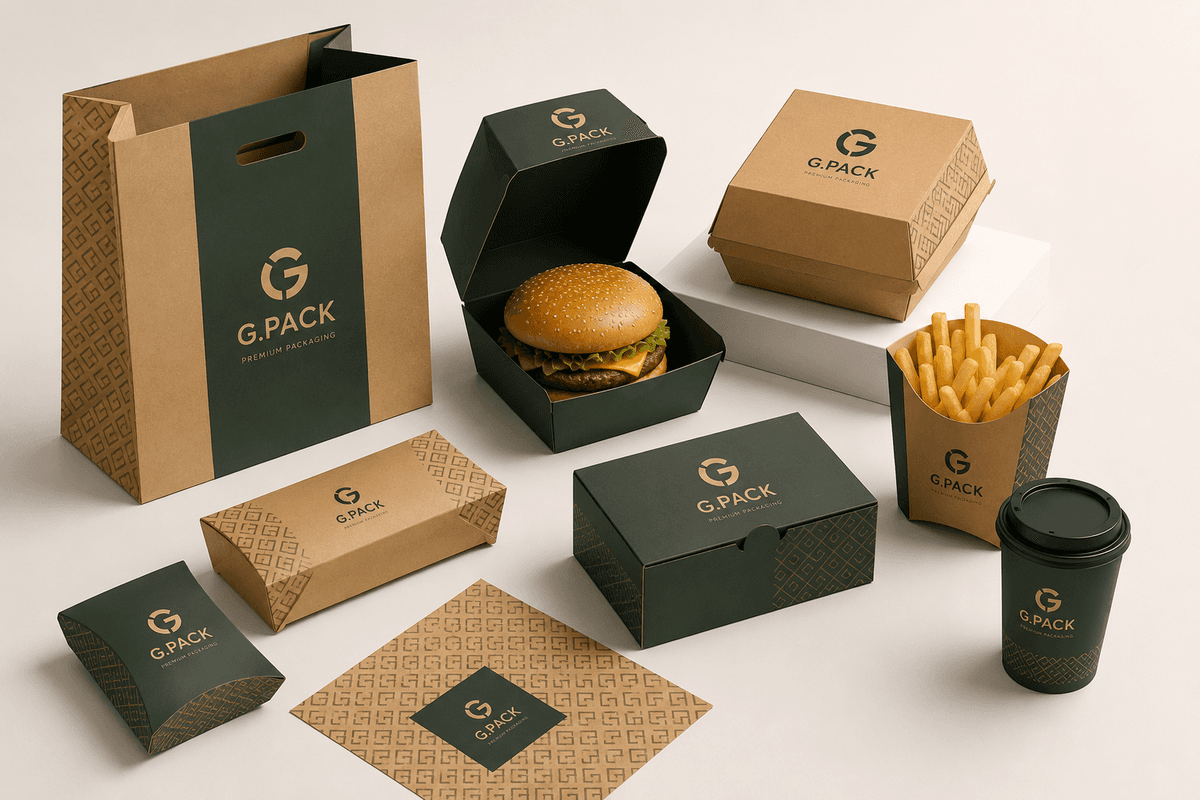
Printing and Visual Identity — Your Packaging Is Your Advertisement. Every meal leaving your restaurant in printed packaging is a moving advertisement. A customer carrying your meal through the street, placing it on their office desk, photographing it for Instagram — all of this spreads your brand at zero additional cost beyond the printing investment. A restaurant that ignores printing leaves this opportunity entirely for its competitor. The core principle of packaging design is visual consistency: the same colors and same logo on the cup, the box, and the bag. Your customer builds their quality impression from the consistency of your visual identity. Packaging where every piece has a different design signals unprofessionalism even when the food is excellent. The smartest approach: print the cup and the outer bag — the two most visible items — and leave inner packaging unprinted to control costs. Three printing methods are standard in Saudi Arabia: flexographic printing for high volumes of 3,000+ units at the lowest per-unit cost; digital printing for 500-2,000 units with no plate fees and fastest turnaround; and hot stamping or embossing for luxury positioning with metallic or raised-texture finishes.
| Product | 1,000 pcs | 3,000 pcs | 5,000 pcs | 10,000 pcs |
|---|---|---|---|---|
| Custom burger box — 1 color | 35–45 | 25–35 | 18–25 | 14–18 |
| Custom paper cup 12oz — 1 color | 12–18 | 9–13 | 7–10 | 5–8 |
| Kraft carry bag medium — 1 color | 18–25 | 14–18 | 10–14 | 8–11 |
| Pizza box 30cm — 2 colors | 45–60 | 35–48 | 28–38 | 22–30 |
How to Build a Smart Packaging Budget. Before calling any supplier, calculate your actual consumption: take last month's orders, identify which packaging items were used with each meal, and multiply. This is your starting point. Restaurants that struggle with packaging costs typically either order too much — freezing capital in slow-moving inventory — or order too little, paying a higher per-unit price every month. The economics of packaging strongly favor volume, but storage has limits. Paper cups don't expire but are damaged by humidity, pressure, and heat when stored long-term. The practical rule: never order more than 3 months of consumption in a single order. If you consume 5,000 cups monthly, order a maximum of 15,000 — this balances volume pricing with storage risk. Always maintain a 10-15% inventory reserve above normal monthly consumption. A restaurant consuming 1,000 boxes per month should order 1,150. Those extra 150 units protect against stockouts during your busiest and most critical moments.
Sustainability — From an Ethical Choice to a Competitive Advantage. 70% of Saudi consumers aged 18-35 prefer restaurants with a clear sustainability position — consistent with local market research and aligned with Vision 2030's green economy agenda. Sustainability in packaging is no longer just an ethical message; it has become a real marketing tool. The first step doesn't require changing everything at once. Start gradually: replace PE cups with PLA cups for cold beverages — the price difference is roughly SAR 0.07 per cup. Add an eco-friendly label to your kraft bags. These small changes send a credible message to customers without major budget impact. Sustainable packaging also reduces exposure to future regulatory pressure. Saudi Arabia is progressively moving toward restricting single-use plastics. Restaurants that begin the transition now will be in a comfortable position when those restrictions arrive.
Seasonal Planning — Ramadan and Peak Seasons. Ramadan is the real packaging stress test for Saudi restaurants. Revenue increases 40-80% in many restaurants during the holy month, but this surge surprises restaurants that haven't planned packaging in advance. Supplier lead times can double during Ramadan — a supplier who normally delivers in two weeks may need four weeks at peak. The golden rule: order Ramadan packaging 6-8 weeks before the month begins. If you want special Ramadan-themed packaging with seasonal design elements, begin preparation 10 weeks ahead — 4 weeks for design approval, 6 weeks for production and delivery. Hajj season particularly affects restaurants in Makkah and Madinah, where demand can double. Summer and school holidays increase delivery orders, requiring higher quantities of delivery bags and heat-resistant packaging. Plan a 20% reserve order above your normal monthly quantity for every major season to avoid the premium pricing of emergency rush orders.
The Most Expensive Packaging Mistakes Restaurant Owners Make. Mistake 1 — Choosing by price alone: a cup SAR 0.05 cheaper that leaks or burns hands costs a negative review worth dozens of lost customers. Mistake 2 — Ordering too infrequently in small quantities: buying weekly in small batches means paying 40-60% more per unit than a restaurant that orders quarterly. Mistake 3 — Wrong sizing: measure your actual plated food before ordering containers. A burger box 1cm too small crushes your product and creates a terrible experience. Mistake 4 — No ventilation for fried items: sealed hot food containers trap steam, softening crispy items within 5 minutes. Always specify ventilation holes for fries, fried chicken, and shawarma. Mistake 5 — Skipping the sample: a trustworthy supplier always provides a production sample before mass printing. If a supplier refuses, that is a serious red flag. Mistake 6 — No custom branding: plain white packaging makes your restaurant invisible in an increasingly competitive, branded market.
How to Build an Integrated Packaging System from Scratch. If you are opening a new restaurant or rebuilding your packaging correctly, follow these four foundational steps. First: create a complete packaging specification list — every menu item mapped to its exact packaging type, size, material, and monthly quantity requirement. This prevents stockout emergencies and enables intelligent bulk ordering. Second: establish relationships with at least two suppliers — a primary supplier for your main volume and a backup supplier who can fulfill emergency orders within 48 hours. Never create a single-supplier dependency. Third: start with conservative quantities on your first order, then scale as you build confidence in your supplier and stabilize your consumption data. Fourth: set a monthly inventory review schedule — when stock drops to 30% of your normal monthly quantity, trigger a reorder immediately. Assign packaging inventory ownership to one specific team member who is accountable for maintaining supply.
List every product you sell and identify the exact packaging needed for each — type, size, material, and estimated monthly quantity. This analysis prevents ordering items that don't match your food and builds a precise specification before approaching any supplier.
Send identical specification sheets to at least three suppliers. Request pricing at 1,000, 3,000, and 5,000-unit quantities to understand the full volume discount curve. Always include your required delivery timeline in the specification.
Order production samples of all packaging items and test them with your actual food. Check structural integrity under load, heat retention over 30 minutes, leak resistance for saucy items, and how print colors appear in real restaurant lighting.
Work with a designer to create print-ready vector files (.ai or PDF) with correct bleed areas (minimum 3mm), safe zones for text and logos, and Pantone or CMYK color specifications confirmed with your supplier before production begins.
Get the production timeline confirmed in writing — typically 10-21 days for custom printing. Work backward from your launch date and add a 5-day buffer. For Ramadan campaigns, double the buffer.
Before signing any delivery, verify: correct dimensions, print color accuracy, structural strength, and packaging cleanliness. Confirm your supplier retains printing plates for reorders — this eliminates plate charges on all future orders.
Create reorder trigger points for every item based on your daily consumption rate and supplier lead time. When inventory drops to 30% of normal monthly quantity, place a reorder immediately — never wait until stock is exhausted.
Every quarter, evaluate which items performed well and which had issues. As your order volumes grow, renegotiate supplier pricing — volume leverage is your most powerful cost reduction tool.
Most Saudi suppliers require 500-1,000 units for digital printing and 2,000-5,000 units for flexographic plate printing. G-Pack offers custom digital printing from 500 units with no plate setup fees — making professional branded packaging accessible for new and small restaurants from day one.
Divide your total monthly packaging spend by your total monthly orders. Saudi benchmarks: SAR 1.20-2.50 per meal for basic unbranded packaging, SAR 2.50-5.00 for custom branded packaging. Anything above SAR 5.50 per meal for packaging alone is a clear optimization opportunity.
Digital printing: 5-10 business days. Flexographic printing: 14-21 business days. Rush production is available at a 20-30% cost premium. For your first custom order, plan at least 4 weeks ahead to accommodate design approval, sample review, and production without schedule pressure.
Bagasse sugarcane fiber containers, PLA-lined compostable paper cups, recycled cardboard, and FSC-certified kraft paper are all available in Saudi Arabia in 2026. G-Pack stocks eco-friendly alternatives across all major food packaging categories with nationwide delivery.
Minimum pre-opening list: primary food containers for all menu items, hot and cold beverage cups with lids, carry bags in two sizes, sauce cups in 2oz and 4oz, and napkins. Order 4 weeks before opening. Start with a 6-week supply of each item to buffer against early demand uncertainty.
Three proven strategies: (1) Increase order quantities — each doubling typically reduces unit cost by 25-40%. (2) Standardize sizes — fewer SKUs mean larger quantities per item and better supplier pricing. (3) Print only your most visible items — cups and outer bags — and leave inner packaging plain. Combined, these can reduce total packaging spend by 20-35%.
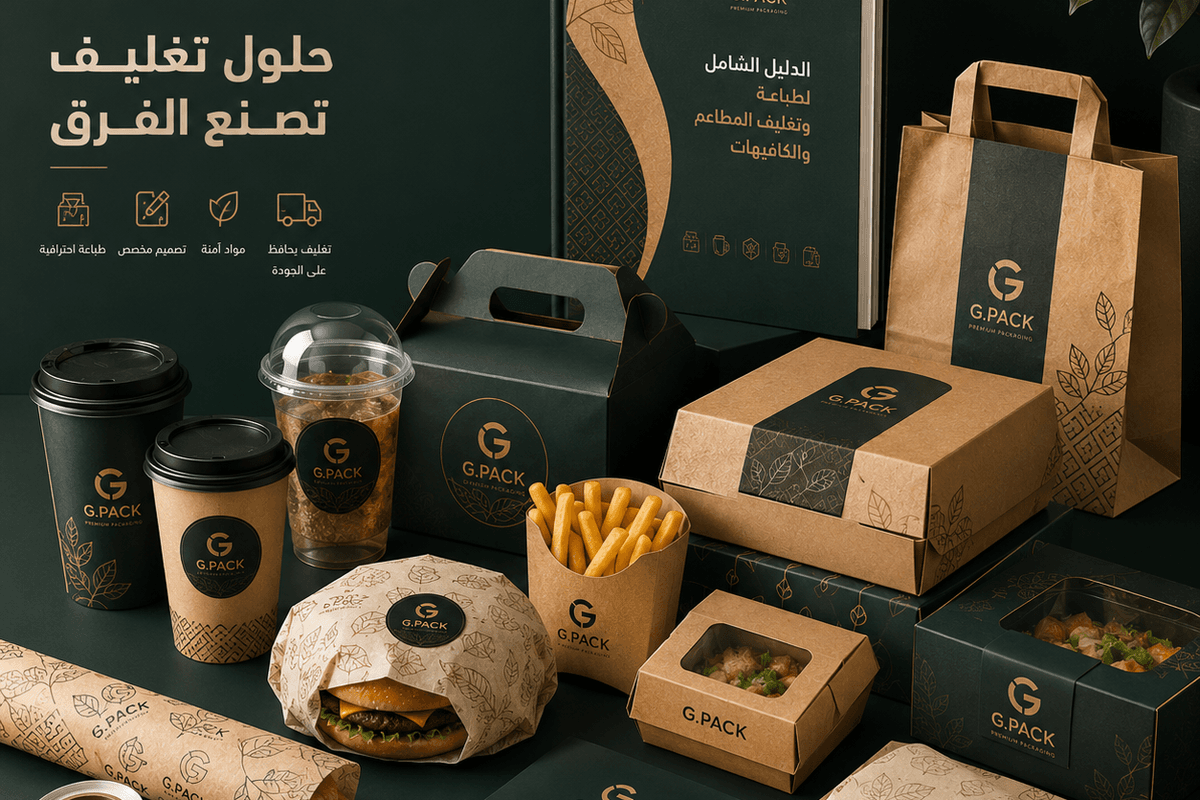
G-Pack delivers complete packaging solutions for Saudi restaurants and cafes — custom printed cups, boxes, bags, and more. Free consultation and your quote within 24 hours.
Get a Free Quote